Syrian President Says Major Phase with SDF Completed as Country Enters New Stage
Syrian President Ahmad Al-Sharaa said a major phase of the SDF agreement is complete, declaring no foreign bases remain, as he outlined Syria’s new political direction at the Antalya forum.
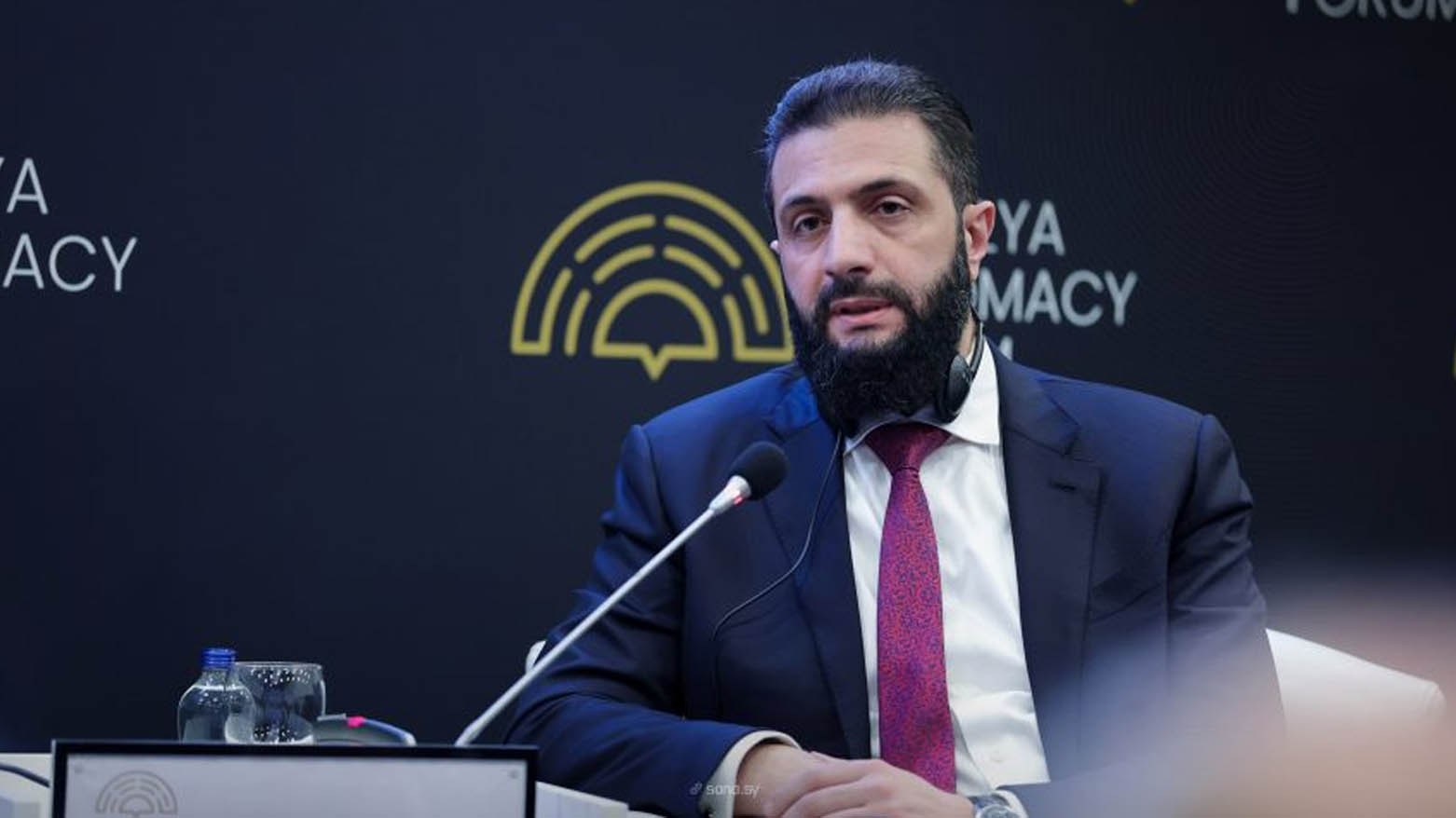
ERBIL (Kurdistan24) - Syrian President Ahmad Al-Sharaa announced that a major phase of the agreement with the Syrian Democratic Forces (SDF) has been completed, signaling a shift toward a new stage of stability as foreign military bases disappear from Syrian territory.
Speaking on Friday, during a special panel at the Antalya Diplomacy Forum, Al-Sharaa presented his country’s political and military roadmap for the next phase, describing Syria as moving from a period of crises toward becoming a point of convergence among global powers.
Progress in SDF integration
Addressing relations with the SDF, Al-Sharaa revealed that the integration process has passed through several stages, beginning in March and later formalized in January 2025 under US supervision.
“We have completed the major phase, and the process is progressing well. We no longer need international supervision, and everyone is moving toward preserving Syria’s territorial unity,” he said.
He added that northern Syria is now free of any US, British, or Russian military bases, describing the development as a historic turning point in restoring national sovereignty.
Syria’s evolving regional role
Al-Sharaa emphasized a new strategic direction for Syria, stating that the country is no longer aligning itself within regional conflicts.
“Syria has become a meeting point for the United States, Russia, and China. Despite 14 years of hostility from Iran, we have not taken sides in the conflict between Tehran and Washington,” he said.
He also expressed concern that any internal crisis in Iran or Lebanon could impact the broader region, while thanking US President Donald Trump for efforts to establish a ceasefire in Lebanon.
Golan and relations with Israel
On the issue of the Golan Heights, Al-Sharaa reaffirmed Syria’s position against recognizing Israeli sovereignty over the territory, stating that the international community supports Syria’s rights.
Regarding negotiations, he said: “After Israel violated the previous ceasefire, we are now discussing an agreement that would see Israel return to the 1974 borders. If this is implemented, we are ready to enter long-term ceasefire talks that would compel Israel to fully withdraw from the Golan.”
He reiterated that Syria is no longer a “box for exporting crises,” but rather a stabilizing force in the region.
Al-Sharaa’s remarks come as regional diplomatic engagement intensifies.
On the sidelines of the Antalya Diplomacy Forum, Kurdistan Region President Nechirvan Barzani met with Al-Sharaa to discuss bilateral relations and regional developments.
According to a statement from the Kurdistan Region Presidency, the talks focused on strengthening ties between the Kurdistan Region, Iraq, and Syria, particularly in economic and trade cooperation. The two sides also reviewed the situation in Syria, including the conditions of Kurds and other communities.
Barzani expressed appreciation for Damascus’ efforts to resolve the conflict and reach an agreement with the SDF, while Al-Sharaa thanked the Kurdistan Region leadership for supporting peace initiatives and contributing to regional stability.
The forum, held from April 17 to April 19, brings together global leaders, diplomats, and academics under the theme “Mapping Tomorrow, Managing Uncertainties.”
Al-Sharaa’s statements reflect a broader attempt to reposition Syria at a moment of transition, as the country seeks to consolidate internal agreements and redefine its regional role.