UN Welcomes Reopening of Hormuz as Erdoğan Warns of Global Crisis
The UN welcomed Iran’s reopening of the Strait of Hormuz as a step toward easing tensions, while Türkiye’s president warned of a looming global crisis. Meanwhile, deep disagreements between Tehran and Washington remain unresolved.
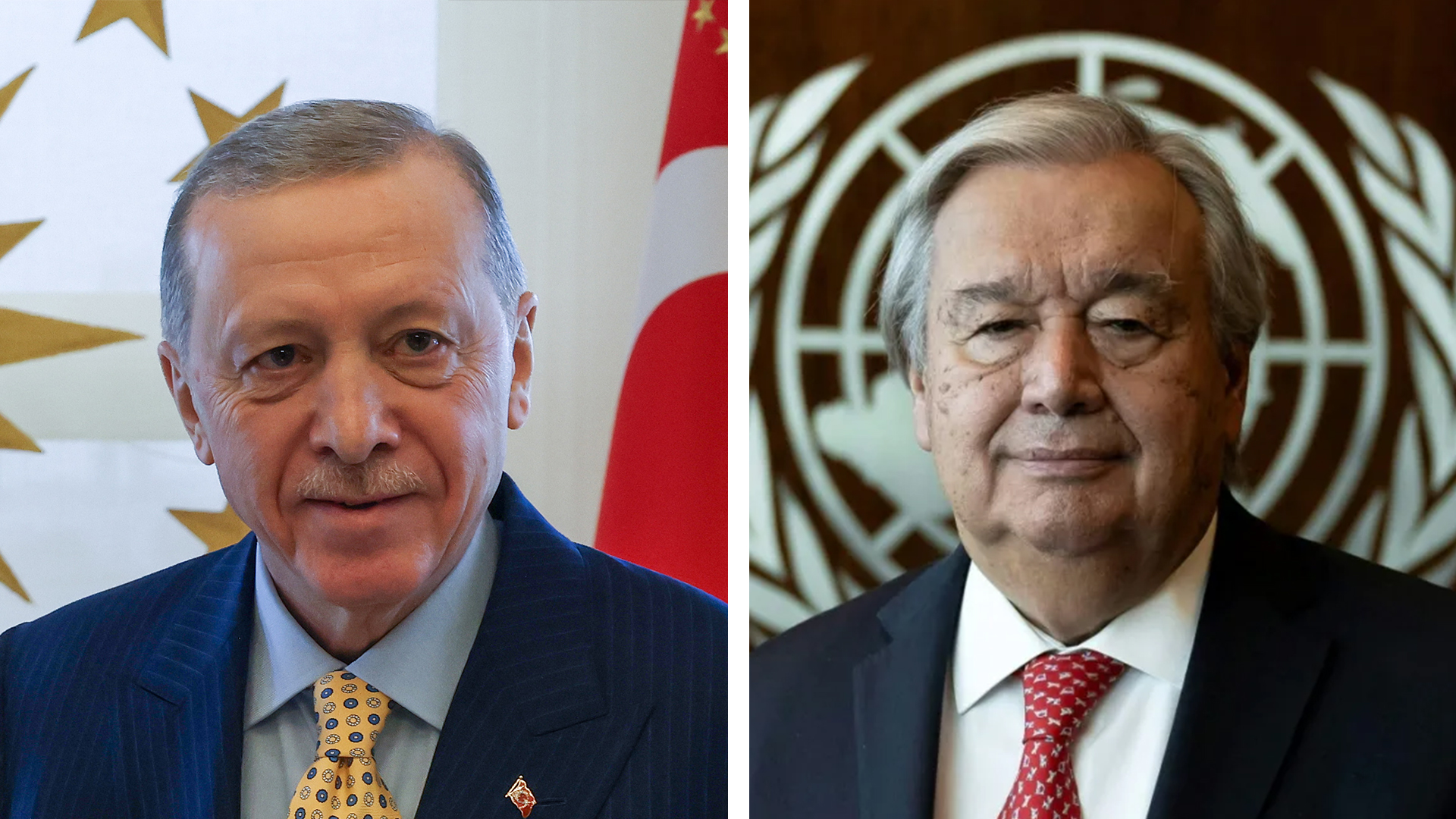
ERBIL (Kurdistan24) - A cautious sense of relief emerged alongside stark warnings on Friday, as the United Nations praised Iran’s move to reopen the Strait of Hormuz, even as Türkiye’s President Recep Tayyip Erdoğan warned that the world stands at the edge of a serious and dangerous crisis.
UN Secretary-General António Guterres welcomed Iran’s announcement to reopen the Strait of Hormuz to international shipping, describing the move as a significant step toward reducing tensions in the region.
He emphasized that the reopening of the strategic waterway is an important development in easing instability.
At the same time, UN spokesperson Stéphane Dujarric reiterated the organization’s position, stressing the need to fully restore freedom of navigation.
“The position of the United Nations is clear; the rights and freedoms of international navigation in the Strait of Hormuz must be fully restored and respected by all parties,” he said.
The UN stance followed earlier remarks by Iran’s Foreign Minister Abbas Araghchi, who announced that the waterway had been fully reopened to commercial vessels and that traffic had returned to normal.
The Strait of Hormuz is considered one of the most vital global maritime routes for transporting energy and commercial goods, and its reopening is seen as an indicator of de-escalation in Gulf tensions.
Erdoğan warns of historic turning point
In parallel, Türkiye’s President Recep Tayyip Erdoğan delivered a stark warning, stating that the world is facing a historic turning point and that the international system is undergoing a major transformation.
Speaking at the opening of the fifth Antalya Diplomacy Forum on Friday, held under the theme of addressing uncertainty in shaping the future, Erdoğan said that current global developments should not be reduced merely to shifts in the balance of power.
“The truth is that there is a powerful confrontation taking place, and new axes are emerging,” he said.
Erdoğan sharply criticized international institutions, arguing that mechanisms tasked with protecting human rights and the global system have become ineffective and are unable to uphold justice and humanity.
“The fundamental issue the world is suffering from is a moral and existential crisis based on selective justice,” he stated.
He pointed to Gaza as an example of the failure of the global system, saying that observing developments there over the past two years is sufficient to understand the scale of the crisis.
Concluding his remarks, Erdoğan stressed that the role of diplomacy has fundamentally changed, noting that it is no longer limited to resolving conflicts, but has become a platform for discussing the future of humanity and confronting global challenges.
These developments come as a senior Iranian official stated that deep disagreements between Tehran and Washington remain unresolved regarding ending the war, with no agreement yet reached on the details of the nuclear file.
The official stressed that serious negotiations are required to reduce these differences, adding that reopening the Strait of Hormuz is conditional on the United States adhering to a ceasefire.
He also noted that Iran hopes to reach a preliminary agreement in the coming days through mediation efforts, particularly by Pakistan, with the possibility of extending the ceasefire to allow more time for discussions on lifting sanctions and compensating for damages caused by the 39-day war.
The official further emphasized that no agreement has yet been reached on the details of Iran’s nuclear program, and warned that any claims regarding ongoing negotiations that contradict this reality are a distortion of the facts.
As diplomatic signals and warnings unfold simultaneously, the reopening of the Strait of Hormuz offers a moment of relief, but persistent divisions and escalating rhetoric suggest that the path toward stability remains uncertain.