KRG Health Ministry: Hospital Refusals in Mawlan Case 'Unacceptable'
KRG officials are investigating the death of 18-year-old Ghazal Mawlan after private hospitals in Sulaimani refused her emergency care following an Iranian drone strike. "These behaviors are unacceptable," the Ministry of Health declared, stating care "must not fall under any political motives."
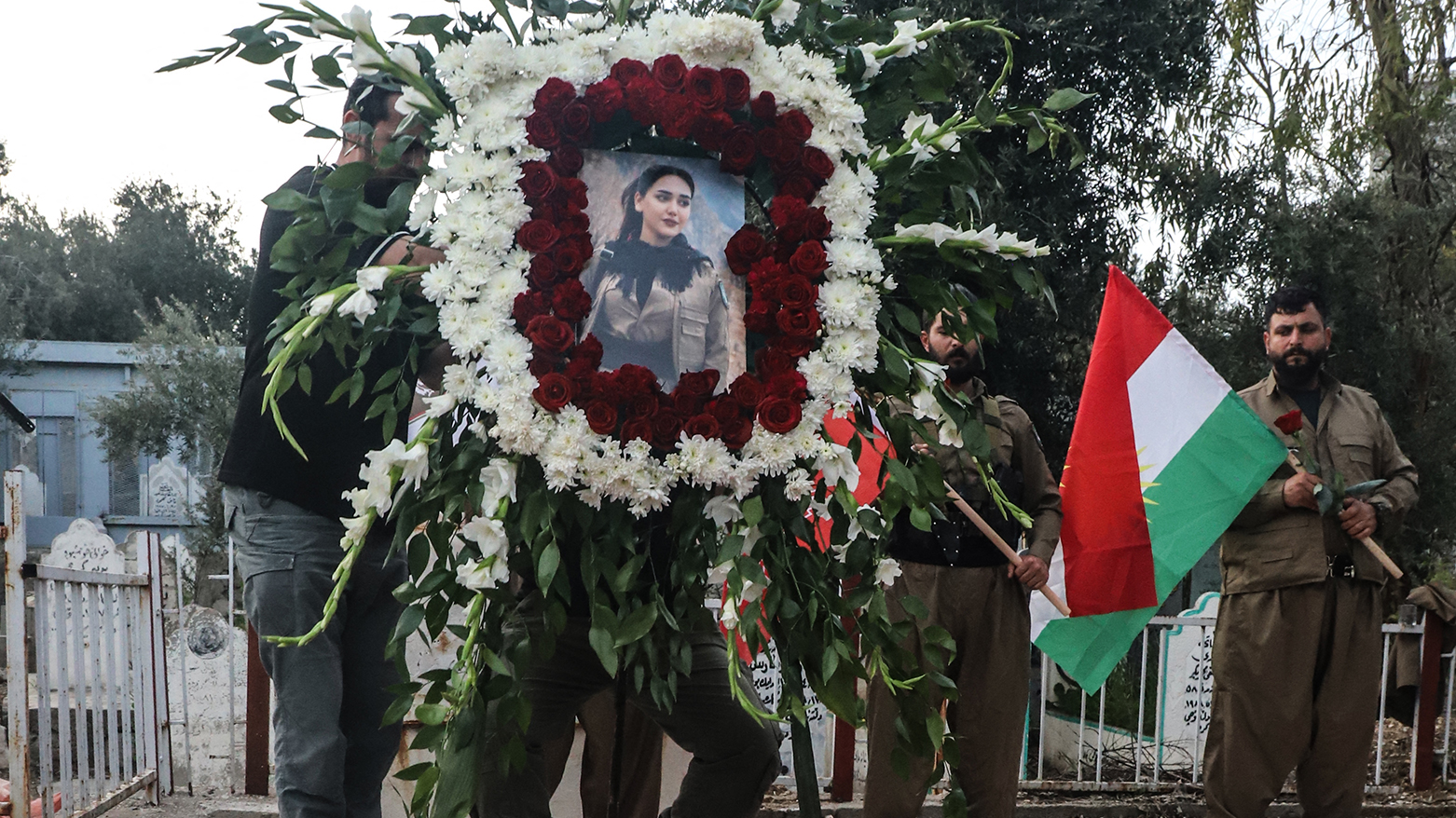
ERBIL (Kurdistan24) - The Kurdistan Regional Government (KRG) Ministry of Health has launched a formal investigation into the death of an 18-year-old Kurdish opposition fighter who succumbed to injuries after multiple private hospitals in Sulaimani province refused her emergency admission.
The medical denial, followed by a local prohibition on her public funeral rites, has triggered a severe institutional crisis regarding the legal protections afforded to foreign dissidents residing in the Kurdistan Region.
On Saturday, the KRG Ministry of Health issued a statement confirming that an investigative committee has been formed to examine the circumstances surrounding the death of Ghazal Mawlan.
Mawlan, a female Peshmerga affiliated with the Komala Party of Toilers of Kurdistan, was severely wounded several days prior during a drone strike conducted by the Islamic Republic of Iran against the Surdash camp, located within the provincial borders of Sulaimani.
Following the strike, Mawlan was transported to Shorish Hospital, a medical facility specifically designated for Peshmerga forces.
According to health officials, she received initial trauma care at Shorish but required specialized intervention. Due to a documented lack of necessary equipment and available space in the Intensive Care Unit, attending medical staff requested her immediate transfer.
According to the Ministry of Health, Mawlan was subsequently transported to the private-sector Bakhshin Hospital, where facility administrators were unwilling to admit her.
Relatives and local officials reported that Asia Hospital, another private facility in the province, similarly refused entry. Mawlan died shortly thereafter due to the prolonged delay in receiving critical medical intervention.
The systemic refusal to treat and subsequently bury Mawlan transcends a localized medical malpractice dispute; it exposes the severe institutional and geopolitical constraints currently restricting Kurdish opposition factions from Eastern Kurdistan (northwestern Iran) within the Kurdistan Region.
Driven by external military pressure from Tehran and stringent cross-border security agreements, local administrative and medical entities appear hesitant to interface with individuals targeted by neighboring states, creating fatal jurisdictional voids for displaced dissidents.
"These behaviors are unacceptable," the Ministry of Health declared in its official statement. The regulatory body emphasized that health institutions must universally fulfill their humanitarian duty to protect human life and "must not fall under any political pressure or motives."
To formalize the inquiry, the Ministry of Health announced it is coordinating directly with the Sulaimani Health Directorate and the Public Prosecution.
The investigative committee was established under the legal frameworks of Patient Rights Law No. 4 of 2020 and Investigation Regulation No. 16 of 2022. The regulatory body stated that the committee is tasked with uncovering the facts, taking binding legal measures, and punishing any entities found in violation of medical mandates.
The institutional paralysis surrounding Mawlan’s medical care stems from a highly contested interpretation of domestic security protocols.
According to statements released by a coalition of local civil activists who condemned the private facilities, hospital administrators cited a lack of specialized resources and the absence of a formal police authorization prior to admission.
The police authorization requirement is a standard KRG Ministry of Health guideline traditionally utilized to process domestic criminal investigations and track violent local crime.
Human rights advocates and legal monitors have vehemently rejected this administrative rationale.
The Independent Commission for Human Rights in the Kurdistan Region issued a formal public rebuke, categorizing the refusal of emergency trauma care as a severe violation of international and domestic law.
"Providing medical treatment is one of the most fundamental human rights and cannot be neglected under any justification," the Commission stated.
Activists argue that protocols designed for local municipal crime cannot be legally or ethically applied to victims of foreign military drone strikes, noting that the demand for police paperwork effectively weaponized bureaucracy against a critically wounded patient.
The systemic rejection extended beyond Mawlan’s death, immediately transitioning from a clinical dispute into a volatile standoff over religious and civic rites.
According to the Independent Commission for Human Rights, local mosques denied access to facilities required for traditional Islamic washing rituals, and public cemeteries initially refused her burial.
The denial of municipal burial space prompted Sardar Abdullah, a Kurdish political figure and former Iraqi Member of Parliament, to offer his private residential courtyard for her interment. While local cultural figures eventually successfully secured an alternate burial site, the dispute subsequently shifted to the organization of her wake.
When a mourning space was established outside Abdullah’s residence in Sulaimani, local security forces intervened, strictly prohibiting the public gathering.
Speaking to Kurdistan24, Abdullah stated that he elected to pause the event to avoid provoking civil unrest, acting with the explicit authorization of the Komala party leadership, including senior official Raza Kaabi.
"We hold ourselves responsible for the security of the city of Sulaimani," Abdullah said, emphasizing a coordinated strategy of de-escalation. He noted that he has formally petitioned the Governor of Sulaimani and KRG Deputy Prime Minister Qubad Talabani to intervene and legally designate an official location for the mourning rites.
Historically, Sulaimani province has cultivated a civic identity as a cultural and political sanctuary, characterized by its historical willingness to accommodate Kurdish political movements from across regional borders.
However, sustained military pressure, manifested in repeated drone strikes by the Islamic Republic of Iran targeting opposition camps, has visibly tightened the operational and social constraints placed upon these groups.
Despite the bureaucratic barriers and the Komala leadership’s strategy of controlled de-escalation, the handling of Mawlan’s death has catalyzed significant public anger.
Abdullah noted that Kurdish diaspora communities in Europe and North America are organizing weekend demonstrations, while local residents in Sulaimani have threatened to pitch protest tents in defiance of the security prohibition.
As the Ministry of Health tribunal initiates its regulatory investigation into the private hospitals, the immediate civic trajectory of the crisis remains unresolved.
Authorities now face a precarious balance between enforcing domestic accountability for a fatal medical denial and managing the volatile diplomatic space required to grant an Iranian Kurdish opposition group the right to publicly mourn.
5 Things to Know
1- The Medical Liability Gap: Hospitals reportedly cited KRG Ministry of Health guidelines requiring police authorization for trauma care, a protocol designed for domestic criminal cases. Activists and the Ministry argue this creates a lethal legal grey area for victims of foreign military drone strikes.
2- Institutional Censure: The KRG Ministry of Health has officially categorized the behavior of the private hospitals as “unacceptable,” launching a committee under Patient Rights Law No. 4 of 2020 to confirm the facts and punish violators.
3- Shift in Sanctuary Status: The intervention of Sulaimani security forces to block the public wake, alongside the denial of mosque access for rituals, signifies a marked shift from the province's historical role as a political safe haven for Kurdish movements from Eastern Kurdistan (northwestern Iran).
4- Coordinated De-escalation: Despite public outrage and the threat of street protests, both the Komala party leadership and local intermediaries have opted for diplomatic negotiation with the KRG Deputy Prime Minister’s office to maintain regional stability.
5- Human Rights Escalation: The Independent Commission for Human Rights has elevated the incident to a formal regulatory issue, demanding a multi-agency prosecutorial response involving the Public Prosecution to address what they classify as a violation of the fundamental right to life.