Fragile Calm in Iran as Ceasefire Nears Expiry
In the present moment, the ceasefire is less a resolution than a fragile interval, one that reveals how close the region remains to systemic rupture, even when the guns are, briefly, silent.
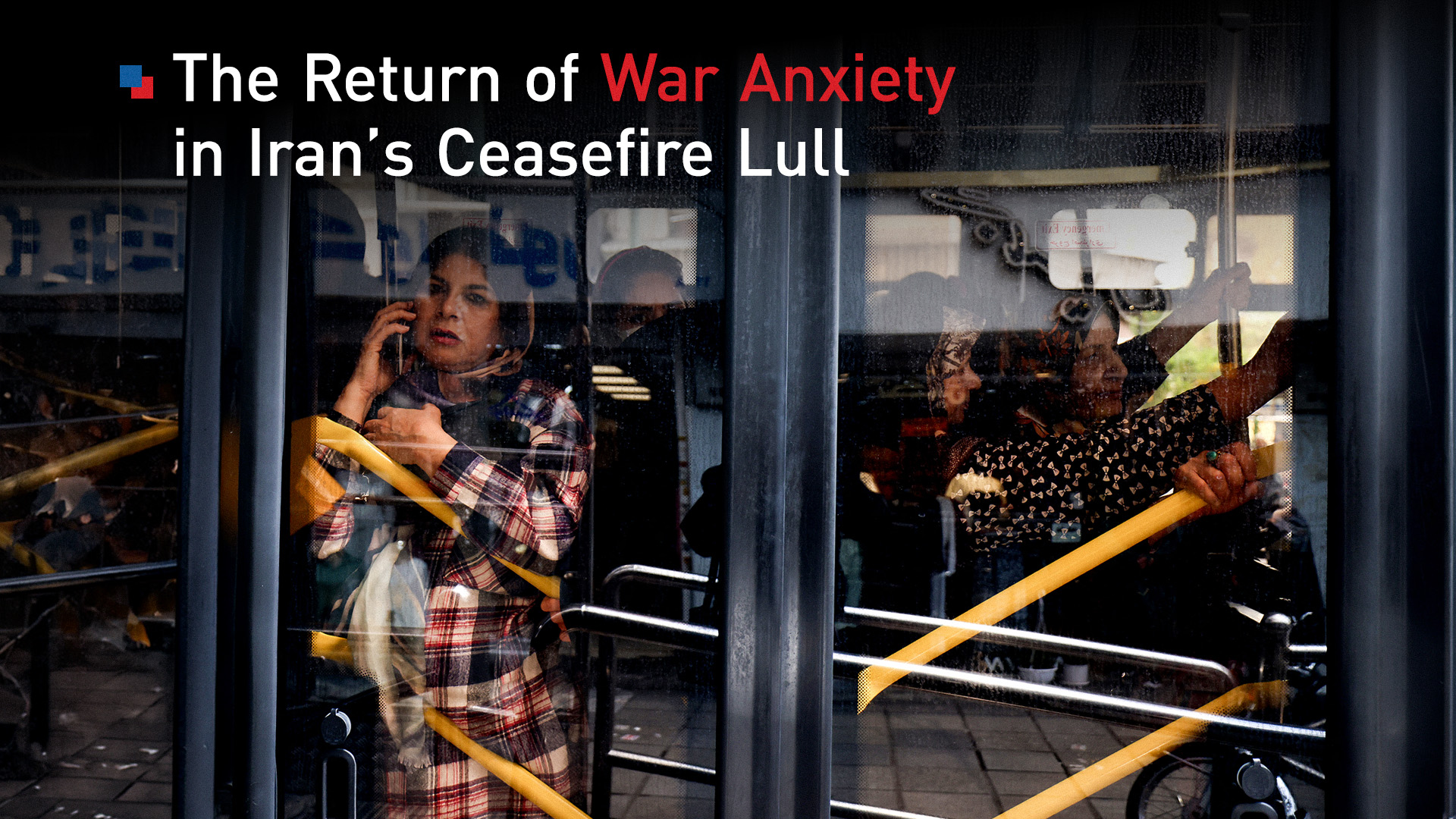
ERBIL (Kurdistan24) - Fear, in Tehran, has become cyclical. It recedes just long enough to suggest normality, then returns with sharper edges. After a 14-day ceasefire between the United States and Iran, that cycle is tightening again—this time under the shadow of explicit threats to dismantle Iran’s infrastructure if negotiations collapse.
As the grace period concludes, the streets of the Iranian capital have transitioned from a brief return to normalcy back into a state of suspended animation.
The prospect of renewed conflict has cast a long shadow over the region, with the United Nations warning of a generational energy crisis and global markets bracing for the potential permanent closure of the Strait of Hormuz.
This diplomatic brinkmanship represents a critical juncture for the Middle East’s security architecture and the global economy.
If the upcoming negotiations in Islamabad fail to yield an extension or a framework for a new nuclear agreement, the region faces the resumption of a conflict that has already claimed over 5,600 lives and paralyzed vital energy corridors.
The Ticking Clock in Tehran
For fourteen days, the silence of the batteries provided a window for citizens like Babak Samiei, a Tehran-based engineer, to attempt a recovery of his daily routine.
"We tried to return to normal," Samiei told reporters, noting that the forty days of active war prior to the April 8 ceasefire had halted all commerce. "I believe negotiations will continue, but ultimately, they will not reach an agreement and the war will restart."
The apprehension is mirrored in the rhetoric of the Iranian state.
While U.S. Vice President JD Vance is reportedly prepared to lead an American delegation to Pakistan for last-minute talks, Iranian state television indicated on Tuesday that no Iranian delegation had yet departed for Islamabad.
Mohammed Baqer Qalibaf, Iran’s chief negotiator and parliamentary speaker, stated on X (formerly Twitter) that Tehran would not negotiate "under the shadow of threats," adding that the Islamic Republic is prepared to "reveal new cards on the battlefield."
What appears as a diplomatic stalemate is, in effect, a test of whether the traditional architecture of Middle Eastern deterrence can survive a direct, unmediated collision between Washington and Tehran.
The Economic and Human Toll
The conflict, which erupted in late February 2026 after the collapse of nuclear talks, has been defined by high-intensity military bombardment.
According to reports from The Associated Press (AP), the fighting has killed at least 3,375 people in Iran and more than 2,290 in Lebanon.
The toll includes 13 U.S. service members and 15 Israeli soldiers.
The maritime consequences have been equally severe.
The International Maritime Organization (IMO) reported that approximately 20,000 seafarers and 2,000 ships remain stranded in the Gulf due to the effective closure of the Strait of Hormuz.
While Lloyd’s List noted that roughly 20 Iranian "shadow vessels" have managed to slip past the U.S. blockade, the channel—which typically sees 120 daily transits—remains largely dormant.
UN Secretary-General António Guterres described the situation as the “most severe energy crisis in a generation,” noting that the war has held global economies hostage to fossil fuel volatility.
Benchmark Brent North Sea Crude remains elevated above $94 per barrel, despite a slight dip on Tuesday driven by lingering hopes for a diplomatic breakthrough.
Strategic Constraints and "Nuclear Dust"
President Trump has maintained an uncompromising posture, utilizing his Truth Social platform to highlight the effectiveness of "Operation Midnight Hammer"—the initial U.S. strikes on Iranian nuclear sites.
Trump referred to these sites as "Nuclear Dust," suggesting that any Iranian attempt to recover enriched uranium would be a "long and difficult process."
The President’s latest warning is specific: if Tehran does not accept a new agreement to abandon its nuclear program, the U.S. military will target Iran’s entire energy infrastructure and its network of bridges.
This shift from targeting military/nuclear assets to civilian-dual-use infrastructure suggests a strategy of total economic immobilization.
In Lebanon, the infrastructure damage is already evident.
Public Works and Transport Minister Fayez Rasamny reported that 15 bridges have been destroyed during the seven-week conflict between Israel and Hezbollah, with losses estimated between $7 billion and $8 billion.
The Judicial Crackdown
Inside Iran, the war footing has been accompanied by a domestic crackdown on perceived internal enemies.
The judiciary’s Mizan Online website reported the execution of Amir Ali Mirjafari on Tuesday morning.
Mirjafari was convicted of collaborating with U.S. and Israeli intelligence and leading "anti-security activities" during pre-war protests.
Rights groups, as noted by Agence France-Presse (AFP), continue to criticize these closed-door trials, while President Trump has previously characterized such executions as a "red line."
Forward-Looking Scenarios
As the ceasefire expiration nears, policymakers are watching three primary indicators:
1- The Islamabad Track: Whether JD Vance and an Iranian counterpart actually meet on Pakistani soil before Wednesday night.
2- The Strait of Hormuz: Whether China, which has called for the reopening of the channel, exerts enough pressure on Tehran to facilitate a maritime de-escalation.
3- Infrastructure Vulnerability: Whether Iran’s "new cards on the battlefield" involve asymmetric strikes on regional energy hubs, which could provoke the infrastructure destruction Trump has threatened.
The streets of Tehran currently exist in a state of suspended animation, a fragile interval where the hum of reopened commerce competes with the tectonic shifting of incoming military orders.
If the Islamabad meetings do not materialize, the "Midnight Hammer" may soon resume its strike, moving from the peripheries of nuclear sites to the very bridges and power grids that sustain Iranian civic life.