Iraq's Trade Minister to Kurdistan24: Customs Dispute will Be Resolved Within Days
Iraq's trade minister confirmed a committee has been formed to resolve the ASYCUDA customs dispute with the Kurdistan Region, promising a fix within days as double taxation continues to burden traders.
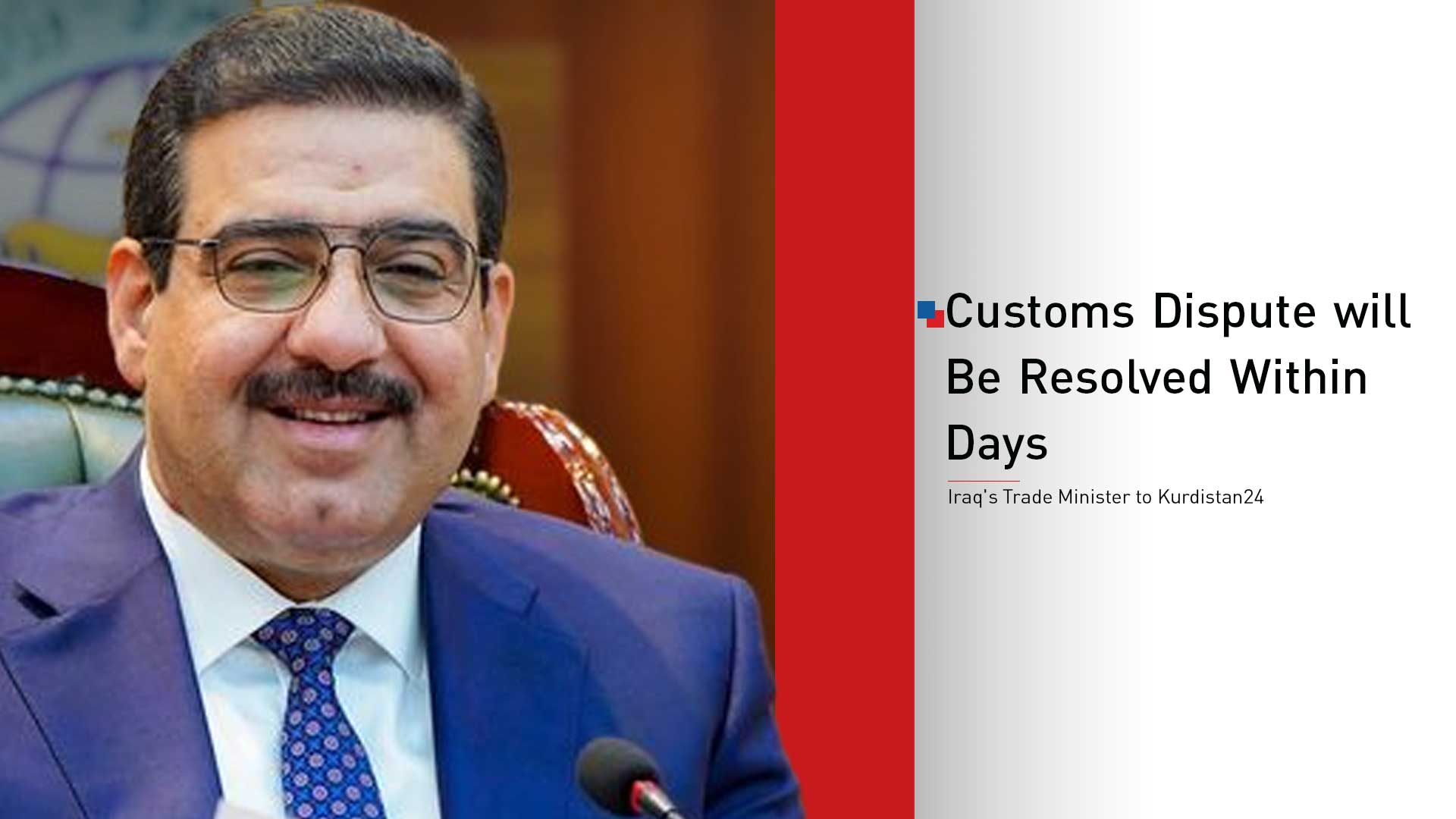
ERBIL (Kurdistan24) - Iraq's minister of trade has told Kurdistan24 that a dedicated committee has been formed to resolve a protracted dispute over the ASYCUDA electronic customs system, and that a solution is expected within days — with coordination between Baghdad and the Kurdistan Region already underway.
Atheer Dawood Salman Al-Ghurairi, Iraq's minister of trade, made the announcement exclusively to Kurdistan24 on Thursday.
"A committee has been formed to resolve the ASYCUDA issue, and the problem will be resolved within the next few days," he said.
He also confirmed that Baghdad is in active coordination with the Kurdistan Regional Government to address the dispute and unify customs procedures across the country.
What is ASYCUDA?
ASYCUDA — the Automated System for Customs Data — is an internationally recognized electronic customs management platform developed by the United Nations.
Its stated objectives are to modernize and accelerate trade procedures, reduce corruption, and increase government revenue through the digitization of customs transactions.
The system's implementation in Iraq, however — particularly at border crossings between the Kurdistan Region and other parts of the country — has generated significant problems for traders.
Chief among them is the issue of double taxation: goods imported through Kurdistan Region border crossings have in some cases been subjected to customs duties a second time at markets elsewhere in Iraq, driving up prices for consumers.
The dispute reflects a deeper tension between Baghdad and Erbil over customs policy. The federal government in Baghdad has pushed for the unification of customs procedures nationwide as a means of preventing tax evasion and increasing public revenue.
The Kurdistan Regional Government, for its part, has asserted its constitutional rights over the management of its own border crossings, while also signaling a willingness to implement the system — on the condition that it be applied through the Region's own institutions.
Several technical meetings between delegations from both sides have taken place in recent months in an effort to bridge the gap, and the minister's latest statement suggests those efforts may now be approaching a resolution.