Ceasefire Under Strain as Israel, Hezbollah Test Limits of Escalation Control
The Israel-Hezbollah ceasefire has devolved into a cycle of "coercive diplomacy," with both sides utilizing strikes to gain leverage. While Washington extends the truce, Hezbollah rockets and Israeli airstrikes continue, highlighting the failure of a stable enforcement architecture.
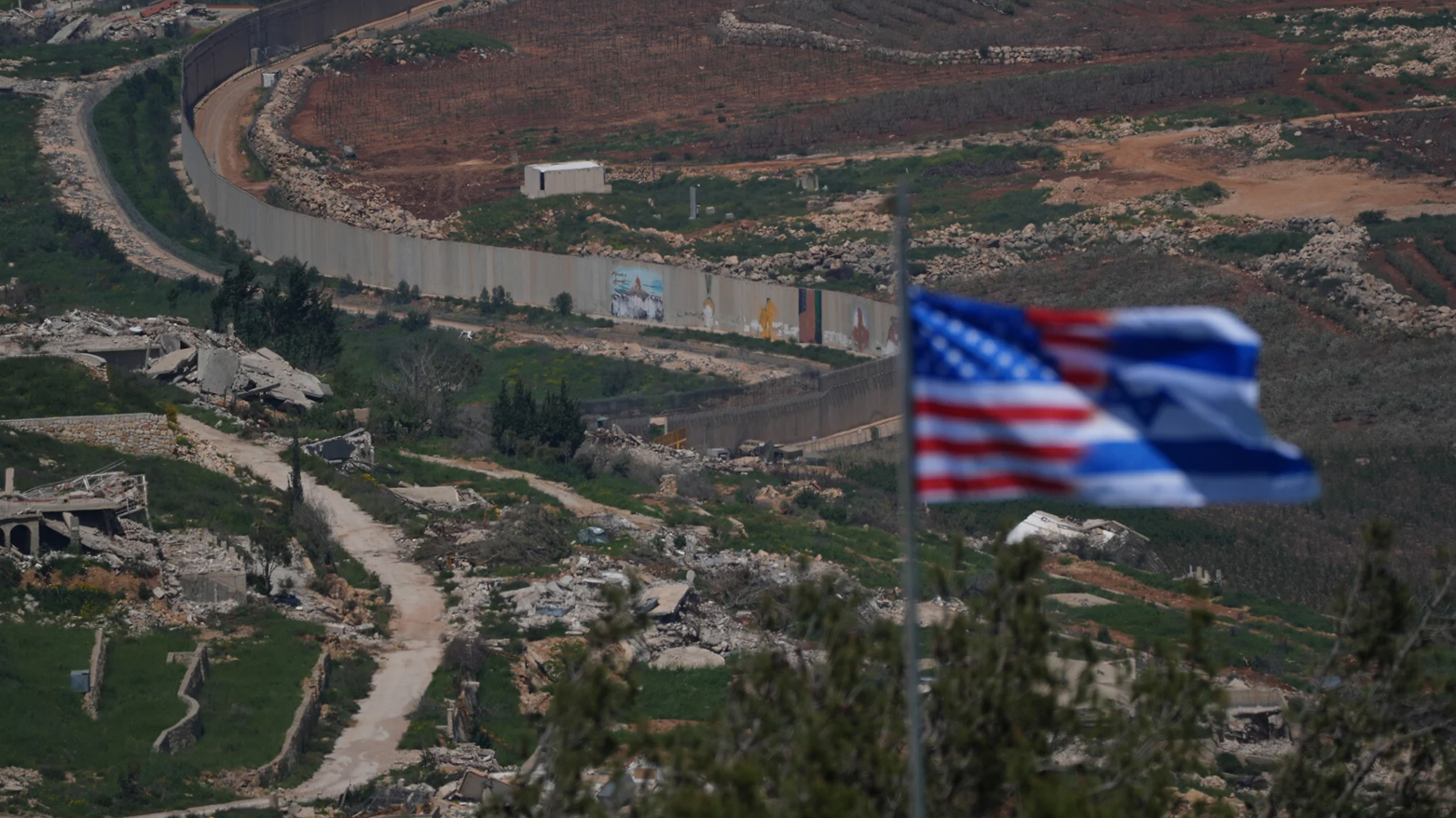
ERBIL (Kurdistan24) - A fragile ceasefire arrangement between Israel and Hezbollah is beginning to resemble less a stabilizing mechanism than a managed escalation channel, as both sides continue exchanging strikes while diplomatic envoys negotiate in Washington under U.S. mediation.
The latest rupture came after Hezbollah fired rockets toward northern Israel late Thursday, according to reporting by The Times of Israel, which cited Israeli military statements confirming the incident. The exchange triggered immediate Israeli airstrikes on southern Lebanon, carried out, the IDF said, against Hezbollah-linked infrastructure in areas including Khirbet Selm and Touline.
The strikes unfolded hours before U.S. President Donald Trump announced an extension of ceasefire arrangements, underscoring a widening gap between diplomatic sequencing in Washington and kinetic developments on the ground.
The Moment the Truce Fractured
Hezbollah’s rocket fire toward the Israeli border community of Shtula marked what The Times of Israel described as the first major breach of the recently established truce framework. The Israeli military said all four rockets were intercepted, but emphasized that the launch represented a direct violation of the ceasefire terms.
Israel responded, according to IDF statements cited by Israeli media outlets, with strikes on operational buildings and rocket launchers it said were prepared for additional attacks. Hezbollah, for its part, claimed responsibility for the salvo, telling Lebanese media it was retaliation for Israeli artillery fire in southern Lebanon’s Yater area, which reportedly caused injuries.
Lebanese health authorities, as reported by regional outlets and cited in international coverage, said additional Israeli strikes in the south—including in Shoukin near Nabatieh—resulted in fatalities, further intensifying competing narratives over escalation responsibility.
Fire for Fire, Claim for Claim
According to the Israeli military, Hezbollah fighters were killed in southern Lebanon after approaching Israeli positions in Aynata, with forces describing them as “armed terrorists posing an immediate threat,” a formulation reported in official IDF communications.
In a separate incident, Hezbollah claimed it launched rocket and drone attacks against Israeli forces in southern Lebanon, including near Taybeh and Bint Jbeil, assertions reported by Lebanese-aligned media outlets.
The IDF said an explosive-laden drone struck a reservist soldier lightly, while Israeli forces carried out retaliatory strikes in the area.
The Times of Israel reported that Hezbollah also said it downed an Israeli drone over Majdal Zoun, though Israeli authorities did not confirm the loss of the aircraft.
The Architecture of an Unstable Truce
The ceasefire framework now under strain, according to diplomatic reporting from Washington, was intended as a phased de-escalation mechanism rather than a comprehensive end to hostilities. However, its implementation has instead produced what analysts describe as parallel tracks of diplomacy and combat.
Israel continues to target what it describes as Hezbollah infrastructure embedded within civilian areas.
The IDF, in statements cited by multiple Israeli outlets, said it uncovered an underground Hezbollah command center beneath a building in Khiam and struck rocket launch sites in southern Lebanon.
Hezbollah, designated as a terrorist organization by several Western governments, remains both a non-state military actor and a central component of Lebanon’s deterrence posture, complicating enforcement of any state-to-state agreement.
Coercion by Other Means
The current escalation pattern reflects what security analysts often describe as coercive diplomacy under fire: a cycle in which both sides use calibrated force to shape negotiating leverage.
Israeli officials, as reported by The Times of Israel, have framed strikes as preventive actions aimed at degrading Hezbollah’s operational capacity.
Hezbollah, meanwhile, has publicly justified its rocket fire as a response to Israeli violations, a narrative echoed in Lebanese media statements attributed to the group.
What appears as tactical retaliation is, in effect, structured signaling within a constrained escalation regime designed to influence diplomatic leverage without triggering full-scale war.
The United States, according to diplomatic sources cited in U.S. and Israeli reporting, is attempting to stabilize this cycle through incremental ceasefire extensions announced alongside ongoing negotiations in Washington involving Israeli and Lebanese representatives.
A Border That No Longer Behaves Like a Border
In southern Lebanon, the conflict has produced what Lebanese officials describe as persistent but uneven displacement conditions. Reporting from the region indicates that communities near Nabatieh and Bint Jbeil experience intermittent airstrikes followed by temporary returns to civilian activity.
The Associated Press, citing Lebanese authorities, has reported widespread damage and displacement since renewed escalation began, with infrastructure repeatedly struck in areas identified by Israel as Hezbollah operational zones.
The result is a border environment that no longer functions as a clear military line, but rather as a shifting zone of episodic violence.
Escalation Without End-State
The durability of the current arrangement depends, according to analysts cited in Western diplomatic reporting, on whether limited violations can remain below escalation thresholds.
Three scenarios are emerging in policy assessments: a managed escalation cycle, a rapid breakdown following a high-casualty event, or tighter external enforcement through U.S.-led mediation efforts.
Indicators being closely monitored include the frequency of cross-border fire, Israeli strike depth in southern Lebanon, and whether diplomatic talks in Washington produce binding enforcement mechanisms rather than repeated ceasefire extensions.
In the absence of a stable enforcement architecture, the Israel–Hezbollah frontier has become less a boundary between war and peace than a continuously negotiated space of controlled instability, where diplomacy and force operate in tandem rather than in resolution.