Herpetologists Identify 'Giant' Glass Lizard Species in Kurdistan Region
The documentation of the giant glass lizard in Kurdistan highlights the critical need for accurate biological classification to protect harmless reptiles from misidentification.
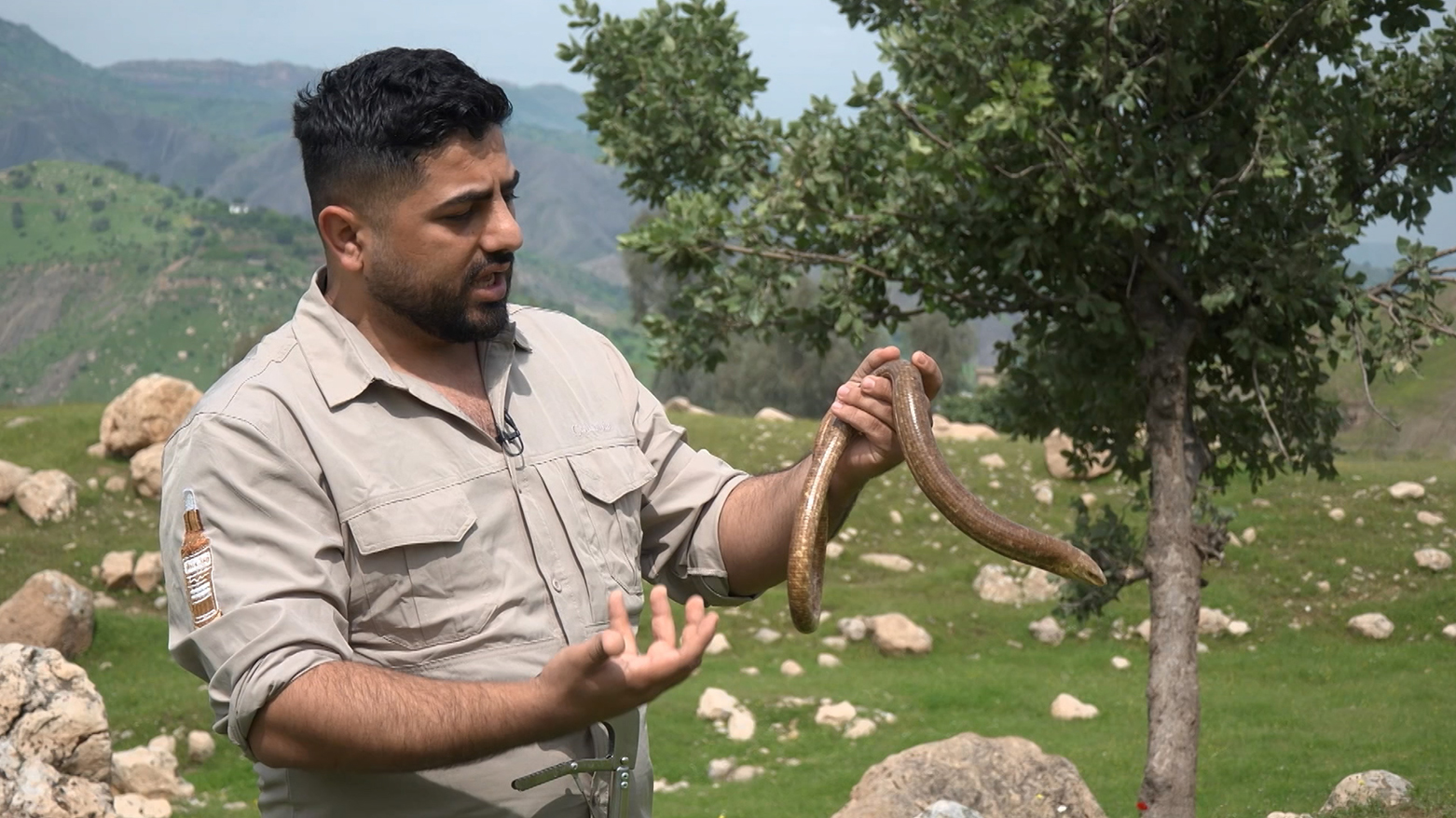
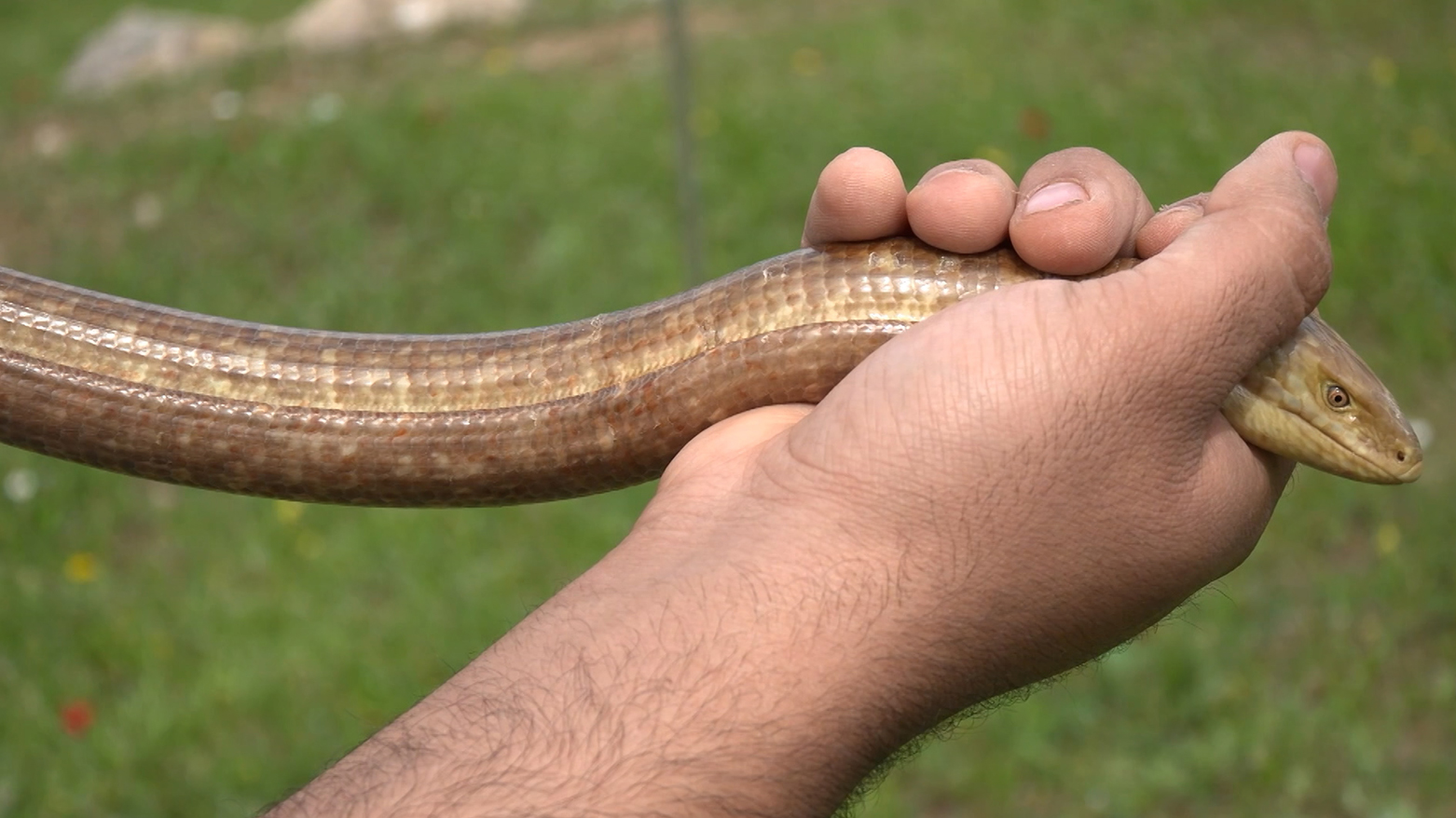
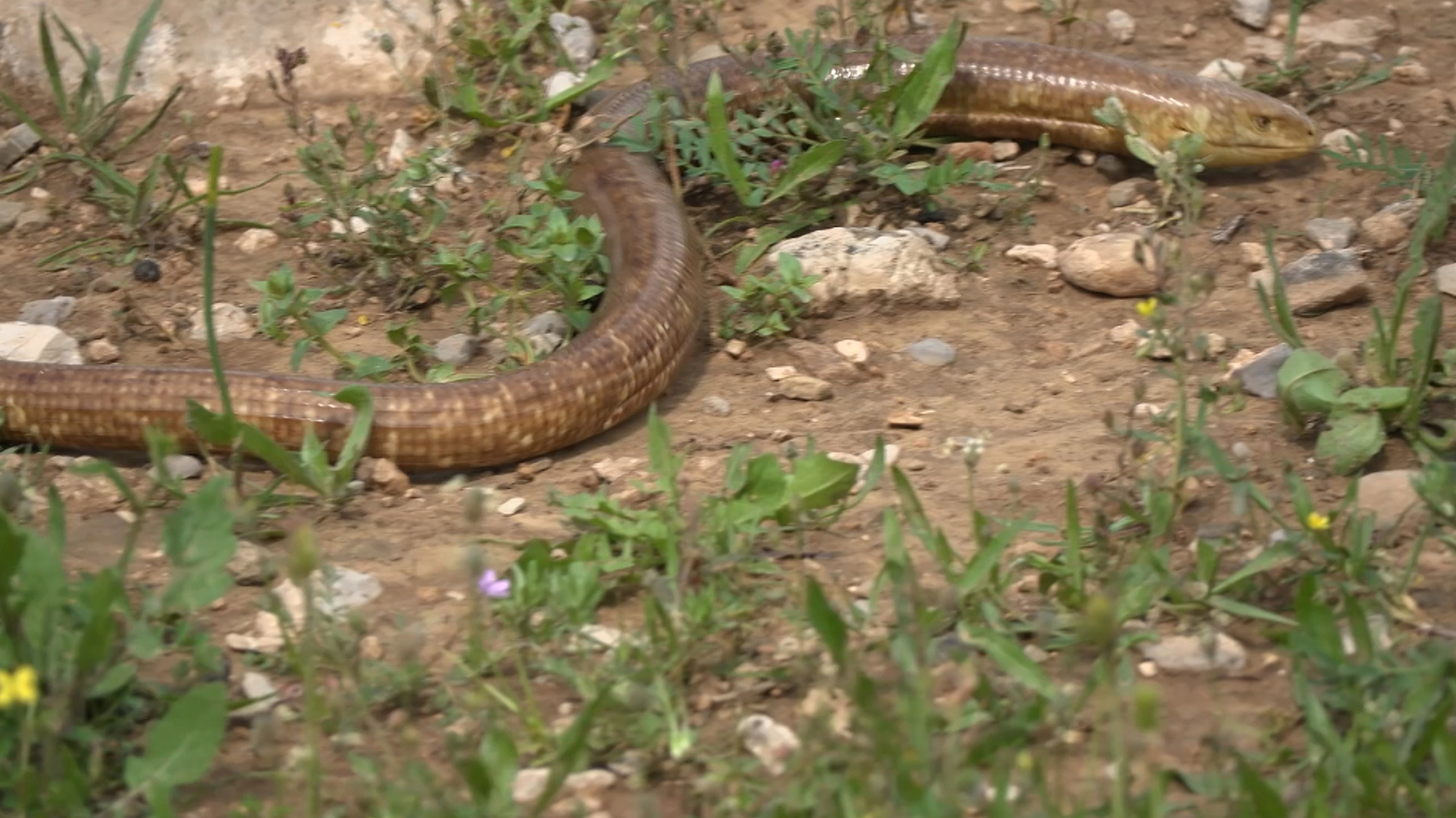
ERBIL (Kurdistan24) - Following localized reports regarding what was popularly described as the world's largest lizard found in Kurdistan, initially mistaken by many for a massive snake, herpetologists have formally identified the specimen as a large species of legless glass lizard, dispelling viral claims through precise biological classification.
Understanding this discovery requires examining the region's broader herpetological environment. According to a VOA Kurdish report, local biodiversity includes evolutionary adaptations like legless lizards, which are frequently misidentified and targeted by a public fearful of snakes.
To further clarify this species' taxonomy globally, the Missouri Department of Conservation's biological profile on the western slender glass lizard explains that these creatures belong to the family Anguidae, a diverse group of lizards that exhibit snake-like traits but possess distinctly different anatomical structures.
The identification of this large glass lizard is biologically significant, as it underscores a persistent taxonomic confusion in the Middle East between legless lizards and true snakes.
It also constitutes an important record of regional biodiversity. While such lizards are found across a wider geographic range, experts indicate that the specimens documented in Kurdistan rank among the largest recorded globally, reaching lengths of up to 1.5 meters.
By confirming the presence of these large legless specimens in the Kurdistan Region, researchers aim to correct deep-seated public misconceptions, protecting harmless reptiles from being eradicated due to their superficial resemblance to venomous predators.
Documenting the Glass Lizard in Kurdistan
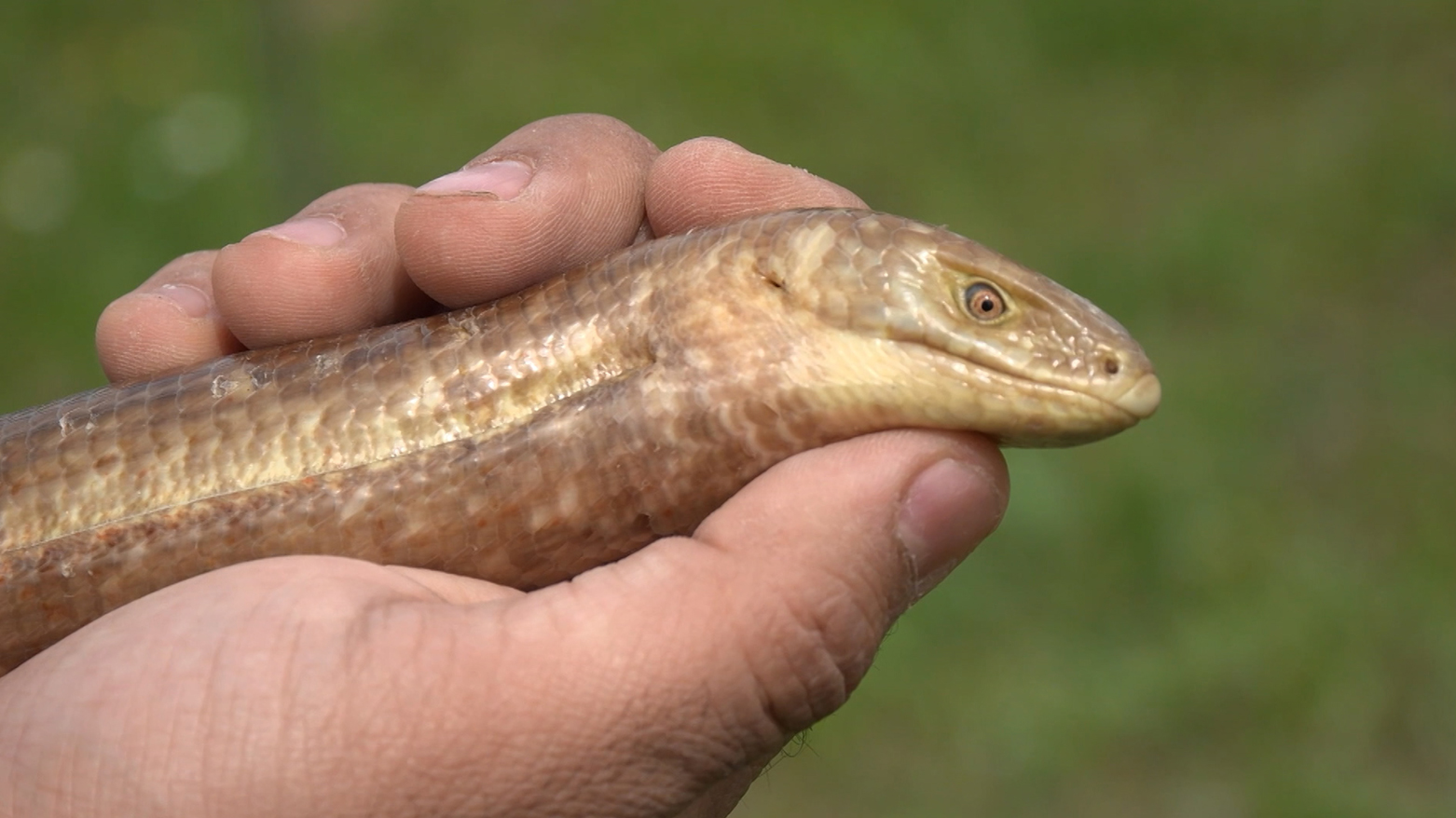
Sherwan Abdulrahman, a regional herpetologist, addressed the recent documentation of the reptile in an interview on Sunday with Kurdistan24's correpondent Aras Amin.
He confirmed that the specimen is a "Glass Lizard," locally referred to in Kurdish as a legless lizard because it completely lacks arms and legs.
According to Abdulrahman, the documented lizard measures between 130 and 150 centimeters in length.
While glass lizards exist globally in various forms, Abdulrahman noted that reaching such a massive size appears to be a specific morphological trait of the specimens found in the Kurdistan Region.
Morphological Distinctions Between Lizards and Snakes
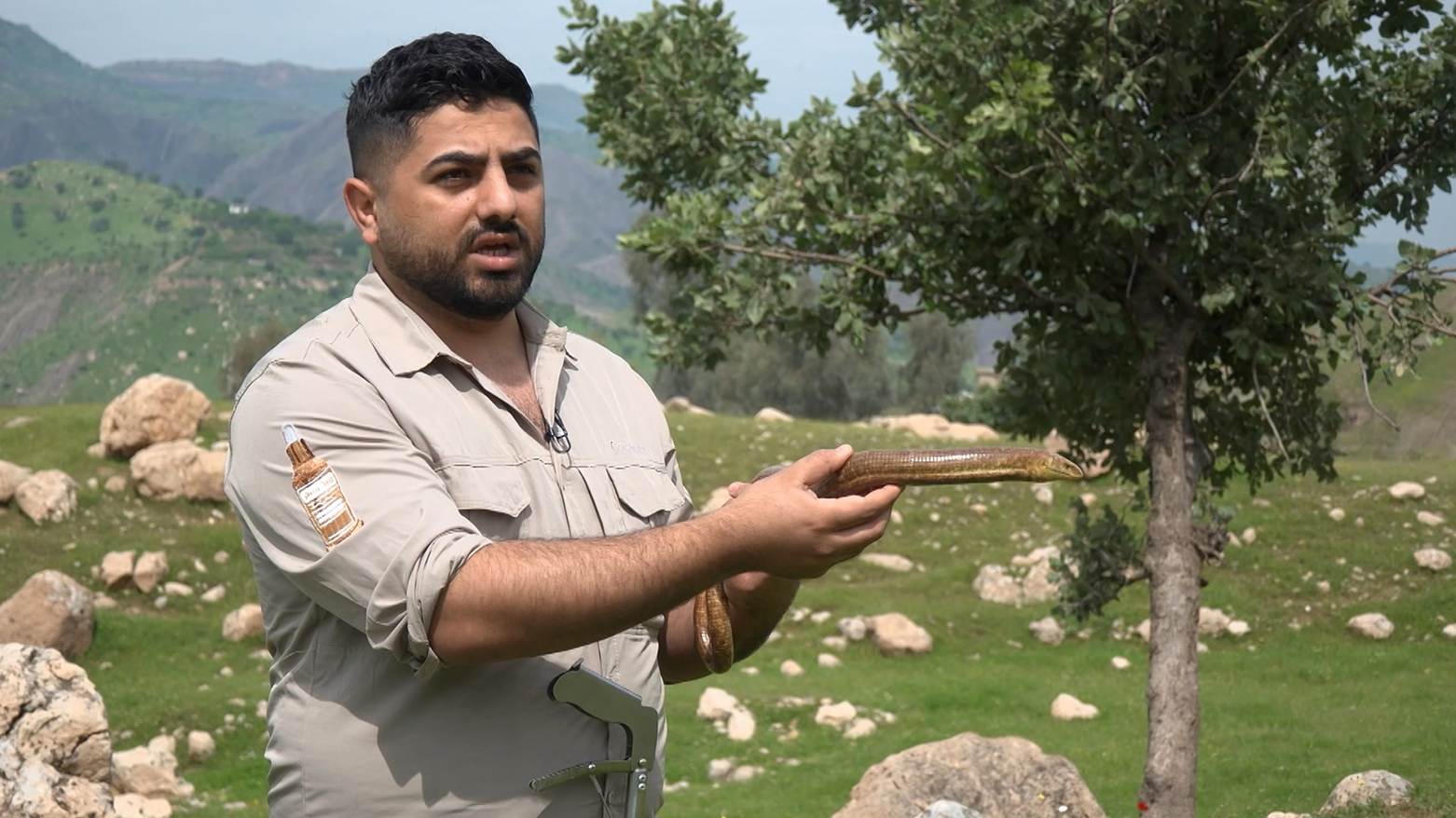
To address public confusion, scientists emphasize specific morphological traits that definitively separate legless lizards from true snakes.
"There are a few things that help us know it's not a snake," Abdulrahman stated. Primarily, glass lizards possess external ear holes.
Snakes lack ear openings entirely, gathering sensory information instead through their tongues via vibrations.
Furthermore, glass lizards have movable eyelids, allowing them to open and close their eyes, a biological feature absent in all snake species.
The Missouri Department of Conservation corroborates these distinctions, noting in its species profile that the presence of movable eyelids, external ear openings, and a lateral groove running down the side of the body are standard, definitive markers of a glass lizard.
Anatomical Traits and Addressing Misconceptions
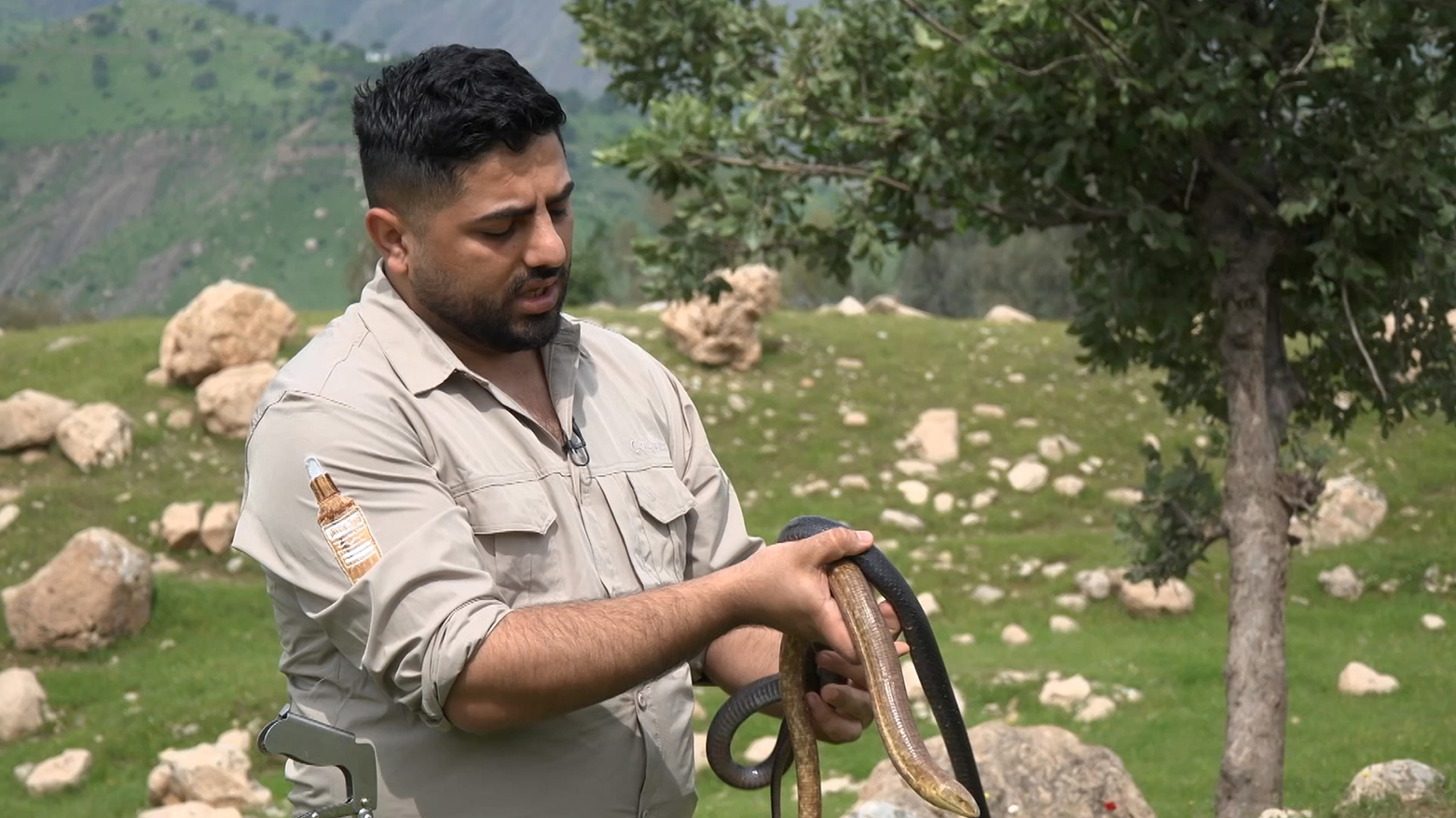
The rigid skeletal and dermal structure of the glass lizard has generated historical misconceptions in Kurdistan.
Abdulrahman explained that the reptile possesses hard skin on its upper and lower body, making it physically unable to slither or stretch in the flexible manner of a true snake.
Instead, it relies on a lateral groove, a soft line of expandable skin and muscle running along its side, to accommodate expansion when breathing or consuming food.
Historically, local populations observed ticks and flies attaching to this softer lateral groove, leading to a cultural myth that the creature was a snake that consumed insects through its side.
"It has been ingrained in the minds of all our ancestors that this is a snake, which is wrong, and that it eats flies and insects through that groove," Abdulrahman clarified, confirming that the lizard consumes prey exclusively through its mouth.
As the Missouri Department of Conservation notes, unlike snakes, glass lizards do not have flexible jaws that can unhinge, strictly restricting them to smaller prey items no larger than their heads.
Regional Biodiversity and the Threat of Misidentification
The survival of legless lizards is heavily impacted by the public's general fear of reptiles.
The VOA Kurdish report indicates that researchers from the University of Sulaimani have documented 31 snake species in the Kurdistan Region.
Of these, only four are venomous: the endangered Blunt-nosed Viper, the high-altitude Kurdistan Viper, the semi-venomous Montpellier Snake, and the Desert Black Cobra.
Despite the overwhelming majority of snakes posing no threat to humans, a cultural perception of danger persists.
Korsh Ararat, a biology professor at the University of Sulaimani, noted that glass lizards, also known locally as "Reqemar", have lost their legs through evolution.
Because of limited public education, residents frequently mistake these lizards for venomous snakes, resulting in their unnecessary killing.
Professor Soran Ahmed added that even non-venomous snakes, such as the large Black Whip Snake, are frequently killed because they are visually confused with the smaller Desert Black Cobra.
Comparative Classification and Ecological Role
The taxonomic family Anguidae, as detailed by the Missouri Department of Conservation, encompasses approximately 130 species across 14 genera globally, including Ophisaurus (glass lizards).
The genus name combines the Greek root words for "snake" and "lizard," reflecting their physical appearance. Glass lizards exhibit unique defensive behaviors; when attacked, their fragile tails can detach and continue to wiggle, distracting predators while the lizard makes a speedy retreat.
Both legless lizards and non-venomous snakes are vital to maintaining regional ecological stability. Biologists emphasize that these reptiles actively control pest populations.
Eradicating these predators, researchers warn, leads to surges in rodent populations that can damage crops and disrupt the entire ecosystem.