Erbil Marks World Dance Day with Three Tableaux Celebrating Kurdish Folk Tradition
The Erbil National Arts Ensemble presented Bahar, Govend, and Ladê in an annual celebration that brought together Kurdish, Assyrian, and Western Kurdistan performers
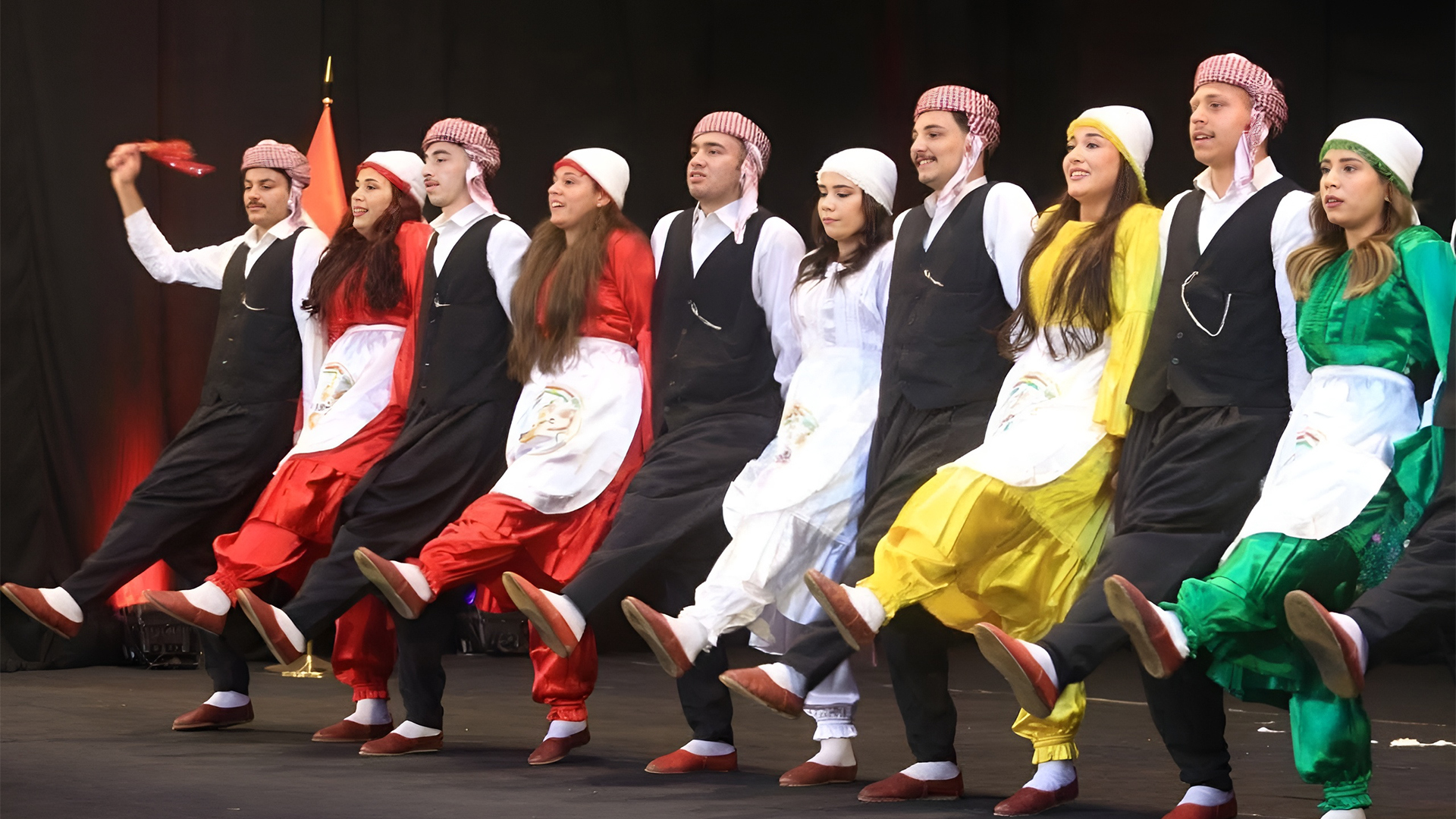
ERBIL (Kurdistan24) - Three tableaux, three visions of Kurdish movement and memory, and a hall full of spectators: Erbil's cultural hall became the stage on Wednesday for the city's annual celebration of World Dance Day, as the Erbil National Arts Ensemble marked the occasion with a program that ranged from the energy of spring to the rhythms of village life.
Himdad Lashkari, director of the Erbil National Arts Ensemble, told Kurdistan24 on Wednesday, that the event was the ensemble's contribution to a day recognized by UNESCO since 1982 and now observed by more than 150 countries.
"Today is World Dance Day," he said. "We as the Erbil National Arts Ensemble commemorate it every year."
The first tableau, titled Bahar — the Kurdish word for spring — was choreographed by Lashkari himself, with music composed by Badraddin Babakr and costume design by Fryad Hassan.
The second, titled Govend — the name for the traditional Kurdish circle dance — was also choreographed by Lashkari, again with music by Badraddin Babakr and costumes by Fryad Hassan. Singer Abbas Ashiq performed the vocal accompaniment.
The third tableau, Ladê — village — was choreographed by Dilshad Barbayar, with music once again by Badraddin Babakr. The songs were performed to the voices of Karim Gulani and the late Jalal Saidi, whose inclusion gave the evening a note of tribute alongside celebration.
The evening extended beyond the ensemble's own program. Assyrian brothers joined the performance as guests, adding a dimension of intercultural expression to the occasion.
The troupe of Koma Afrin, a dance group from Western Kurdistan, also participated — a presence that gave the event a pan-Kurdish resonance.
The ensemble also took the occasion to present honors to several cultural figures, recognizing Azad Saeed, Silvana William, and Nizam Shakur for their contributions to the arts.
The event was organized under the auspices of the Erbil Directorate General of Culture and Arts, and stands as part of the ensemble's long-running commitment to preserving and presenting Kurdish folk performance traditions as a living, annual practice.