Iraq Faces Severe Electricity Shortfall Ahead of Summer 2026, Energy Report Warns
Iraq faces a severe summer electricity crisis as reliance on unstable Iranian gas, war-related disruptions, and funding shortfalls widen the gap between power supply and demand.
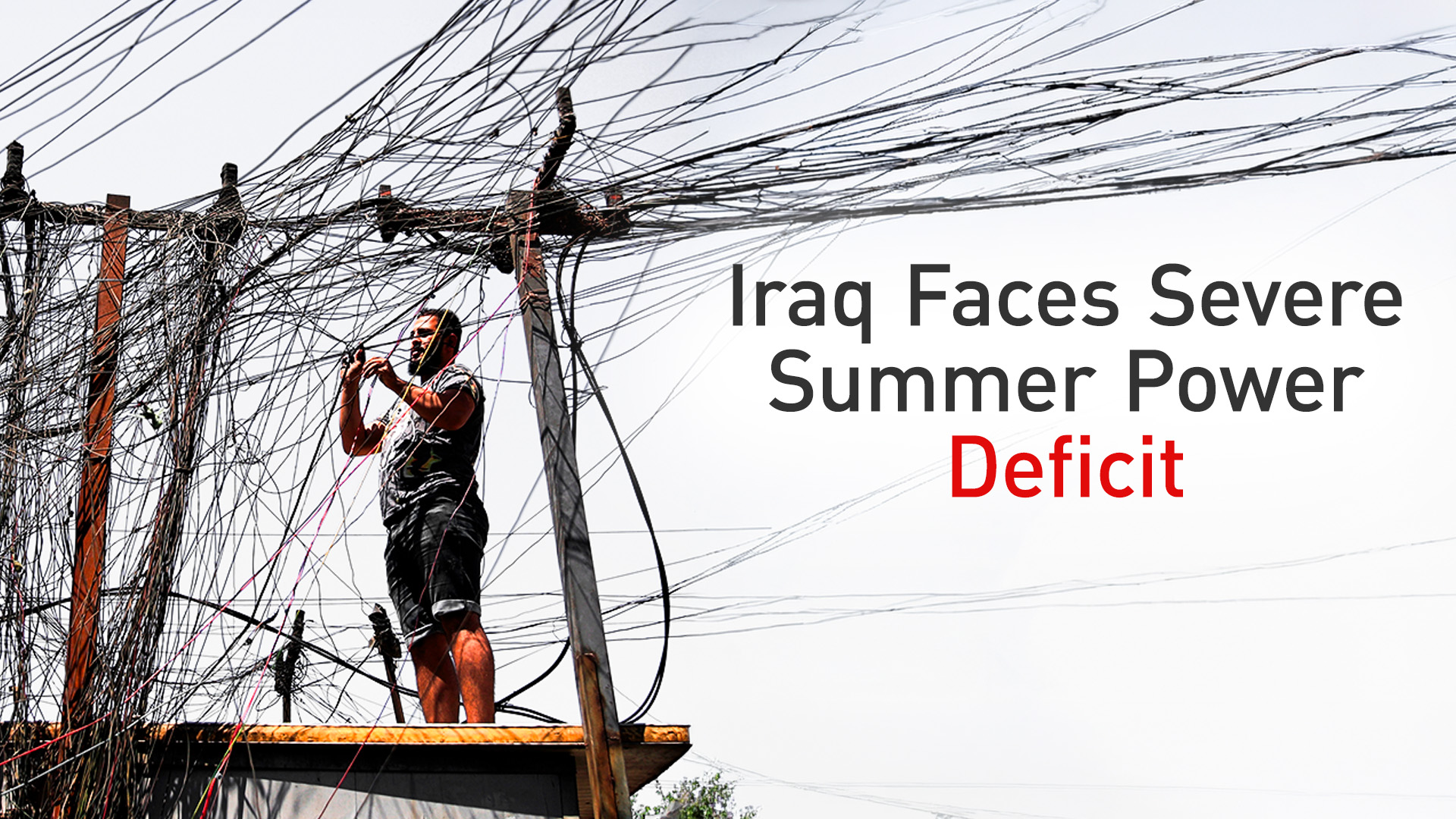
ERBIL (Kurdistan24) - The Washington-based global platform Attaqa (Energy) warns in its latest report on Sunday that Iraq's electricity crisis is expected to become very severe by the summer of 2026.
According to the platform, the projected shortfall is primarily attributed to Iraq's heavy, structural reliance on Iranian gas imports, which remain highly unstable due to recent political tensions and the outbreak of regional war.
The ongoing gap between supply and demand continues to plague the nation's power grid.
According to the Attaqa energy report, as of the end of Jan. 2026, Iraq's electricity production had reached 29 gigawatts (GW). However, the platform noted that the country requires approximately 40 GW to meet baseline national demand.
To address this persistent deficit, the Iraqi government has pursued diversification strategies, including solar energy.
The Attaqa platform reported that Iraq plans to produce 7,500 megawatts (MW) of electricity through 15 solar energy projects, implemented in direct cooperation with the American conglomerate General Electric and the German company Siemens.
However, experts cited by the platform cautioned that these initiatives require several years of continuous work and will not resolve the immediate crisis ahead of the peak summer demand period.
Supply Gap Widens Ahead of Summer
The systemic fragility of Iraq's power infrastructure has been severely compounded by recent macroeconomic shocks.
According to the Attaqa energy report, efforts to link the Iraqi power grid with neighboring countries are ongoing, but technical and financial obstacles have become significant hindrances.
The financial capacity of the state to manage the crisis has been deeply compromised.
The platform emphasized that due to the war and the closure of the Strait of Hormuz on Feb. 28, 2026, Iraq's oil revenue decreased by approximately 90%.
According to Attaqa, this catastrophic drop in national income created a major obstacle for the government in providing the budget necessary for emergency fuel purchases.
As a result, Iraqi citizens remain highly vulnerable to fluctuations in imported fuel supplies.
The Attaqa platform reported that, according to the latest data, Iranian gas exports to Iraq dropped to 15 million cubic meters per day last week, a decline from previous levels of 20 million cubic meters.
Dependence on Iranian Gas
The roots of the current crisis are tied to a long-standing structural dependency on Tehran.
Before the escalation of military conflict, Iraq relied on Iranian gas to generate approximately 30 to 40 percent of its electricity. The vulnerability of this arrangement was highlighted by international policy shifts prior to the war.
In Mar. 2025, the United States ended a sanctions waiver that had allowed Iraq to import electricity directly from Iran.
According to The Associated Press, Washington declined to renew the exemption as part of its "maximum pressure" campaign against Tehran, prompting immediate fears of power cuts in Baghdad.
Reuters reported simultaneously that Iraqi energy officials warned the policy shift could slash daily electricity output by up to a third if gas imports were similarly threatened.
Even before the imposition of war-related damages, Iranian supplies proved unreliable.
Reuters reported in Dec. 2025 that Iranian gas flows halted entirely due to technical issues on the Iranian side, causing a loss of 4,000 to 4,500 MW from Iraq's grid.
Similar interruptions occurred in January and Feb. 2026, which the Iraqi Electricity Ministry attributed to Iran's domestic heating needs amid cold weather.
Previously, Kurdistan24 reported during this period that these stoppages forced severe load-shedding and emergency measures across the country.
Impact of War and Infrastructure Damage
The situation deteriorated sharply with the outbreak of the U.S.-Israeli war against Iran in Feb. 2026. The direct targeting of Iranian energy infrastructure had immediate consequences for the Iraqi power grid.
On Mar. 18, following reported Israeli strikes on Iran's massive South Pars gas field, flows to Iraq stopped completely.
According to Reuters, which cited Iraqi Electricity Ministry spokesperson Ahmed Moussa, the halt knocked approximately 3,100 MW offline almost immediately.
"As a result of developments in the region, Iranian gas flows to Iraq were completely halted," Moussa told the state news agency, as reported by Reuters.
While partial resumptions occurred days later, supplies remained critically low.
Reuters noted that flows restarted at just five million cubic meters per day, barely a tenth of normal contracted volumes, stabilizing the grid temporarily at around 14,000 MW.
Local reporting highlighted the severity of these reductions.
In an Apr. 4, 2026 article, Kurdistan24 quoted ministry officials confirming a full halt of supplies to southern Iraq and sharp reductions to central regions, linking the disruptions explicitly to damage at Iranian energy facilities.
Efforts to Diversify Energy Sources
As the summer approaches, the projected deficits are expected to widen.
By late April, a previous Kurdistan24 report warned of looming summer blackouts.
According to previous Kurdistan24 reporting on this matter, the Iraqi Electricity Ministry projected a massive 27,000 MW deficit during peak demand periods, as Iranian imports dropped to just 18 million cubic meters daily against a required volume of approximately 50 million cubic meters.
To mitigate the shortfall, Iraqi authorities have been forced into greater reliance on expensive and polluting liquid fuels.
As Reuters observed in earlier coverage, Baghdad had begun exploring alternatives, such as importing gas from Qatar and Oman, yet these options have not materialized at the scale required to replace Iranian volumes.
Although Iraq is attempting to increase domestic gas production to end its reliance on foreign sources, experts cited by the Attaqa energy report believe this plan will not provide short-term relief.
The intersection of aging power plants, the continued flaring of Iraq's own domestic gas resources, and severe budgetary constraints ensure that generation remains well below peak demand requirements.