Trump Escalates Pressure on Iran with Stark Warning Over Hormuz Strait
U.S. president signals potential for intensified military action as Gulf tensions remain volatile
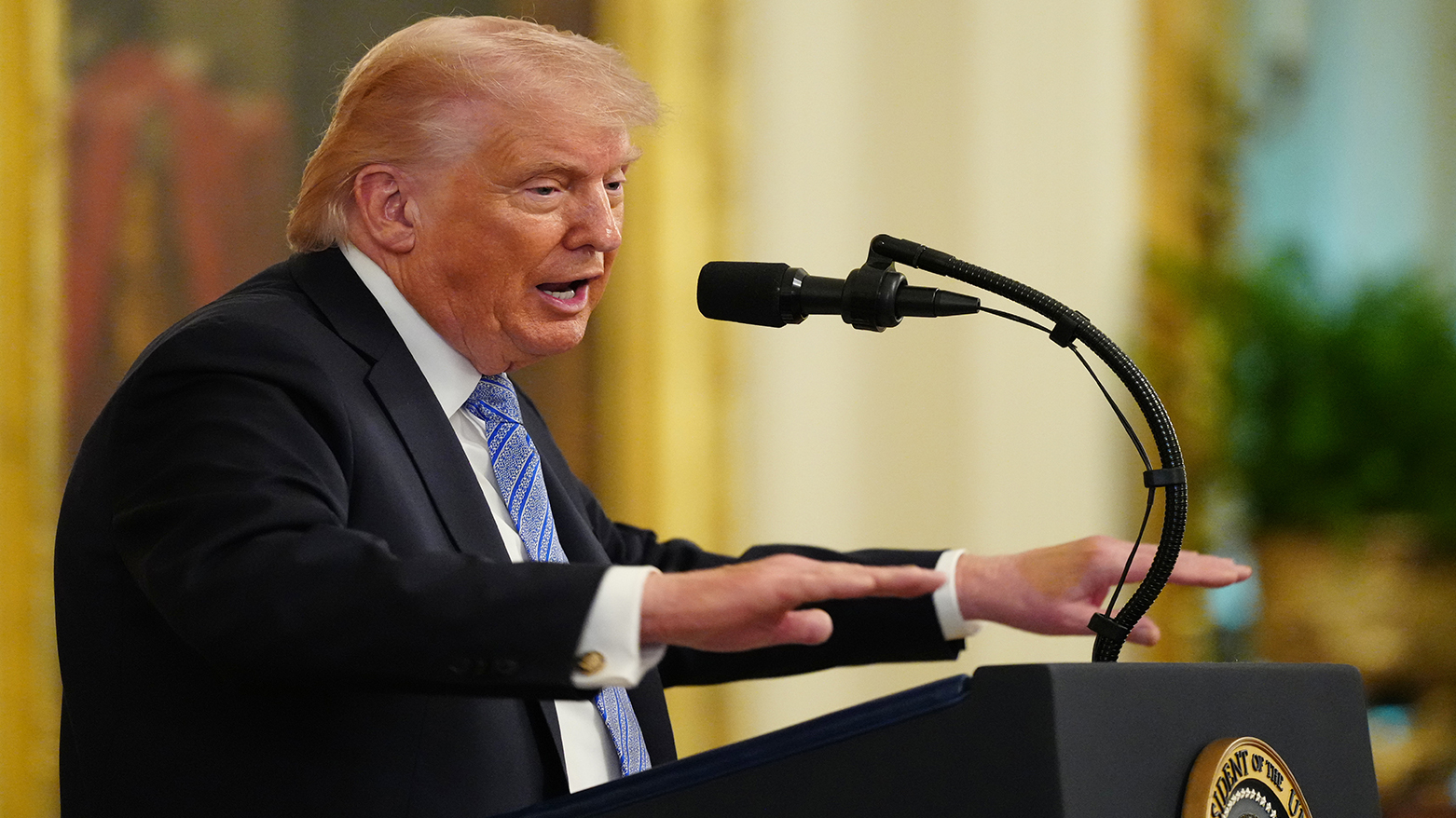
ERBIL (Kurdistan24) — U.S. President Donald Trump on Wednesday issued a sharply worded statement warning Iran of renewed military action if it fails to meet unspecified commitments tied to ongoing tensions in the Gulf, particularly around the strategic Strait of Hormuz.
“Assuming Iran agrees to give what has been agreed to, which is, perhaps, a big assumption, the already legendary Epic Fury will be at an end, and the highly effective Blockade will allow the Hormuz Strait to be OPEN TO ALL, including Iran,” Trump said, framing the situation as contingent on Tehran’s compliance.
He added a direct warning: “If they don’t agree, the bombing starts, and it will be, sadly, at a much higher level and intensity than it was before.”
Trump’s remarks come at a time of heightened uncertainty in the Gulf, where a tenuous ceasefire between the United States and Iran has struggled to translate into lasting stability.
The Strait of Hormuz — a narrow maritime corridor through which roughly a fifth of global oil supply passes — remains central to both economic and military calculations.
Any disruption to traffic through the Strait of Hormuz has immediate global implications, affecting energy markets, shipping insurance costs, and broader economic confidence.
In recent months, intermittent tensions, including threats to shipping and regional infrastructure, have underscored how quickly the situation can deteriorate despite diplomatic efforts.
Trump’s reference to a “highly effective Blockade” suggests a continuation — or potential tightening — of maritime restrictions aimed at limiting Iran’s ability to project power or influence shipping lanes.
While details remain unclear, such measures historically involve naval patrols, sanctions enforcement, and coordination with regional allies to monitor and control key transit routes.
Reopening the strait “to all, including Iran,” as Trump described, implies a conditional framework in which Tehran’s compliance would lead to eased restrictions — a proposition analysts say reflects a coercive diplomacy model combining military threat with economic leverage.
The warning of intensified bombing raises concerns among regional observers, particularly given the already fragile security environment. Previous rounds of confrontation have demonstrated how quickly escalation can spread beyond initial targets, drawing in regional actors and affecting civilian infrastructure.
Military analysts note that any expansion in the scale or intensity of strikes would likely trigger retaliatory measures, potentially threatening Gulf states, international shipping, and energy installations.
Trump’s statement also reflects enduring tensions in U.S.-Iran relations, which have oscillated between confrontation and negotiation for decades. The current dynamics are further complicated by shifting alliances in the region, ongoing conflicts, and the strategic importance of energy security.
For Gulf countries, the stakes remain particularly high. Stability in the Strait of Hormuz is not only a security concern but an economic necessity, underpinning export revenues and broader development strategies.
Whether Trump’s warning translates into concrete policy action remains uncertain. However, the language signals a readiness to escalate pressure at a moment when diplomatic pathways appear increasingly narrow.
For now, the region remains caught between deterrence and diplomacy — with the Strait of Hormuz once again at the center of a geopolitical standoff that carries global consequences.