Iran's Revolutionary Guard Threatens to Expand War Beyond the Region if Attacked Again
The Islamic Revolutionary Guard Corps warned on Wednesday that any renewed aggression against Iran would trigger strikes in locations far beyond the Middle East, escalating its rhetoric as nuclear negotiations between Tehran and Washington remain unresolved
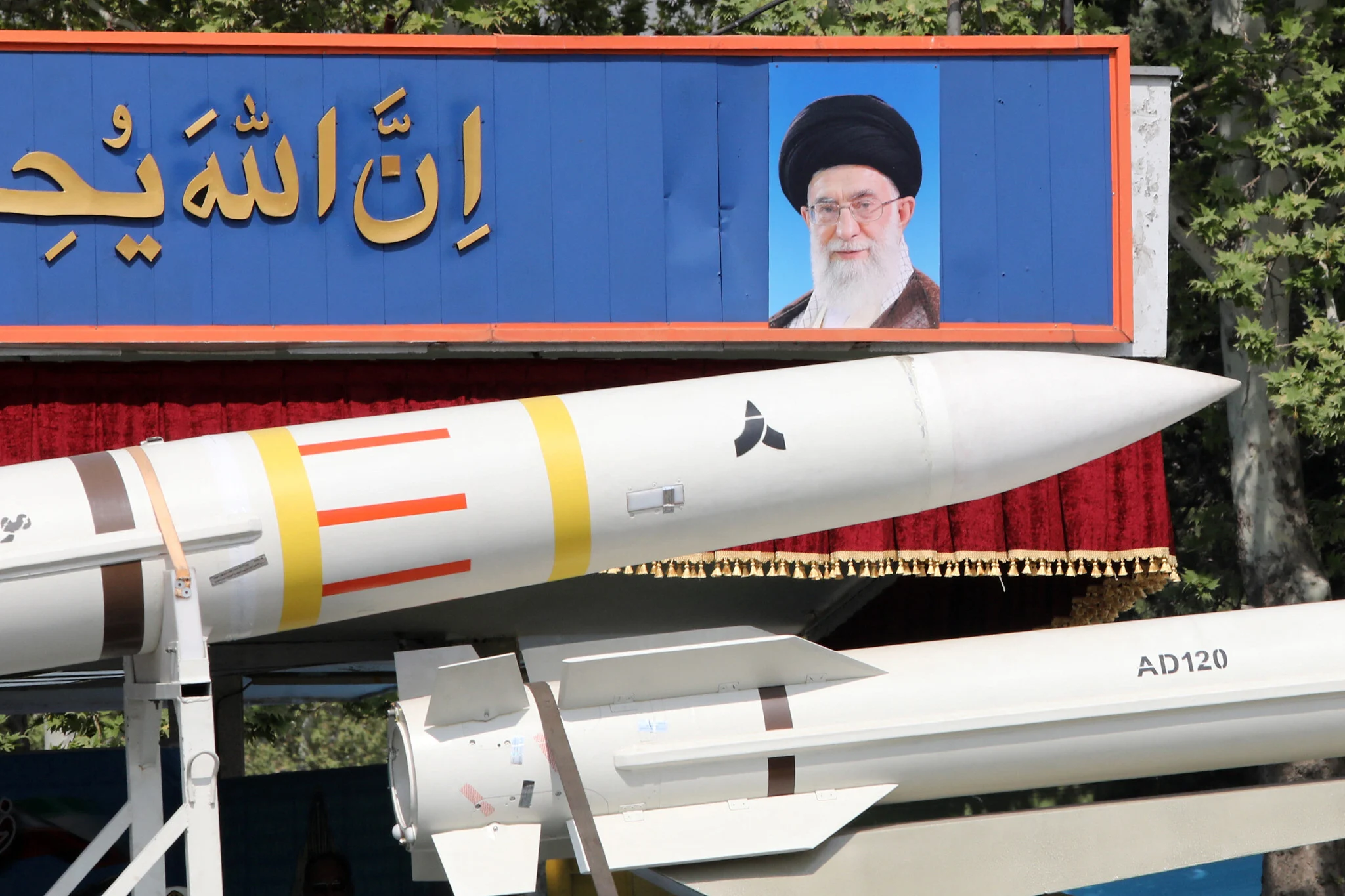
Erbil (Kurdistan24) - Iran's Islamic Revolutionary Guard (IRGC) Corps issued a stark warning on Wednesday, threatening to take the war far beyond the region if the United States and Israel launched fresh attacks against Iran, according to a statement published by the Iranian Fars News Agency.
The IRGC said in the statement that the "American-Zionist enemy," which it accused of failing to learn from what it described as repeated strategic defeats at the hands of the Islamic Revolution, had once again opened the door to threats. The force insisted that despite facing the combined military might of two of the world's most expensive armed forces, it had not yet deployed the full capabilities of the Islamic Republic of Iran against its adversaries. "If aggression against Iran is repeated, the regional war that was promised will this time extend beyond the region, and our crushing blows will bring you to your knees in places you cannot imagine," the IRGC said in the statement carried by Fars News Agency on Wednesday.
The force added: "We are men of war, and you will see our power on the battlefield, not in hollow statements and on virtual pages."
The warning marked a significant escalation in tone at a moment of acute regional tension. The IRGC had earlier in May threatened to target US sites in the Middle East and "enemy ships" if Iranian tankers came under fire, a day after US strikes against two Iranian tankers in the Gulf of Oman, Iranian media reported.
Separately, the Israeli Public Broadcasting Corporation KAN News reported that the IRGC had shifted its strategy from "regional defense" to increased aggression, with Iran implementing a series of operational escalations, including intensified strikes on energy infrastructure in Gulf states, missile barrages toward Dimona, and a long-range strike targeting the US base on Diego Garcia, roughly 2,485 miles (4,000 kilometres) away.
The broader conflict has already inflicted severe disruption on global energy markets. Starting on March 4, 2026, Iranian forces declared the Strait of Hormuz "closed," threatening and carrying out attacks on ships attempting to transit the waterway, through which roughly 27 percent of the world's maritime trade in crude oil and petroleum products flows, according to a Congressional Research Service report published by Congress.gov.
The United Nations Conference on Trade and Development warned that the disruption's ripple effects go far beyond the region, driving up oil prices, freight rates, insurance premiums, and food costs, with Brent crude rising above $90 per barrel, UNCTAD reported in March 2026.
Analysts have cautioned against underestimating the IRGC's resilience. Ali Alfoneh, a senior fellow at the Arab Gulf Institute in Washington and one of the foremost scholars of the organization, told NPR that the US and Israel had miscalculated the IRGC's strength and failed to fully appreciate its highly decentralized structure, in which every province maintains its own IRGC chief, a design that has enabled the force to continue fighting even as its senior leaders have been killed.
The IRGC's Wednesday statement came against a backdrop of sustained military confrontation. The conflict between Iran, Israel, and the United States flared into full-scale war in February 2026, following widespread protests inside Iran that signaled deep public frustration with the government, according to Britannica. The confrontation was preceded by a significant escalation on June 13, 2025, when Israel launched Operation Rising Lion, a preemptive strike on Iranian nuclear and ballistic missile sites, including Iran's main uranium enrichment facility at Natanz, with the IRGC's headquarters in Tehran catching fire during the attack and the force confirming the death of its commander-in-chief, Hossein Salami, according to the Counter Extremism Project. Antigovernment protests broke out again at the end of 2025 and quickly escalated into nationwide demonstrations that grew violent by January 2026, according to the Council on Foreign Relations, further destabilizing the government ahead of the February offensive.
Neither the White House nor Israeli officials have publicly responded to the IRGC's Wednesday statement. Nuclear negotiations between Washington and Tehran remain ongoing, with no breakthrough reported at the time of publication.