Analyst Urges Syrian Kurdish Parties to Engage Damascus, End Election Boycotts
Kurdish political analyst Shvan Ibrahim said Kurds must engage directly with Damascus and participate in Syria's political process, warning that boycotting parliament weakens representation.
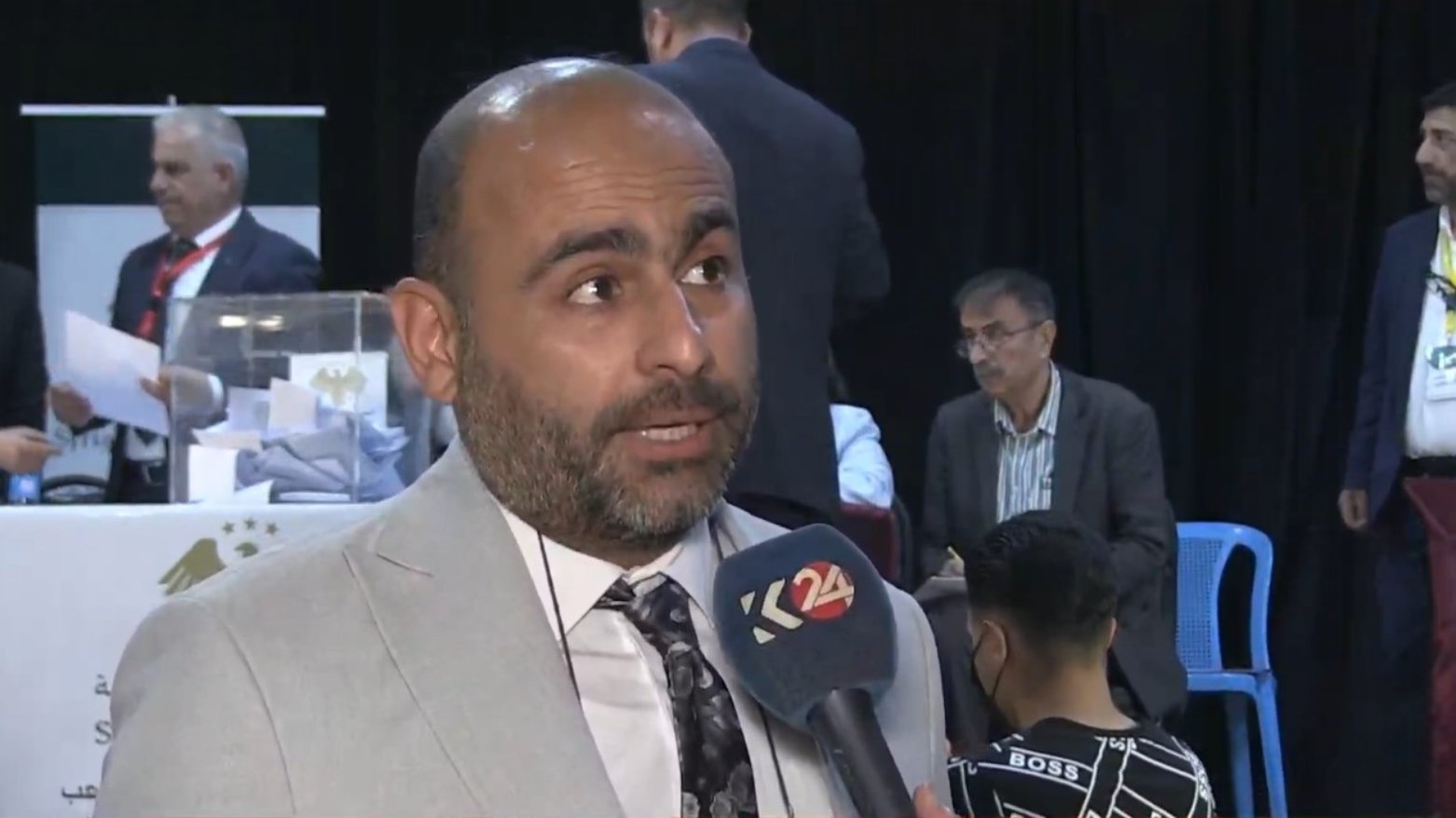
ERBIL (Kurdistan24) - Kurdish political analyst and writer Shvan Ibrahim has argued that Kurds must engage directly with Damascus to protect their interests, warning that boycotting Syria's political and electoral processes is a strategic error.
Speaking to Kurdistan24 on Sunday, Ibrahim urged the Kurdish National Council (ENKS/KNC) and other Kurdish parties to modernize their political methodology to keep pace with the shifting dynamics of the Syria's governance.
Ibrahim, who also serves as a member of the election committee in Qamishlo, stated that current Kurdish political strategies in Syria require a fundamental shift toward active institutional participation rather than withdrawal.
He suggested that the responsibility for the currently limited Kurdish representation lies with the political leadership that has conducted repeated, yet often inconclusive, negotiations with central government officials.
Highlighting the geopolitical necessity of a legislative presence, Ibrahim remarked that because all national laws and regulations originate within the Syrian parliament, a total absence from the body effectively silences Kurdish influence over the country's legal framework.
He asserted that a mutually dependent relationship exists between Kurdish actors and the central authorities, noting that Damascus seeks a political balance that cannot be achieved if Kurdish representatives are absent from the table.
The analyst was particularly critical of the ENKS, urging the council to abandon its "classical methods" of operation. Ibrahim argued that the traditional party structures are failing to adapt to a global and regional landscape that is rapidly evolving.
He contrasted the stagnation of traditional Kurdish political methods with newer administrative and military actors in the region, noting that successful movements are increasingly characterized by younger, educated, and more experienced leadership.
"We can no longer work in a classical manner," Ibrahim told Kurdistan24, emphasizing that the failure to reform will prevent ENKS and other parties from achieving political success in the future.
He further observed that the current economic and social instability is a burden shared by all Syrians, not just the Kurdish community, necessitating a more integrated approach to national politics.
The electoral process Ibrahim referred to took place across various districts in the Hasakah and Aleppo governorates on Sunday morning.
Polling stations for the Syrian People's Assembly elections opened at 8:00 AM local time in districts including Hasakah, Qamishlo, and Kobani. According to reports from the Syrian news agency SANA, these elections proceeded following initial delays caused by regional security obstacles.
SANA reported that the polling stations were scheduled to remain open until 12:00 PM, with the possibility of a one-hour extension if voter turnout did not reach the 50 percent threshold.
Following the closure of the ballot boxes, the counting process was expected to begin immediately to facilitate the announcement of preliminary results.
Ibrahim noted that despite the political fragmentation, there is a foundation for a significant Kurdish presence in the assembly. He identified several Kurdish representatives currently elected in Qamishlo, Kobani, and Afrin, alongside successful candidates in Hama, Damascus, and Aleppo.
He argued that if these representatives coordinated their efforts, they could form a formidable parliamentary bloc capable of advocating for Kurdish rights and regional stability.
In his concluding remarks, Ibrahim reiterated that the pursuit of a new strategy is the only viable path forward for Kurdish political entities. He maintained that engagement with the central institutions in Damascus is a prerequisite for achieving meaningful political representation and reform in an increasingly complex Syrian landscape.