From Basra To Baghdad: Iraqi Officials Unite In Praise Of Prime Minister Barzani's Diplomatic Push
Officials from the Siyada Alliance, the Hikma Movement, and Basra province say the Kurdistan Region prime minister's trip has created a direct path to ending Erbil-Baghdad tensions.
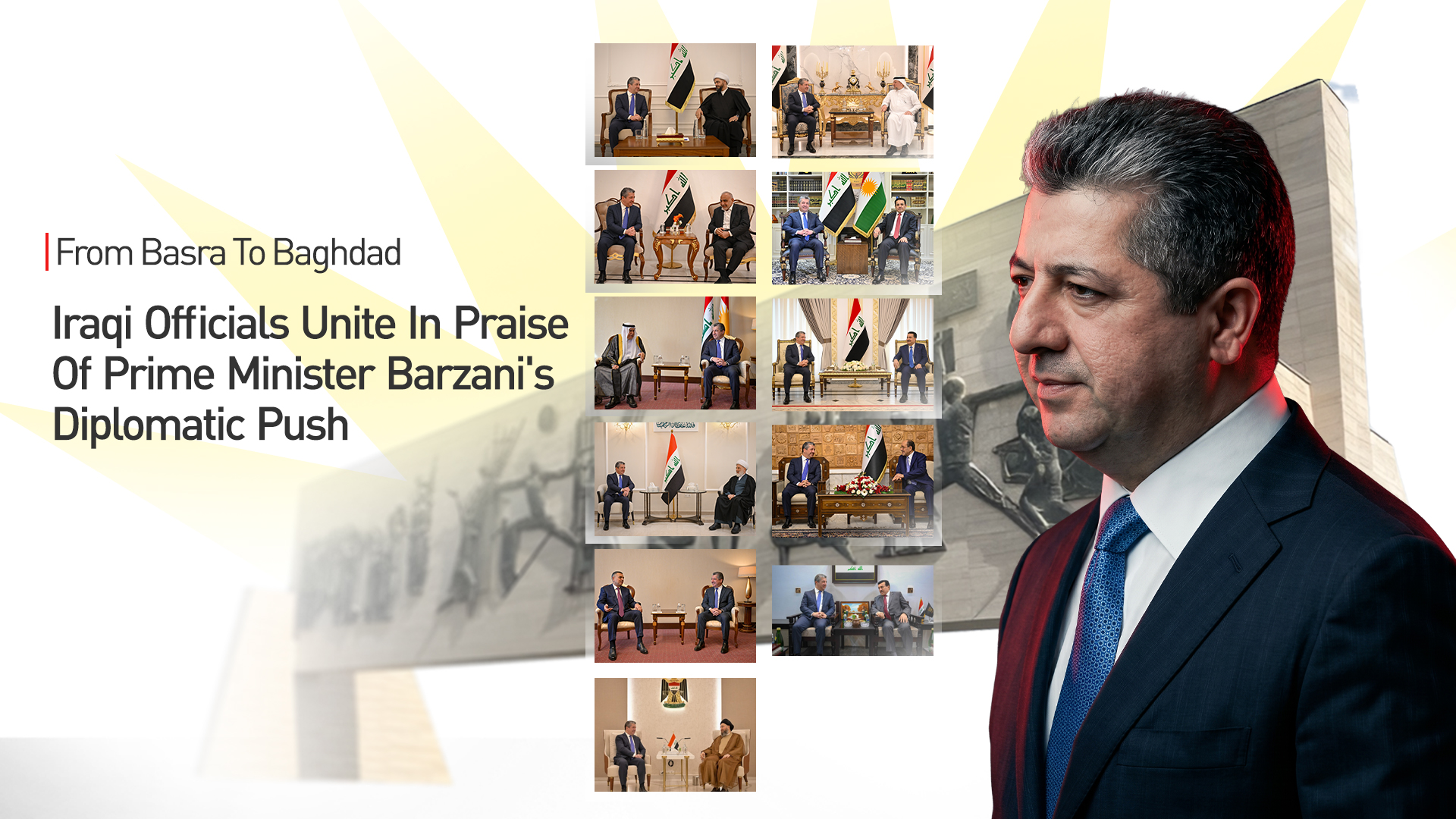
ERBIL (Kurdistan24) - The governor of Basra, a senior Hikma Movement leader, and the Siyada Alliance's spokesperson have each described Kurdistan Region Prime Minister Masrour Barzani's Baghdad visit as a pivotal moment in federal-regional relations — with one calling on Iraqi cities to learn from the Kurdistan Region's development model and another insisting that what divides Erbil and Baghdad amounts to nothing more than administrative paperwork.
Speaking during Kurdistan24's 10 p.m. bulletin on Sunday, Basra Governor Asaad Al-Eidani said the KDP's political leadership represents a cornerstone of Iraq's political process, playing a central role in bringing parties closer together.
"Masrour Barzani's visit to Baghdad will have a direct impact on preventing disputes and will serve as a foundation for resolving all outstanding issues between Erbil and Baghdad," Al-Eidani said, adding that his own meeting with the prime minister had covered a number of important and strategic matters.
The governor called on other Iraqi cities to draw lessons from the Kurdistan Region's development experience, and said the federal system must serve all Iraqis, including the citizens of the Kurdistan Region. He expressed hope that the visit would build trust, deepen relations, and construct a stronger bridge between both sides.
On the economic front, Al-Eidani pointed to the Development Road project and the Grand Faw Port, saying Iraq, through the Kurdistan Region, could become a primary corridor to Türkiye, and that goods produced in the Kurdistan Region could be exported internationally via Faw. He called for expanded ties with all provinces, particularly in agricultural trade.
Al-Eidani also reached into history to underscore the depth of the relationship. "Basra once welcomed the late leader Mulla Mustafa Barzani," he said. "There is a longstanding bond between the people of Basra and the Kurdistan Region, and they have always received one another warmly."
Siyada Alliance: Kurdistan Region is a model of progress
Mohamed Abbas al-Taei, spokesperson for the Siyada Alliance, told Kurdistan24 that his alliance, led by Khamis al-Khanjar, regards the Kurdistan Region as a principal and vital partner in Iraq's reconstruction and development.
"The Kurdistan Region is a great model of progress and civilization, and possesses a rich experience, one that should be studied and emulated," he said, adding that all efforts to resolve disputes must be grounded in the constitution and the principles of good governance.
On Prime Minister Barzani's visit specifically, al-Taei said the meetings had been positive and that the trip could serve as a springboard for resolving many of the outstanding issues between Erbil and Baghdad, noting that a strong level of mutual understanding had been achieved.
He closed with a direct appeal to Shia factions, calling on them not to create divisions between components, and urging the federal government to ensure the financial rights and entitlements of Kurdistan Region citizens are met in accordance with the law and constitution. "The federal government must, in the future, deal with the Kurdistan Region clearly and as a genuine partner," he said.
Hikma Movement: 'What exists are not problems in the true sense'
Mohammed Hussam, a leader within the Hikma Movement, described Prime Minister Barzani's meeting with Hikma leader Ammar al-Hakim as "important and realistic," and offered perhaps the most optimistic framing of the visit.
"What exists between the Kurdistan Region and Iraq are not problems in the true meaning of the word, they are only a few legal and administrative matters that can be resolved easily," he told Kurdistan24.
Hussam said direct meetings of this kind consistently produce faster and better outcomes, adding that the discussions had been candid and focused on resolving as much as possible in the shortest time.
On the financial dimension, he pointed to the appointment of Falah al-Sari as finance minister, and to the strong existing relationship between al-Sari and the Kurdistan Region, as a factor that would have a direct and positive impact on the swift resolution of all outstanding financial disputes.