British navy readies Hormuz mine-clearing mission, but awaits peace deal first
Hundreds of Royal Navy sailors sit at Gibraltar with advanced mine-hunting drones loaded and ready, as Britain seeks to answer Trump's challenge and reopen the world's most critical energy corridor.
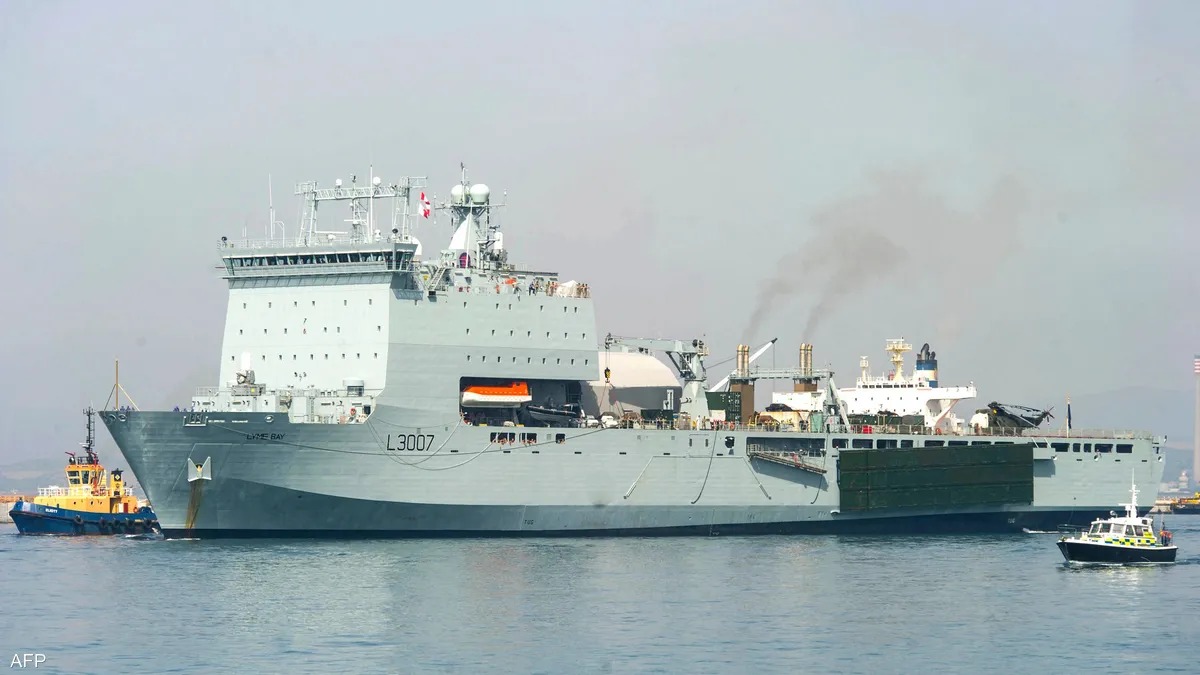
Erbil (Kurdistan 24) - The ship is loaded. The drones are tested. The sailors are ready. Aboard the RFA Lyme Bay, docked off the coast of Gibraltar at the gateway to the Mediterranean, hundreds of Royal Navy personnel have been running final preparations for one of the most technically demanding and strategically consequential naval operations in recent British military history - the clearing of sea mines from the Strait of Hormuz. There is only one thing holding them back: a peace deal that has not yet been signed.
The operation, if and when it is launched, would mark Britain's most significant contribution to resolving a conflict that has choked global energy markets, driven up fuel and food costs worldwide, and strained relations between Washington and its NATO allies to a degree not seen in years.
A mission locked and loaded
As the Associated Press reported on Friday, British Armed Forces Minister Al Carns visited the RFA Lyme Bay and briefed a small group of journalists on the vessel's readiness. The amphibious landing ship was being loaded with ammunition and mine-hunting sea drones equipped with sonar systems capable of detecting and identifying mines on the seabed. Commander Gemma Britton, who leads the Royal Navy's Mine and Threat Exploitation Group, told reporters that Iran could have deployed a "huge" variety of mines across the strait, including rocket-propelled, cabled, and seabed-triggered devices activated by sound, movement, or light.
The Associated Press, in its Sunday coverage, noted that at least 6,000 ships have been blocked from passing through the strait since the conflict began on Feb. 28 - a figure Carns cited directly. The planned international operation would be led jointly by Britain and France, with the RFA Lyme Bay set to depart Gibraltar imminently to join the destroyer HMS Dragon, along with allied vessels providing air support. The combined force would then sail through the Suez Canal into the Arabian Gulf to begin securing maritime passage through the strait.
Trump's challenge and Britain's answer
The British deployment carries significant diplomatic weight, shaped by months of tension between Washington and London over the extent of British support for the US-led war effort. As Reuters documented on March 3, Trump publicly rebuked Prime Minister Keir Starmer in the Oval Office, comparing him unfavourably to wartime leader Winston Churchill. "This is not Winston Churchill that we're dealing with," Trump said, after Starmer initially blocked the US from using British military bases, specifically Diego Garcia, for strikes against Iran during Operation Epic Fury.
The Boston Globe, in its Sunday reporting, noted that Trump went further, dismissing Britain's naval capability as "toys" - a characterization that drew sharp reactions in London. Starmer later permitted the use of British bases for what he described as limited and defensive strikes, after Iran launched drone and missile attacks against US allies in the region.
The rift over basing rights was not the only point of contention. In March, as Fox News reported on March 3, Trump told NATO allies to "go get your own oil" and take responsibility for securing the Strait themselves. The RFA Lyme Bay's mission is, in effect, Britain's direct response to that demand, though Carns was pointed in defending London's contribution. "Which other country can pull together 40 nations and come up with a solution to deal with a complex problem that we couldn't predict because we weren't involved?" he asked, responding to a question about what Trump wants from his British ally.
Conditioned on a final agreement
Despite the vessel's readiness, the operation remains entirely contingent on the conclusion of a peace agreement between the US and Iran. The Hill, in its Sunday coverage, confirmed that the RFA Lyme Bay and its crew will continue waiting until a deal is reached, certified, and signed, with Carns saying the force would be "really, really ready" when the moment comes.
That moment may be approaching, but remains uncertain. On Saturday, Trump declared the deal with Iran "largely negotiated" following calls with Israeli Prime Minister Benjamin Netanyahu and leaders across the Gulf region. By Sunday, his tone had grown more cautious, urging negotiators not to rush. As CNN reported on Monday, both sides are working toward a memorandum of understanding as a first phase, with broader talks expected within 30 to 60 days - though significant disputes over Iran's enriched uranium stockpile, sanctions relief, and the future management of the strait itself remain unresolved.
A waterway with a long memory
The Strait's role as a pressure point is not new. In 1951, when Tehran nationalised its oil industry, Britain used naval power to prevent Iran from exporting oil, turning the waterway into a tool of economic coercion. During the 1984 tanker war, Iran laid mines in the Strait of Hormuz and harassed commercial shipping in response to Iraqi attacks on Iranian vessels. Throughout both those conflicts, however, the strait remained in partial use. What makes the current crisis historically singular is the near-total halt to traffic - a closure without modern precedent, now entering its fourth month.
The stakes of reopening it cannot be overstated. The IEA's May 2026 Oil Market Report, published on May 13, estimated that more than 14 million barrels of oil per day remain shut in, with cumulative supply losses since the start of the conflict already exceeding one billion barrels. IEA Executive Director Fatih Birol warned at a Chatham House session on Thursday, as CNBC reported, that global oil markets could enter a "red zone" by July or August if the strait remains closed.
For the sailors aboard the RFA Lyme Bay, the history and the stakes are not abstractions. They are the mission. And as their ship sits loaded and waiting at the edge of the Mediterranean, the question is no longer whether Britain is ready; it is whether the diplomats will give them the order in time.
SUMMARY: Britain's RFA Lyme Bay is stationed at Gibraltar with hundreds of sailors and mine-hunting drones ready for a Hormuz clearance operation, co-led with France, pending a final US-Iran peace agreement amid deepening global energy concerns.