Senior Iranian Officials Arrive in Doha for Talks on Potential U.S.-Iran Agreement
Reuters reports Iran's foreign minister and parliament speaker are meeting Qatari officials as discussions continue over sanctions relief and frozen Iranian assets
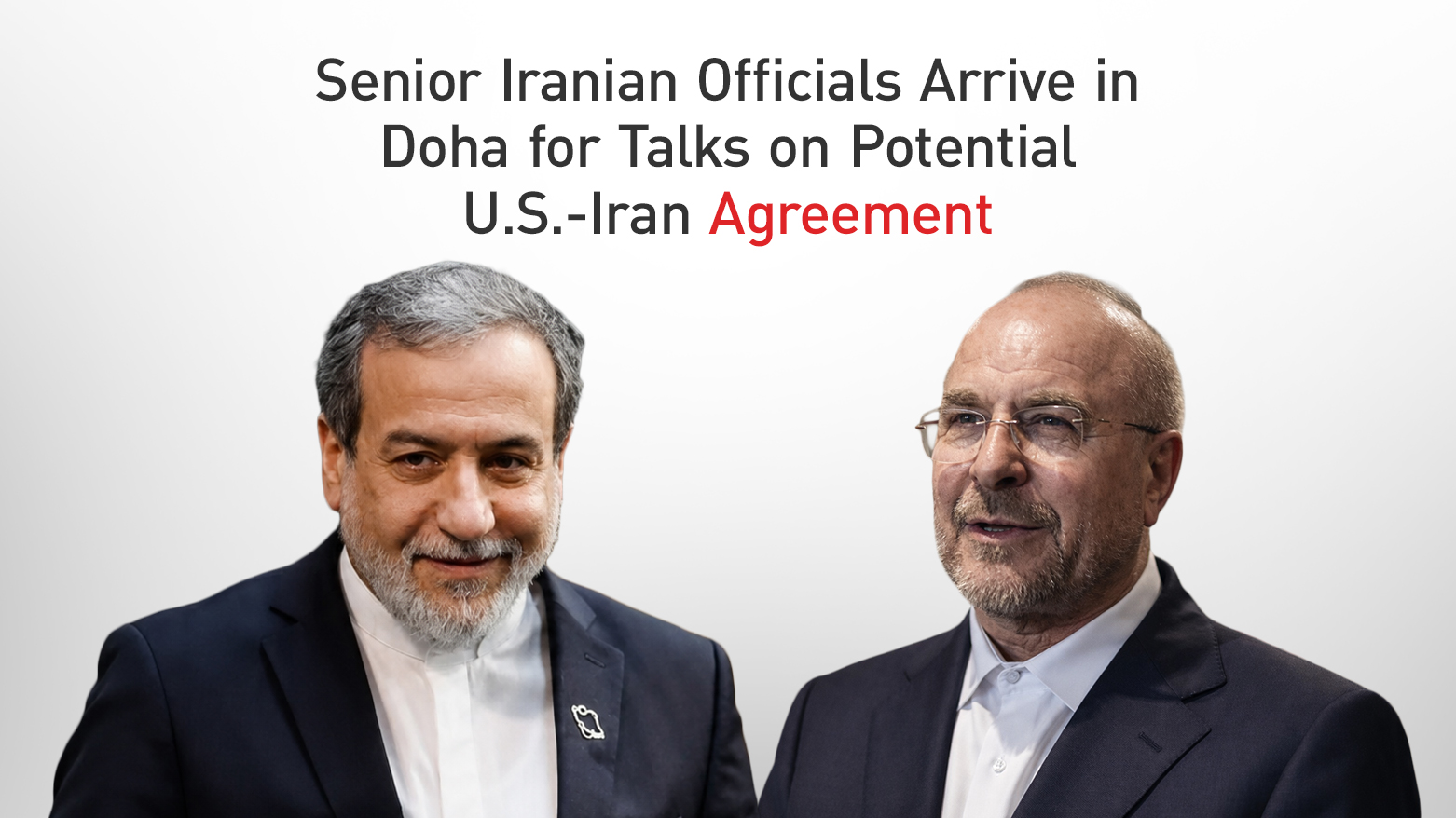
ERBIL (Kurdistan 24) - Senior Iranian officials arrived in Doha on Monday for meetings with Qatari leadership amid continuing diplomatic efforts surrounding a possible agreement between Iran and the United States, as U.S. President Donald Trump simultaneously pushed for a broader regional settlement tied to the expansion of the Abraham Accords.
According to Reuters reporting published on Monday, Iranian Parliament Speaker Mohammad Baqer Qalibaf and Iranian Foreign Minister Abbas Araghchi arrived in Doha to meet with Qatari Prime Minister and Foreign Minister Mohammed bin Abdulrahman Al Thani.
The talks are expected to focus on the possibility of reaching a broader understanding between Tehran and Washington following months of regional conflict, maritime tensions, and stalled negotiations.
Reuters also reported on Monday that the governor of Iran's Central Bank is part of the Iranian delegation, signaling that financial issues, particularly frozen Iranian assets abroad, are expected to play a central role in the discussions.
According to the report, one of the key issues under discussion involves the potential release of frozen Iranian funds as part of any eventual final agreement between Iran and the United States.
The meetings come amid intensified diplomatic activity involving Qatar, Pakistan, Türkiye, and other regional mediators attempting to reduce tensions following the U.S.-Israeli war with Iran that began on Feb. 28, 2026.
In recent weeks, Iranian and international media outlets have increasingly reported negotiations surrounding sanctions relief, maritime access through the Strait of Hormuz, nuclear restrictions, and phased de-escalation arrangements across the region.
At the same time, Trump said Monday in a lengthy post on his Truth Social platform that negotiations with Iran were "proceeding nicely," while warning that failure to reach an agreement could mean a return "to the battlefront and shooting, but bigger and stronger than ever before."
Trump also revealed that during discussions held Saturday with regional leaders, including officials from Saudi Arabia, the United Arab Emirates, Qatar, Pakistan, Türkiye, Egypt, Jordan, and Bahrain, he proposed linking any future Iran settlement to a major expansion of the Abraham Accords framework.
The U.S. president said he wanted multiple regional countries to simultaneously join the Abraham Accords as part of what he described as a historic Middle East realignment tied to a future agreement with Iran.
Trump specifically called for Saudi Arabia and Qatar to immediately sign onto the accords, while suggesting that Iran itself could eventually become part of the framework if an agreement with Washington is reached.
"In speaking to numerous of the Great Leaders mentioned above, they would be honored, as soon as our Document is signed, to have the Islamic Republic of Iran as part of the Abraham Accords," Trump wrote.
He described the initiative as potentially "the most important Deal" in the modern history of the Middle East and claimed it could transform the region into a "United, Powerful, and Economically Strong" coalition.
The remarks signal an apparent attempt by the Trump administration to move beyond a narrowly nuclear-focused agreement with Iran toward a broader regional diplomatic and economic architecture involving Gulf states, Israel, and Washington's regional partners.
Qatar has increasingly positioned itself as a central mediator in indirect U.S.-Iran diplomacy, particularly on issues involving financial negotiations, regional de-escalation, hostage arrangements, and energy-related discussions.
The presence of Iran's central bank governor in the Doha delegation is likely to reinforce speculation that economic arrangements and financial guarantees are becoming increasingly central to ongoing negotiations.
Neither Washington, Doha, nor Tehran had immediately released detailed official summaries of the latest round of discussions.