WHO Chief Warns of 'Catastrophic Collision' of Ebola and War in DR Congo
With no vaccine for the Bundibugyo strain and state services largely absent in Ituri province, the UN health agency's chief is calling on all warring parties to agree to an immediate ceasefire.
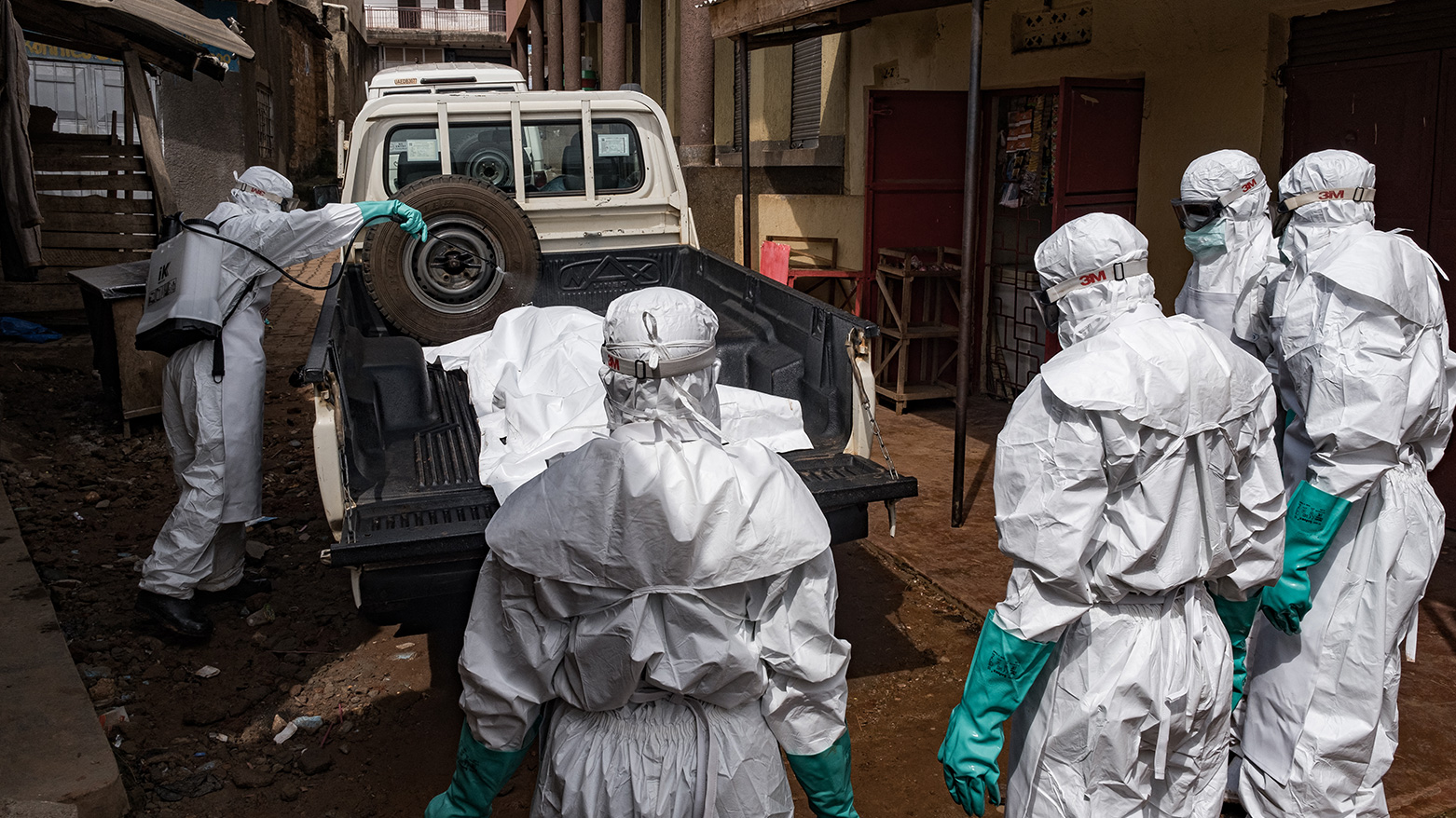
ERBIL (Kurdistan24) - On a motorbike threading through the chaos of eastern Democratic Republic of Congo (DRC), a symptomatic woman arrived at a rural hospital squeezed between her sister and the driver — no ambulance available, no protective equipment on the man who carried her, only a surgical mask between him and one of the world's most dangerous viruses.
It was a scene that captured, in a single moment, the scale of the crisis now gripping Ituri province in the Democratic Republic of Congo, where an Ebola outbreak is racing ahead of the response, complicated at every turn by three decades of armed conflict.
The World Health Organization has recorded 10 confirmed and 223 suspected Ebola deaths in the DRC since the outbreak was declared in mid-May, out of more than 1,000 confirmed and suspected cases. WHO chief Tedros Adhanom Ghebreyesus warned Wednesday that the situation had become a convergence of catastrophes.
"Eastern DRC now faces a catastrophic collision of disease and conflict with the Ebola outbreak in Ituri province outpacing the response," Tedros wrote on X, adding that clashes were "driving mass displacement, pushing exposed contacts into overcrowded camps and severing critical containment corridors."
"Frontline workers are risking everything, while attacks on health facilities make tracking cases and their contacts nearly impossible," he warned. "We cannot build community trust or isolate the sick while bombs are falling."
Tedros called on all warring parties to agree to an immediate ceasefire to allow containment efforts to proceed.
No vaccine, no ambulances
The outbreak represents the DRC's 17th recorded Ebola episode and involves the Bundibugyo strain, for which no vaccine or approved treatment currently exists. State services in rural Ituri province, where the virus was first detected, have been largely absent for decades.
At a hospital in Rwampara, one of the outbreak's epicenters, health worker Dieudonne Sezabo described the impossible conditions on the ground. With no ambulances available, he said, "people make do with motorbikes." The facility has established a temporary isolation center but was still awaiting critical equipment deliveries as of Wednesday.
Neighboring Uganda moved swiftly on Wednesday, announcing the immediate closure of its border with the DRC. Authorities also imposed a 21-day quarantine on all arrivals from the DRC, to be supervised by the Ministry of Health and district surveillance teams. Uganda has confirmed one Ebola death and six additional cases within its borders.
Kenya, meanwhile, said it had screened approximately 55,000 people crossing from Uganda and had not yet confirmed a single case. The United States, according to a report in the Wall Street Journal, plans to open a quarantine center in Kenya intended primarily for Americans needing to depart the DRC quickly.
While the WHO put the case fatality rate at under 25 percent — significantly lower than in several recent outbreaks — experts cautioned that the true extent of the crisis remains unclear, with suspicions that the virus had been circulating undetected for some time before the outbreak was formally declared.
The combination of a novel strain without a vaccine, a conflict-shattered health system, and an active war zone has led the WHO to treat this as among the most complex outbreak responses it has faced in the region.