Vance Says U.S., Iran 'Very Close' to Nuclear Agreement Amid Fragile Ceasefire
"I can't guarantee that we're going to get there, but right now I feel pretty good about it," U.S. Vice President J.D. Vance stated, noting that negotiators are still finalizing the specifics of how to manage Iran's highly enriched uranium stockpile.
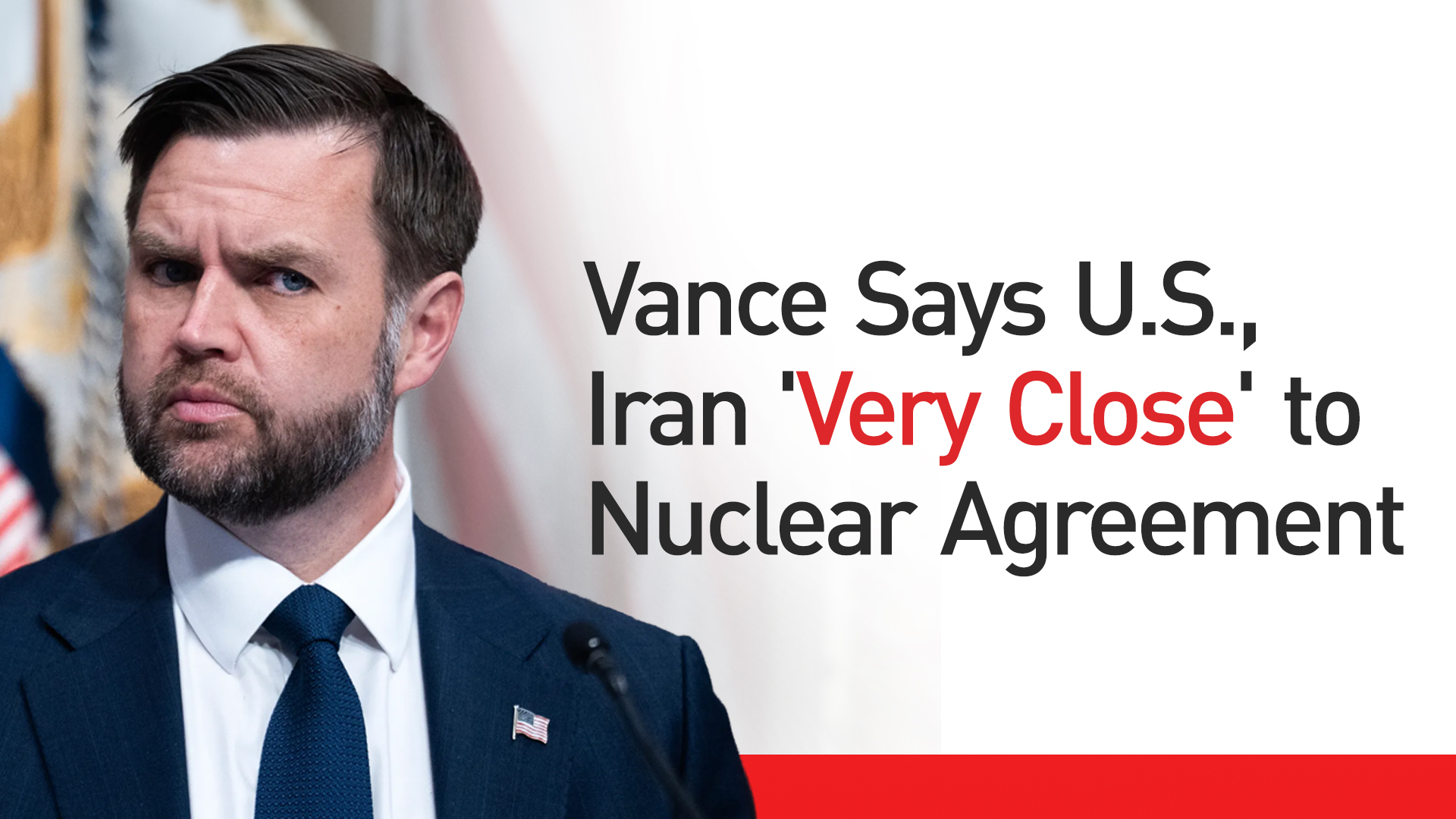
ERBIL (Kurdistan24) - The United States and Iran have reached a tentative agreement to extend their fragile ceasefire by 60 days and launch comprehensive negotiations regarding Tehran's contested nuclear program. U.S. Vice President JD Vance confirmed Thursday that the two sides are "very close" to finalizing a memorandum of understanding, though he cautioned that critical language points remain unresolved and President Donald Trump has yet to grant final approval.
Speaking to reporters at Joint Base Andrews in Maryland, Vance offered a guarded but optimistic assessment of the diplomatic track, acknowledging the inherent difficulties of formalizing a deal amid ongoing regional volatility.
"I can't guarantee that we're going to get there, but right now I feel pretty good about it," Vance stated, noting that negotiators are still finalizing the specifics of how to manage Iran's highly enriched uranium stockpile.
The diplomatic momentum occurs against a backdrop of paradoxical escalation. As envoys close the gap on paper, kinetic exchanges continue to test the durability of the truce that paused the three-month war.
According to reporting by The Associated Press (AP), the U.S. military recently intercepted missiles and drones targeting Kuwait, an incident U.S. Central Command labeled an "egregious ceasefire violation."
Iraq's Foreign Ministry also issued an statement condemning the attack on its southern neighbour on Friday.
Read More: Iraq Condemns Missile and Drone Strikes on Kuwait Amid Unraveling Ceasefire
Iran's Islamic Revolutionary Guard Corps (IRGC) claimed the strike was retaliation for U.S. operations near Bandar Abbas, underscoring the precarious environment in which the negotiations are unfolding.
The Nuclear Question and Verification
A primary focus of the proposed 60-day negotiation framework is the fate of Iran's highly enriched uranium.
According to the International Atomic Energy Agency, Iran currently possesses 440.9 kilograms of uranium enriched to 60 percent purity, a technical threshold dangerously close to weapons-grade levels.
Vance indicated that negotiators are attempting to strike general terms on the stockpile within the tentative agreement, leaving the intricate details of disposal and monitoring for the ensuing talks.
"Even if you come to an agreement on, let's say, destroying the enriched stockpile, how do you do it? When do you do it? How do you actually get access to it?" Vance asked, highlighting the logistical challenge of verifying materials that are reportedly buried deeply underground.
The Vice President emphasized that the administration relies on stringent monitoring rather than diplomatic trust.
"You don't take anything on faith," Vance told reporters, affirming that any Iranian guarantee to halt its nuclear program would require robust, long-term verification processes.
While the Trump administration initially stated its objective was to ensure Iran could never acquire a nuclear weapon, Vance framed the current progress slightly differently, noting that the U.S. is now in a position to "substantially set back their nuclear program... over the long term."
The Strait of Hormuz and Economic Pressure
Beyond the nuclear file, the memorandum of understanding addresses the immediate economic crisis stemming from the war.
AP reporters Aamer Madhani, Jon Gambrell, Michelle L. Price, and Sam Metz noted that the agreement explicitly prohibits Iran from imposing tolls on the Strait of Hormuz and mandates the removal of all naval mines within 30 days.
In exchange, the United States would gradually lift its naval blockade on Iranian ports and relax specific sanctions, allowing Tehran to resume vital oil exports.
The closure of the strait, a conduit for a fifth of the world's traded oil and natural gas, has severely disrupted global energy markets.
U.S. Treasury Secretary Scott Bessent predicted that a finalized deal could bring global oil prices down "very quickly."
However, the U.S. is maintaining its "maximum pressure" strategy even as diplomacy advances.
On the same day word of the potential deal emerged, the U.S. Treasury Department imposed additional sanctions on the Iranian military's oil sales arm, signaling that economic leverage will not be surrendered prematurely.
Regional Demands and Simultaneous Escalation
The path to a final signature is complicated by Iran's broader regional demands.
Tehran has insisted that any comprehensive agreement must include a cessation of Israel's military operations in Lebanon against Hezbollah.
Tensions on the Lebanese front deepened Thursday following Israeli airstrikes in Beirut and Tyre, adding a complex multilateral dimension to the U.S.-Iran negotiations.
The regional perception is one of contradictory dynamics: diplomacy and military confrontation unfolding simultaneously.
While Vance acknowledged that ceasefires are "always a little messy," he maintained that the truce is "very much holding."
As President Trump reviews the final draft of the memorandum, the Middle East remains suspended between the prospect of a historic diplomatic settlement and the risk of renewed war.
For now, the tentative agreement offers a 60-day window to pull the region back from the brink, provided negotiators can finalize the critical language surrounding uranium, sanctions, and the security of the Gulf's vital shipping lanes.