U.S. Indicts Dual Iranian-Iraqi National Over Alleged Global Terror Network Linked to IRGC
The U.S. Department of Justice has indicted Iranian-Iraqi national Mohammad Baqer Saad Dawood Al-Saadi, alleging he operated as a commander for Kata'ib Hizballah and the IRGC. He is accused of coordinating nearly 20 attacks across Europe and plotting strikes against U.S. targets.
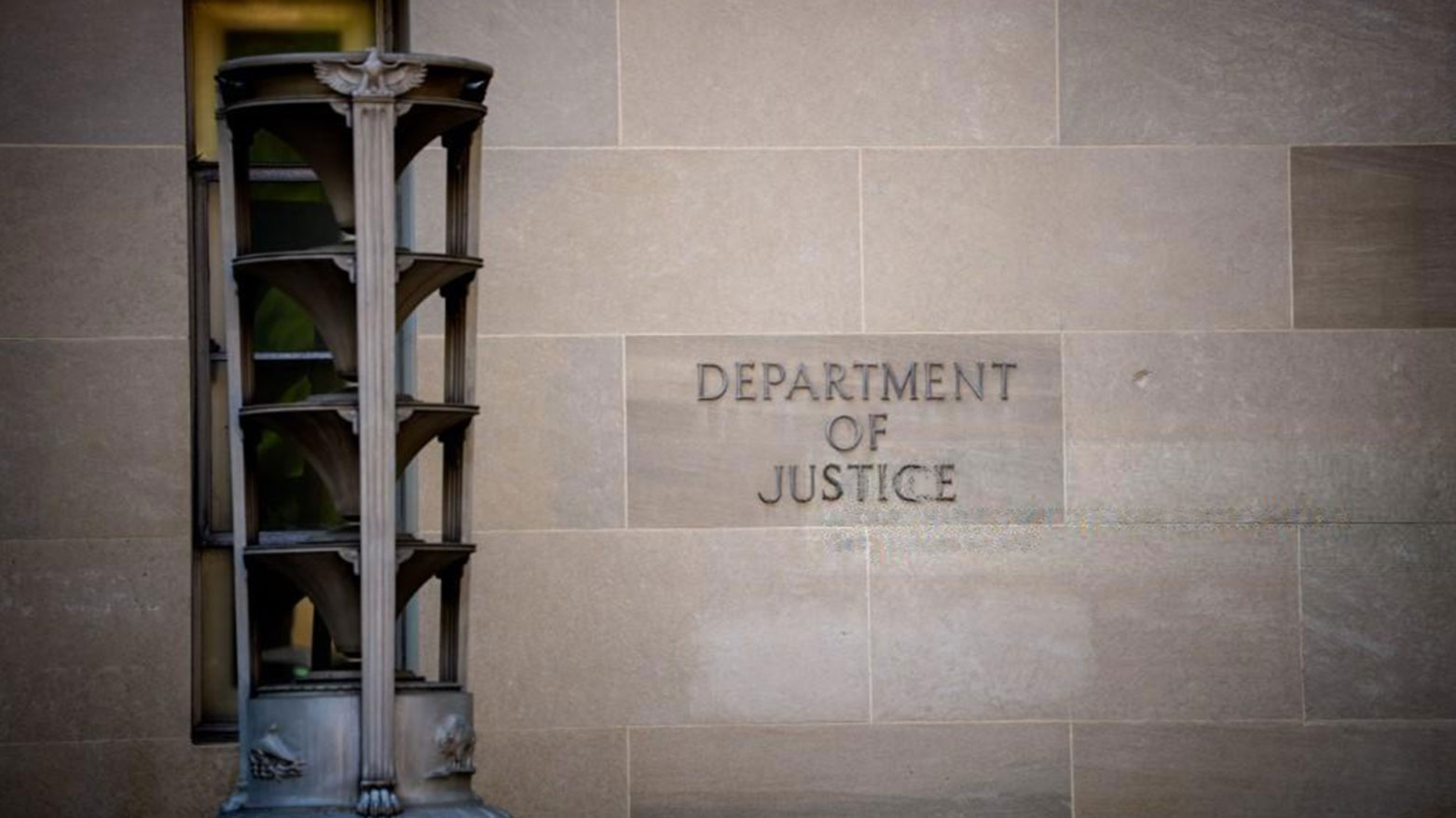
ERBIL (Kurdistan24) - The U.S. Department of Justice (DoJ) has unsealed an eight-count terrorism indictment against a dual Iranian-Iraqi national, accusing him of coordinating nearly 20 attacks across Europe and plotting further violence within the United States.
The U.S. Department of Justice (DoJ) unsealed a sprawling, transnational terrorism case on Thursday, detailing the operations of a suspected high-level commander tied to the Islamic Revolutionary Guard Corps (IRGC) and Kata'ib Hezbollah.
Mohammad Baqer Saad Dawood al-Saadi, a 32-year-old dual Iranian-Iraqi national, faces an eight-count indictment that outlines his alleged role in directing a network of violence and psychological warfare intended to strike targets in Europe and the United States.
Acting Attorney General Todd Blanche characterized the arrest as the removal of an alleged Kata'ib Hezbollah commander with deep ties to the Iranian regime.
"Al-Saadi has been directly involved in terrorist operations and military decisions to attack U.S. and Israeli interests across the world," Blanche said in a statement released by the DoJ's Office of Public Affairs.
A Transnational Terrorism Case Unsealed
According to federal prosecutors in the Southern District of New York, al-Saadi has operated to further the goals of the IRGC and Kata'ib Hezbollah since at least 2017.
Following U.S. airstrikes that neutralized senior leaders of these organizations, al-Saadi allegedly stepped into a coordinating role, directing retribution operations aimed at U.S. citizens, political figures, and military personnel.
The indictment claims al-Saadi recently orchestrated approximately 18 attacks and attempted attacks across Europe.
U.S. investigators allege these "European Terrorist Attacks" were claimed under the pseudonym Harakat Ashab al-Yamin al-Islamiya, which federal prosecutors assert is a front group created by Kata'ib Hezbollah and other U.S.-designated foreign terrorist organizations.
European Attacks and Alleged 'Psychological Warfare'
The charges outline a sophisticated hybrid warfare operation where physical attacks were synchronized with digital propaganda.
According to court filings, al-Saadi participated in FaceTime calls with attackers in real-time, directing violence and recording the events to produce propaganda videos.
In one cited instance from April 2026, al-Saadi allegedly recorded an attack against a synagogue in London via a video call, where instructions were given in English to ignite and throw incendiary devices.
Investigators claim the defendant described these propaganda efforts as part of a "psychological warfare" campaign designed to instill fear in civilian populations.
The indictment further references communications involving a purported attack on the Israeli Embassy in London, allegedly involving drones loaded with dangerous materials.
According to the DoJ, al-Saadi coordinated closely with a Kata'ib Hezbollah contact to disseminate these videos, stating that "anything that distracts the enemy is useful."
U.S. Targets and Domestic Threat Allegations
The case extends beyond European operations, detailing alleged attempts to orchestrate violence inside the United States.
Federal prosecutors claim that between March and April 2026, al-Saadi attempted to carry out attacks targeting American soil, including a plot against a synagogue in New York.
Court documents allege that on April 30, al-Saadi contacted an individual in the United States, asking if they knew someone who could carry out an attack, specifically mentioning methods such as "burning" or "killing." He was detained while traveling abroad the following day before the alleged plot could advance.
IRGC and Kata'ib Hezbollah Links
The indictment provides an extensive review of al-Saadi's alleged ties to senior Iranian military leadership.
During interviews with U.S. investigators, al-Saadi reportedly described himself as a leader within "the resistance," handling media, psychological warfare, and military intelligence for the IRGC and its proxy groups.
Al-Saadi allegedly claimed a close, familial relationship with Qasem Soleimani, the late commander of the IRGC Quds Force.
The DoJ asserts that al-Saadi's electronic devices contained videos and photographs placing him in underground operations centers alongside Soleimani and other designated terrorists.
One notable photograph recovered from his devices allegedly showed al-Saadi in a military intelligence room with an array of machine guns and a map of the United States displaying a list of "legitimate targets" targeting prominent U.S. officials.
Arrest, Transfer, and U.S. Custody
Al-Saadi's international operations were halted when he was detained abroad.
On May 14, 2026, he was transferred into FBI custody and transported to the Southern District of New York.
The DoJ reported that al-Saadi waived his Miranda rights during transport and provided voluntary statements detailing his leadership role within the IRGC proxy network.
Legal Charges and Potential Penalties
The eight-count indictment includes charges of conspiring to provide material support to foreign terrorist organizations, attempted acts of terrorism transcending national boundaries, and conspiring to bomb a place of public use.
If convicted, al-Saadi faces multiple potential life sentences.
U.S. Counterterrorism Response
U.S. Attorney Jay Clayton emphasized that the indictment exposes the reality of IRGC operations.
"The IRGC's claims are not just rhetoric, they are taking action around the world to undermine America and American values," Clayton said, noting the 40-year history of Iranian-backed groups attempting to bring terror to U.S. shores.
The investigation was spearheaded by the FBI's New York Joint Terrorism Task Force, integrating efforts from the NYPD, Customs and Border Protection, and the DoJ's National Security Division.
FBI Director Kash Patel lauded the operation as a "righteous mission executed brilliantly" by interagency partners and global allies.
A Case Reflecting Expanding Transnational Security Concerns
The prosecution of al-Saadi underscores the evolving nature of international terrorism, where state-sponsored proxy networks utilize digital communication and front groups to coordinate transnational violence.
As the judicial process begins in federal court, the case highlights the persistent threat posed by hybrid extremist networks and the critical role of international cooperation in modern counterterrorism strategies.