FULL INTERVIEW - The Future of Erbil: An Exclusive Look at the 2050 Master Plan
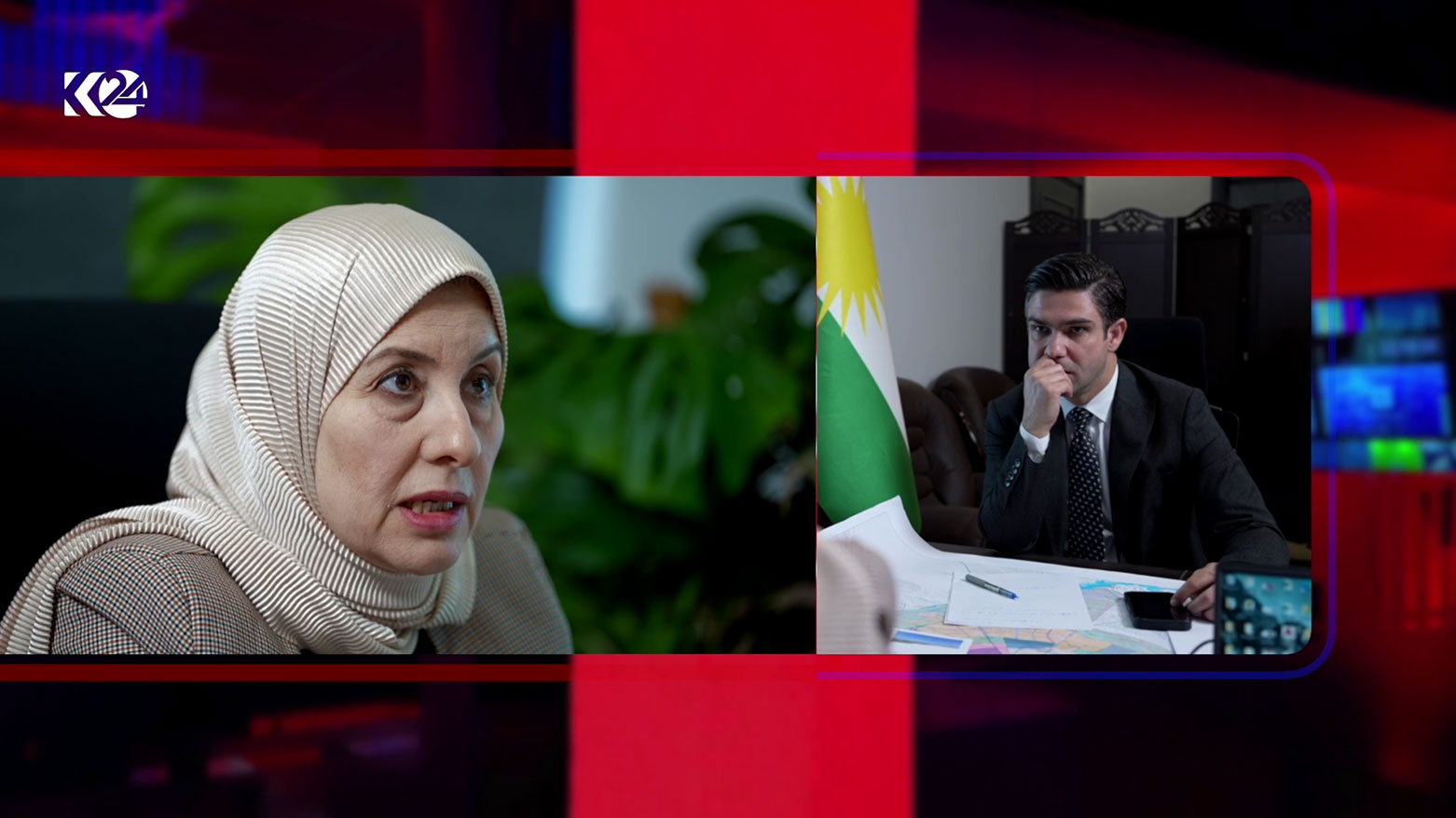
ERBIL (Kurdistan24) - In an exclusive interview with Kurdistan24 news anchor Kovan Ezzat, Shukria Abbas Qadir, the Director of Erbil Urban Planning, provided the first comprehensive look at the newly approved 2050 Master Plan.
The project, a massive undertaking involving the Kurdistan Regional Government (KRG), the Erbil Governorate, the Ministry of Municipalities and Tourism, and the Japan International Cooperation Agency (JICA), represents a total reimagining of the city's footprint, infrastructure, and social fabric.
The previous Master Plan, which governed Erbil's growth from 2008 with a target of 2030, had long since reached its limits.
Below is the transcript of the interview:
Kurdistan24's Kovan Ezzat: I am here at the Erbil Directorate of Urban Planning and Reconstruction. Let’s find out what has happened to the future Master Plan for Erbil. What plan have they designed, what is its timeline, and what does the future hold for Erbil as a whole? I have these maps in front of me—this one is the old Master Plan, and this one is Erbil’s new Master Plan. We will dive straight into the new plan to see how the city will evolve. Joining us is Shukria Abbas Qadir, the Director of Erbil Urban Planning. What is the status of the Erbil Master Plan? How is it looking, and until what year does it extend?
Shukria Abbas Qadir, the Director of Erbil Urban Planning: In collaboration with JICA (Japan International Cooperation Agency) and our Ministry, and with the full support of the Governor and the Minister, we have successfully completed the amendment and comprehensive review of the Erbil City Master Plan. The previous plan was set for the period 2008 to 2030. Legally, any Master Plan is entitled to a review after ten years. This one had exceeded twenty years. We initiated this overhaul with the Japanese JICA team alongside our directorate’s specialized teams. This new Master Plan extends until the year 2050.
Kurdistan24's Kovan Ezzat: Until 2050?
Shukria Abbas Qadir, the Director of Erbil Urban Planning: Yes, until 2050. The city limits remain essentially the same as what you see on the screen, but we have completely re-evaluated land use and zoning based on rigorous scientific foundations.
Kurdistan24's Kovan Ezzat: Have there been major changes?
Shukria Abbas Qadir, the Director of Erbil Urban Planning: Yes, absolutely. These changes were made based on scientific data.
Kurdistan24's Kovan Ezzat: Regarding residential areas—are there places that were previously non-residential but have now been designated for housing?
Shukria Abbas Qadir, the Director of Erbil Urban Planning: To clarify for you and the viewers: existing areas—the status quo—remain untouched. The primary changes regarding new residential developments occur beyond the 150-meter Ring Road. Almost everything within that perimeter was already subdivided. Beyond the 150-meter road, we have established new residential zones for civil servants, following the significant directive issued by the Prime Minister.
Kurdistan24's Kovan Ezzat: So, two things are clear now. First, will we see new major roads in the future?
Shukria Abbas Qadir, the Director of Erbil Urban Planning: Yes, indeed. There are two new ring roads. None of these roads are less than 100 meters wide. One encircles the city outside the Green Belt, and the other is within it.
Kurdistan24's Kovan Ezzat: People will ask: we already have the 120m and 150m roads; is a 200-meter road coming?
Shukria Abbas Qadir, the Director of Erbil Urban Planning: What you are referring to are these upcoming rings. However, they aren't necessarily just "200-meter roads." They are designed with comprehensive services that reflect our national identity.
Kurdistan24's Kovan Ezzat: What makes them different from the old Master Plan or the current 150-meter road?
Shukria Abbas Qadir, the Director of Erbil Urban Planning: The 150-meter road is an expressway. While the new roads also feature high-speed lanes, they are unique because they include dedicated bicycle lanes that will encircle the entire city of Erbil. This is a crucial addition. They also include pedestrian walkways, integrated roadside parking, and even dedicated lanes for horses or carriages.
Kurdistan24's Kovan Ezzat: We will actually see horses on these roads?
Shukria Abbas Qadir, the Director of Erbil Urban Planning: God willing. This is part of our national identity. In the past, people traveled between villages using animals or bicycles. We want to preserve that cultural heritage, especially within the Green Belt where villages are being preserved as they are. Moving beyond the Green Belt, the "Future Erbil" zones begin, which include industrial and residential sectors.
Kurdistan24's Kovan Ezzat: Could you point out where these are on the map?
Shukria Abbas Qadir, the Director of Erbil Urban Planning: This is the Green Belt.
Kurdistan24's Kovan Ezzat: The one in green?
Shukria Abbas Qadir, the Director of Erbil Urban Planning: Yes, the Green Belt. Beyond that, we have the residential zones and the industrial zones.
Kurdistan24's Kovan Ezzat: And where are the new roads located?
Shukria Abbas Qadir, the Director of Erbil Urban Planning: Here is the first, and here is the second. This was Ring Road 8, and this is Ring Road 9. These will be the new arteries of Erbil. Here is the airport. In the old Master Plan, there was a general rail line, but here, fortunately, we have integrated it more effectively.
Kurdistan24's Kovan Ezzat: Let’s talk about the train system. What is the plan there?
Shukria Abbas Qadir, the Director of Erbil Urban Planning: As you can see, these are the general railway lines.
Kurdistan24's Kovan Ezzat: Will we see trains in Erbil in the future?
Shukria Abbas Qadir, the Director of Erbil Urban Planning: God willing. These are major lines circling the city, with an internal network connecting them.
Kurdistan24's Kovan Ezzat: Has this been factored in to avoid obstacles? Will you have to demolish houses to make way for the tracks?
Shukria Abbas Qadir, the Director of Erbil Urban Planning: No, not at all. The routes have been protected. For example, we have designated specific areas for train stations. We have protected the best land for these stations and haven't allowed them to be used for other purposes. The rail corridors are fully secured in the plan, so no residential compensation or demolition will be necessary.
Kurdistan24's Kovan Ezzat: We’ve covered the rail, the new roads, and the housing. What about the industrial zones?
Shukria Abbas Qadir, the Director of Erbil Urban Planning: The purple areas on the map represent the primary industrial zones.
Kurdistan24's Kovan Ezzat: The ones in purple?
Shukria Abbas Qadir, the Director of Erbil Urban Planning: Yes. We also have smaller vocational zones in Khabat, Kasnazan, and Shawes. People often just call them "Sina’a" (Industrial), but these zones will house both vocational workshops and large-scale, strategic brand-name factories. We have these zones in both the north and the south.
Kurdistan24's Kovan Ezzat: Where exactly are these located in Erbil?
Shukria Abbas Qadir, the Director of Erbil Urban Planning: Between the Makhmur Road and the Kirkuk Road. This is the Timar industrial area, and this is the southern sector. Industrial corridors work as a "chain"—the byproduct of one factory becomes the raw material for another. That is why they are linked together as a chain, and all are surrounded by green buffers.
Kurdistan24's Kovan Ezzat: Will they be modern?
Shukria Abbas Qadir, the Director of Erbil Urban Planning: Entirely modern.
Kurdistan24's Kovan Ezzat: What about house designs? Will people still build whatever they want, or will you implement a specific aesthetic code?
Shukria Abbas Qadir, the Director of Erbil Urban Planning: We don’t want to place a heavy financial burden on the citizens, as our people have already endured many hardships. However, we must organize the city. One of the regulations in the new Master Plan concerns house design and the "frontage." For instance, trash bins will no longer be left on the street; they must be integrated into a small enclosure within the property wall, similar to how people hide gas cylinders.
Kurdistan24's Kovan Ezzat: Integrated into the wall itself?
Shukria Abbas Qadir, the Director of Erbil Urban Planning: Yes, a designated spot for refuse bins must be part of the design. If we want to build a modern, civilized city, this is a requirement.
Kurdistan24's Kovan Ezzat: And the architectural style?
Shukria Abbas Qadir, the Director of Erbil Urban Planning: Neighborhoods will have a unified "form." For example, a neighborhood we’ve named "Khanadan" (The Elite/Noble District) must follow a consistent style. Even if colors vary, they must harmonize—like music. Urban planning is like music; it doesn't mean every house must be identical, but the forms and materials should create a visual harmony that is restful for the eyes and the mind.
Kurdistan24's Kovan Ezzat: So the colors and designs must be compatible?
Shukria Abbas Qadir, the Director of Erbil Urban Planning: Exactly. Furthermore, the practice of "subdividing" (dividing 200m² plots into two 100m² plots) will cease, God willing.
Kurdistan24's Kovan Ezzat: No more subdivision?
Shukria Abbas Qadir, the Director of Erbil Urban Planning: No. Based on the Council of Ministers' decision, the standard plot size is 200 square meters. We will not see smaller plots in the future.
Kurdistan24's Kovan Ezzat: Currently, Erbil has a major issue with street parking in residential areas. Does the Master Plan address this?
Shukria Abbas Qadir, the Director of Erbil Urban Planning: We have resolved this. We held many sessions, supervised personally by the Minister and the Governor, to ensure these past mistakes are not repeated in the new developments.
Kurdistan24's Kovan Ezzat: What about the surrounding districts like Shaqlawa, Daretū, Beneslawa, and Kasnazan?
Shukria Abbas Qadir, the Director of Erbil Urban Planning: Many of these towns grew haphazardly. We cannot fundamentally alter their legal land status, but we can re-organize them. This includes increasing green spaces, widening narrow streets, and bringing in essential services.
Kurdistan24's Kovan Ezzat: What kind of services?
Shukria Abbas Qadir, the Director of Erbil Urban Planning: New schools, hospitals, and dedicated parking lots to prevent people from parking on the main roads. We have also factored in future tram and rail lines within these areas, so that if we reach the level of developed nations, the infrastructure is already accounted for.
Kurdistan24's Kovan Ezzat: You have a 3D model here—is this how the houses will look?
Shukria Abbas Qadir, the Director of Erbil Urban Planning: Yes, this is a sample. As I mentioned, the colors must harmonize like music. If an architect changes a color, it must remain in sync with the overall form. We have also accounted for solar energy—look at the solar systems here.
Kurdistan24's Kovan Ezzat: So the designs are optimized for solar panels?
Shukria Abbas Qadir, the Director of Erbil Urban Planning: Yes. Today, people talk about this a lot. In the current city, people install panels at all sorts of angles—45 degrees, 90 degrees, 85 degrees. In this plan, the roof angles are standardized for optimal solar efficiency.
Kurdistan24's Kovan Ezzat: And what about government institutions? Will they be centralized or remain scattered?
Shukria Abbas Qadir, the Director of Erbil Urban Planning: We have designated a specific "Administrative Area"—a government zone—where all ministries will be centralized next to a large public park.
Kurdistan24's Kovan Ezzat: In which direction is Erbil currently growing?
Shukria Abbas Qadir, the Director of Erbil Urban Planning: After extensive studies by international experts, we’ve made several determinations. The Kasnazan area (East/North-East) is a "water-rich" zone with high groundwater levels. Our Japanese experts and our own specialists found that this area acts as a natural filter for the city’s aquifers.
Kurdistan24's Kovan Ezzat: So that area will be protected?
Shukria Abbas Qadir, the Director of Erbil Urban Planning: It must be protected for the future of Erbil’s water security. Meanwhile, the Kirkuk Road area is for the industrial chain I mentioned. Beyond the industrial zone, we have approved a massive agricultural and irrigation project.
Kurdistan24's Kovan Ezzat: Was that at your request?
Shukria Abbas Qadir, the Director of Erbil Urban Planning: We asked the Ministry of Agriculture to classify the land based on its importance, and they designated it as Grade-A land for irrigation projects. Then we have the Duhok Road area, Khabat... we have also designated a major tourism zone. After the Aynkawa sector, there is the zone for civil servants. And of course, the Pirmam/Bastora direction.
Kurdistan24's Kovan Ezzat: Is Erbil growing mostly in that direction?
Shukria Abbas Qadir, the Director of Erbil Urban Planning: Residential growth is focused in that direction because it offers the best land.
Kurdistan24's Kovan Ezzat: If this plan is implemented, will land prices change?
Shukria Abbas Qadir, the Director of Erbil Urban Planning: One of the core principles of urban planning is to harmonize land prices across the city. Currently, Erbil's real estate prices are among the highest in Iraq. If this plan is executed as intended, prices will likely appreciate even further.
Kurdistan24's Kovan Ezzat: What is the most significant project in this Master Plan?
Shukria Abbas Qadir, the Director of Erbil Urban Planning: We have a new park that will be three times the size of Sami Abdulrahman Park.
Kurdistan24's Kovan Ezzat: Three times the size of Sami Abdulrahman Park?
Shukria Abbas Qadir, the Director of Erbil Urban Planning: Yes. I won't reveal the exact location yet—I’ll leave that to the Minister—but it is in a direction where residents currently lack sufficient park space.
Kurdistan24's Kovan Ezzat: I’ll have to think about which direction that is!
Shukria Abbas Qadir, the Director of Erbil Urban Planning: (Laughs) Let the citizens wonder for a bit. The key is that we will have a massive park, world-class industrial zones, and a rail network. The Green Belt is perhaps the most significant project we’ve started. It is two kilometers wide, circling the city. It includes six parks—three of them major theme parks—and modern "farmer markets" where local growers can sell their produce directly. It is a very detailed and sophisticated design.
Kurdistan24's Kovan Ezzat: Excellent. Thank you, Shukria Abbas Qadir, Director of Erbil Urban Planning, for being with us.
Shukria Abbas Qadir, the Director of Erbil Urban Planning: Thank you.
Kurdistan24's Kovan Ezzat: And thank you for watching. Stay well.