Record Eid Crowds Bring More Than 100,000 Visitors to Halabja
More than 100,000 tourists visited Halabja this Eid, highlighting the Kurdistan Region’s broader tourism expansion. With over $7.5 billion in recent investments and 80 major projects, the KRG is successfully leveraging its natural heritage to build a sustainable, non-oil economic engine.
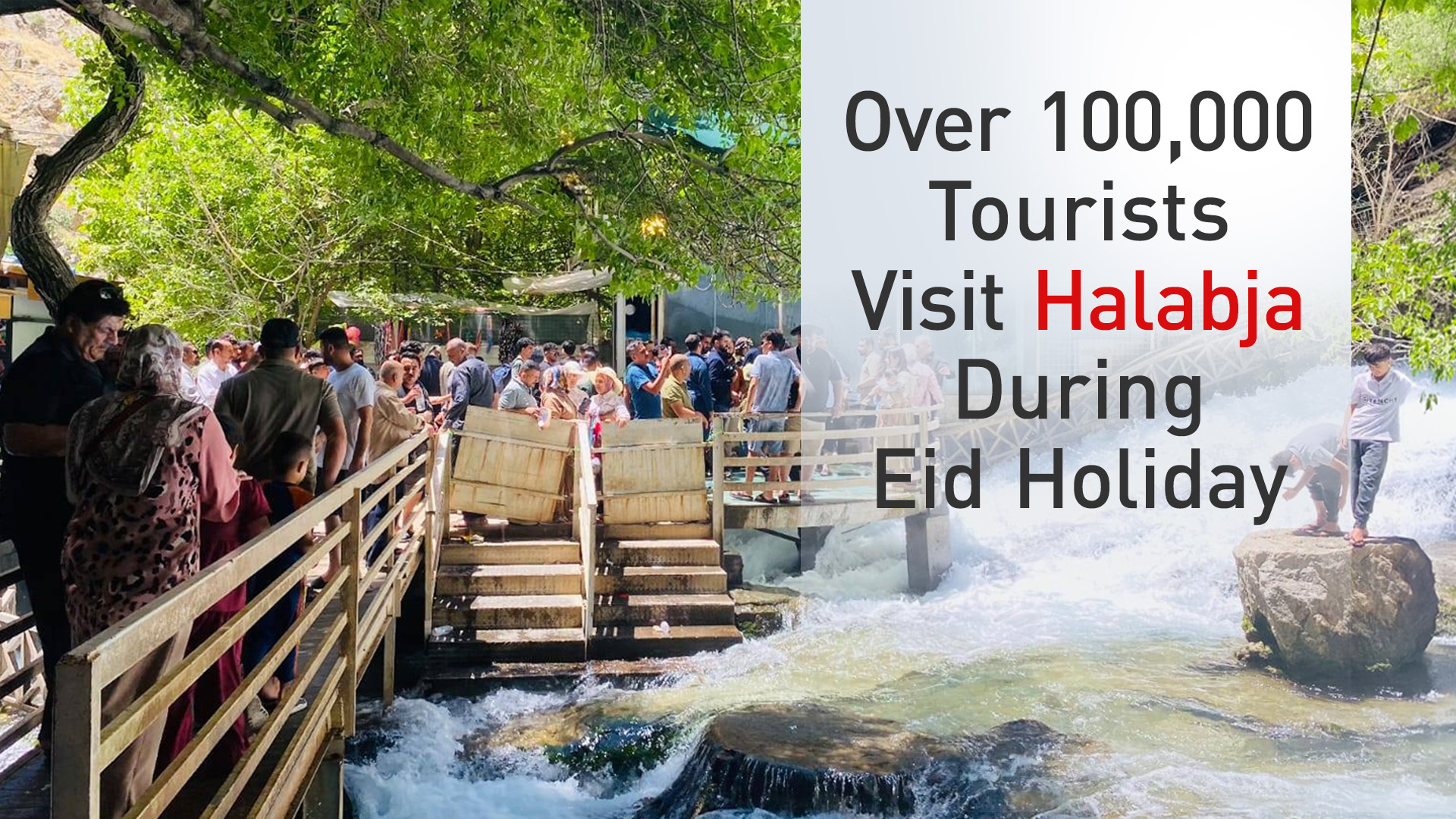
ERBIL (Kurdistan24) - As the sun set on the final day of the Eid al-Adha holiday, officials in Halabja Province began tallying a historic success that suggests the Kurdistan Region's tourism ambitions are moving from strategy to reality. According to figures released by the province's General Directorate of Tourism, more than 100,000 visitors flocked to Halabja's natural landmarks and cultural sites during the holiday break, a surge that passed without a single recorded security or administrative incident.
The directorate reported that specialized teams remained deployed across the province to monitor market prices, maintain environmental standards, and provide guidance to a diverse wave of international and domestic travelers.
Beyond the sheer volume of visitors, officials issued advisory notices to 82 tourist establishments to ensure regulatory compliance, highlighting an increasingly professionalized approach to hospitality management in the province.
Halabja's Director of Tourism, Chia Qasim, who personally supervised the ground operations, noted that exceptionally heavy seasonal rainfall had significantly enhanced the region's natural appeal this year.
This local success, however, is being viewed by economic analysts as a microcosmic indicator of a much larger transformation currently reshaping the Kurdistan Region's financial landscape.
Building a Non-Oil Growth Engine
The record-breaking numbers in Halabja align with a massive influx across all provinces.
Ibrahim Abdulmajid, the spokesperson for the Kurdistan Region's General Board of Tourism, recently revealed that the sector has secured more than $7.5 billion in investment over the past five years.
Read More: Kurdistan Tourism Sector Sees Major Growth With $7.5 Billion Investment Over Five Years
This capital has fueled over 80 strategic projects, including 40 world-class tourism centers and five-star resorts that now operate at international standards.
This investment boom is a central pillar of the Kurdistan Regional Government's (KRG) Ninth Cabinet reform agenda, led by Prime Minister Masrour Barzani.
By prioritizing tourism, agriculture, and industry, the administration aims to insulate the regional economy from the volatility of global energy markets.
Abdulmajid emphasized that the focus is on "sustainable tourism," ensuring that the Region remains a viable destination through all four seasons rather than relying solely on peak holiday travel.
The economic ripple effect is profound.
The $7.5 billion investment roadmap has not only modernized hospitality infrastructure but has also stimulated the construction, retail, and transportation sectors, creating thousands of jobs for the local workforce.
This structural shift is reflected in mass mobility data: Erbil alone recorded over 861,000 visitors in the first four months of 2026, setting the stage for what provincial officials, such as tourism spokesperson Nariman Fazil, predicted would be a historic seasonal peak.
Villages, Mountains, and New Frontiers
While urban centers like Erbil and Sulaimani remain primary gateways, the KRG's vision is increasingly reaching into the Region's rugged highlands and rural villages.
High in Duhok province, the village of Hiror has become a symbol of this rural revival.
Nominated for the United Nations Tourism Organization's "Best Tourism Villages" initiative, Hiror represents a delicate balance between modern infrastructure and ancient heritage.
Reving Hirori, a prominent figure in the village, told Kurdistan24 that KRG-funded projects, ranging from schools and water systems to telecom towers, have encouraged youth to return to their ancestral lands.
This return of the younger generation has reinvigorated communal traditions, such as the collective cleaning of the landscape during "Hiror Environment Day."
Read More: Duhok Village Celebrates Global Recognition Amid Rural Revival and Tourism Push
This grassroots stewardship is a key component of the KRG's bid to position the Region as a premier eco-tourism destination.
Further south in Rawanduz, an even more ambitious roadmap is taking shape. Pariz Yusuf, the district's director of tourism, recently unveiled a Norwegian-designed masterplan that includes an 11-kilometer cable car.
The proposed aerial tramway would stretch from the Ali Beg valley to the summit of Korek Mountain, traversing spectacular gorges and ridgelines.
Yusuf noted that the district, which saw over 1.16 million visitors annually in previous years, is betting on hiking trails and cultural museums to double its appeal.
Protecting the Visitor Experience
As the volume of tourists increases, so has the government's focus on preservation and oversight.
In northwestern Duhok, tourism directorate spokesperson Shemal Jafar highlighted the use of digital tools, including QR codes on visitor cards, to allow tourists to report service quality or complaints in real-time.
However, the rapid growth has also brought challenges. Last year, vandalism at the ancient Bahiri Cave in Zakho prompted a stern response from authorities.
Bewar Sindi, media director for Zakho Tourism, vowed legal action against those defacing historical sites, describing such acts as "uncivilized."
To institutionalize protection, Prime Minister Masrour Barzani has ordered the establishment of a specialized "Tourism Police" force.
Read More: KRG to Launch Tourism Police, Vows Legal Action After Vandalism Mars Historic Zakho Site
Ibrahim Abdulmajid confirmed that the initial cadre of 165 officers, all graduates of tourism departments, will be deployed to ensure security and tranquility at tourist sites.
This force is intended to serve as a professional bridge between enforcement and hospitality, ensuring that the Region's ancient artifacts and natural beauty are preserved for future generations.
A Region Reimagined
The successful management of 100,000 visitors in Halabja is more than a holiday achievement; it is a validation of a multi-billion-dollar strategy.
Across Sulaimani, where Goran Qadir's teams provided 24-hour guidance at urban information centers, and Soran, where mountain resorts hosted festive musical programs, the message from the holiday season is one of resilience and coordination.
Read More: Kurdistan Region Forecasts Record Eid Tourism Influx Across Provinces
With the "Visit Kurdistan" campaign aiming to attract 20 million tourists by 2035, the current momentum suggests the Region is on a clear trajectory toward becoming a leading destination in the Middle East.
Read More: Kurdistan Launches ‘Visit Kurdistan’ Initiative to Attract 20 Million Tourists by 2035
By blending multi-billion dollar infrastructure projects with community-led rural revivals, the Kurdistan Region is successfully drafting a new narrative, one where its natural inheritance becomes its most sustainable source of prosperity.
As the KRG moves toward 2030, the surge in Halabja serves as a compelling preview of a future where tourism stands as the cornerstone of a diversified and stable Kurdish economy.