Israel Raises Flag Over Beaufort Castle as Troops Expand Offensive in Southern Lebanon
Israeli Defense Minister Israel Katz confirmed the capture of the strategic site, describing it as a major strategic achievement for Israeli forces
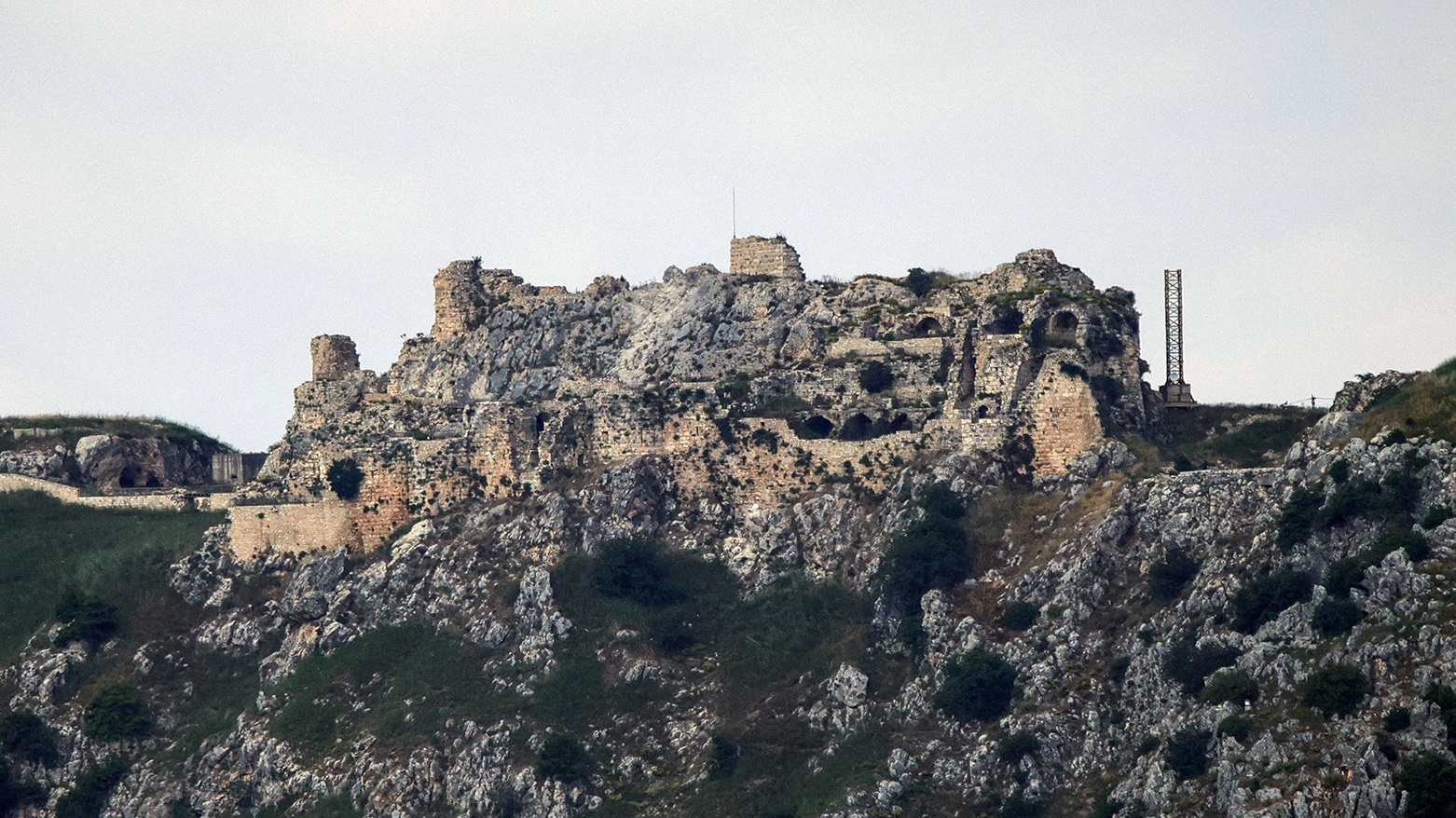
ERBIL (Kurdistan24) — Israeli forces raised their national flag over the Medieval Beaufort Castle in southern Lebanon on Sunday after capturing the strategic hilltop stronghold, marking a significant advance in Israel’s expanding ground campaign against the Iran-backed Hezbollah group.
The move came as the Israeli military issued broad evacuation warnings covering large areas of southern Lebanon ahead of intensified military operations, while fresh exchanges of fire underscored the continued collapse of a ceasefire that officially took effect in April.
The Israeli flag was seen flying above Beaufort Castle, a historic fortress overlooking much of southern Lebanon, as shelling echoed across the surrounding area and smoke rose from nearby locations.
Israeli Defense Minister Israel Katz confirmed the capture of the site, describing it as a major strategic achievement for Israeli forces.
“Forty-four years after the heroic Battle of Beaufort, and on this day commemorating the soldiers who fell in the First Lebanon War, our troops have returned to the summit of Beaufort and once again raised the Israeli flag there,” Katz said in a statement posted on social media.
He said Israeli troops had crossed the Litani River and seized the Beaufort Ridge, which he described as one of the most important positions for protecting communities in northern Israel and ensuring the security of Israeli forces operating in the area.
Speaking later at a military ceremony, Katz said Israel’s campaign in Lebanon had resulted in “the elimination of thousands of terrorists and the seizure of hundreds of square kilometers,” while warning that areas used to launch attacks against Israeli civilians could face territorial consequences.
The advance to Beaufort came alongside a sweeping Israeli evacuation order covering territory south of the Zahrani River and north of the Litani River, extending roughly 40 kilometers from the Israeli border.
Israeli military spokesperson Avichay Adraee urged civilians to leave areas where Hezbollah maintains positions or military infrastructure.
“Anyone present near Hezbollah elements, facilities, or combat means endangers their life. Any building used by Hezbollah for military purposes may become subject to targeting,” Adraee said.
Lebanon’s National News Agency reported multiple Israeli strikes around the southern coastal city of Tyre and several nearby villages. The agency said one strike occurred near a hospital and reported that civil defense personnel in the Tyre region received phone calls from the Israeli military instructing them to evacuate.
The latest escalation follows comments by Lebanese Prime Minister Nawaf Salam, who on Saturday accused Israel of pursuing a “scorched-earth policy and collective punishment” in southern Lebanon.
Salam said Israeli operations were “destroying towns and villages, and forcing their inhabitants into exile,” and called for an immediate end to the fighting.
Despite the ongoing hostilities, diplomatic efforts have continued. Military representatives from Israel and Lebanon met in Washington on Friday for security talks mediated by the United States, with additional negotiations scheduled for next week.
Salam acknowledged that the talks offered no guarantee of success but described them as “the least costly path for our country and our people.”
A ceasefire between Israel and Hezbollah officially came into effect on April 17, but has failed to halt the violence. Both sides routinely accuse each other of violating the truce and cite those alleged breaches to justify continued military action.
A U.S. statement following Friday’s discussions characterized the meeting as “productive military-to-military discussions” that would help inform future political negotiations, although it did not specifically address the ceasefire.
Hezbollah has strongly opposed the direct talks between Lebanon and Israel.
On Sunday, the group announced attacks on Israeli military positions and infrastructure in the northern Israeli communities of Shlomi and Nahariya. Air raid sirens sounded in the Acre region as rockets were launched from southern Lebanon.
According to the Israeli military, more than 25 projectiles were fired from Lebanon toward Israel on Saturday. Warning sirens also sounded in the northern cities of Karmiel and Safed for the first time since the ceasefire was declared.
Israeli public broadcaster Kan aired footage circulating on social media that appeared to show rockets landing in the Mediterranean Sea near Nahariya, prompting beachgoers to flee.
Meanwhile, the Israeli military announced that one of its soldiers was killed Saturday after a Hezbollah explosive drone strike, bringing the total number of Israeli military fatalities in Lebanon since early March to 25.
Lebanon’s Health Ministry says Israeli military operations have killed more than 3,371 people since March 2, as the conflict between Israel and Hezbollah has become increasingly intertwined with the broader regional confrontation involving Iran and its allies.
Beaufort Castle, known locally as Qalaat al-Shaqif, is one of southern Lebanon’s most strategically important landmarks. Perched on a hilltop overlooking the Litani River valley, the fortress has long held military significance due to its commanding view of the surrounding terrain.
The site played a prominent role during Israel’s 1982 military operation in Lebanon and subsequent occupation of parts of southern Lebanon, serving as an Israeli military outpost for years.
Its recapture by Israeli forces is likely to carry both symbolic and strategic significance as fighting continues across southern Lebanon amid efforts by the United States and regional actors to secure a broader ceasefire and prevent further escalation.