KRG Completes Strategic Khanke Water Project to End Shortages, Expand Regional Supply
In a statement on Sunday, the KRG's Department of Media and Information confirmed that the Khanke Water Project, located near the Mosul Dam, has become fully operational following an investment of 3.5 billion Iraqi dinars (approximately $2.67 million USD).
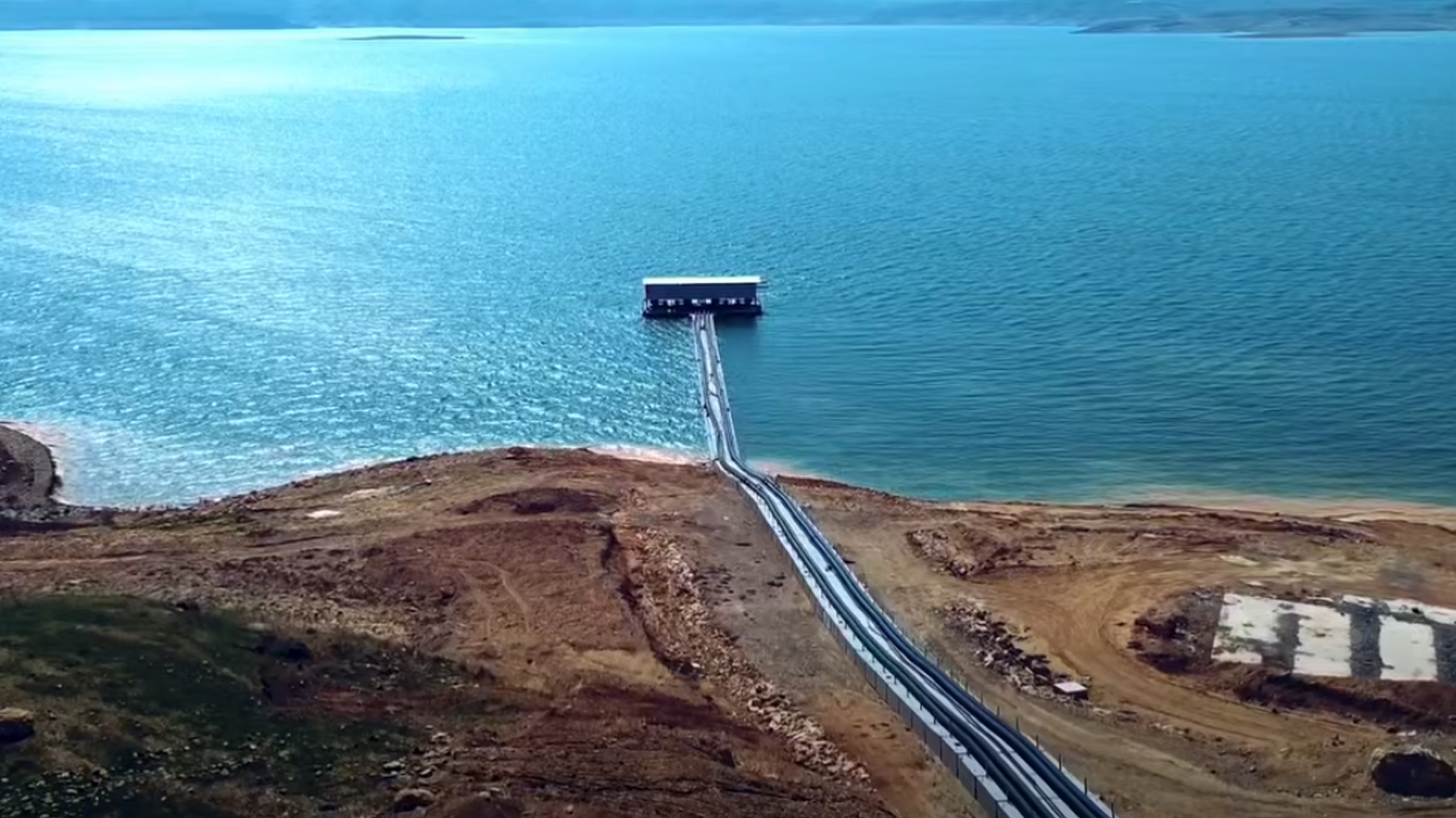
ERBIL (Kurdistan24) – The Kurdistan Regional Government (KRG) has announced the completion of a major strategic water project in the Khanke sub-district of Duhok province, a development expected to eliminate water shortages in the area and strengthen access to clean drinking water across neighboring communities.
In a statement on Sunday, the KRG's Department of Media and Information confirmed that the Khanke Water Project, located near the Mosul Dam, has become fully operational following an investment of 3.5 billion Iraqi dinars (approximately $2.67 million USD).
The project is capable of producing 3,400 cubic meters of clean and safe drinking water per hour, providing a long-term solution to water scarcity in Khanke and improving public access to essential services.
According to the KRG, the project's second phase will extend water supplies to the districts and sub-districts of Semel, Tenahi, and Misurike, allowing thousands more residents to benefit from reliable access to safe drinking water.
The government said the project forms part of the Ninth Cabinet's broader efforts to modernize water infrastructure and enhance public services throughout the Kurdistan Region.
The completion of the Khanke Water Project comes amid a wider regional strategy to strengthen water security in response to growing environmental challenges, including climate change, declining rainfall, and recurring drought conditions affecting Iraq and the Kurdistan Region.
According to official KRG data, more than 2.564 million cubic meters of clean water are currently produced daily across the Kurdistan Region through a network of strategic water projects, purification plants, wells, and natural springs. Authorities say the initiative is designed to provide a permanent solution to water shortages while ensuring access to drinking water that meets international standards.
The Kurdistan Region currently relies on 25 major strategic water purification plants and stations, in addition to 4,946 wells and 536 natural springs serving urban and rural communities.
The KRG has also expanded water storage capacity through dam construction, completing nine dams during the current cabinet's term with a combined storage capacity exceeding 252 million cubic meters. According to official figures, the Kurdistan Region now has 36 dams, including 25 completed structures, while 11 more remain under construction or implementation.