Trump Says Iran Wants Nuclear Deal, Urges Critics to Stop Second-Guessing Negotiations
U.S. president argues political pressure complicates diplomacy as talks with Tehran continue
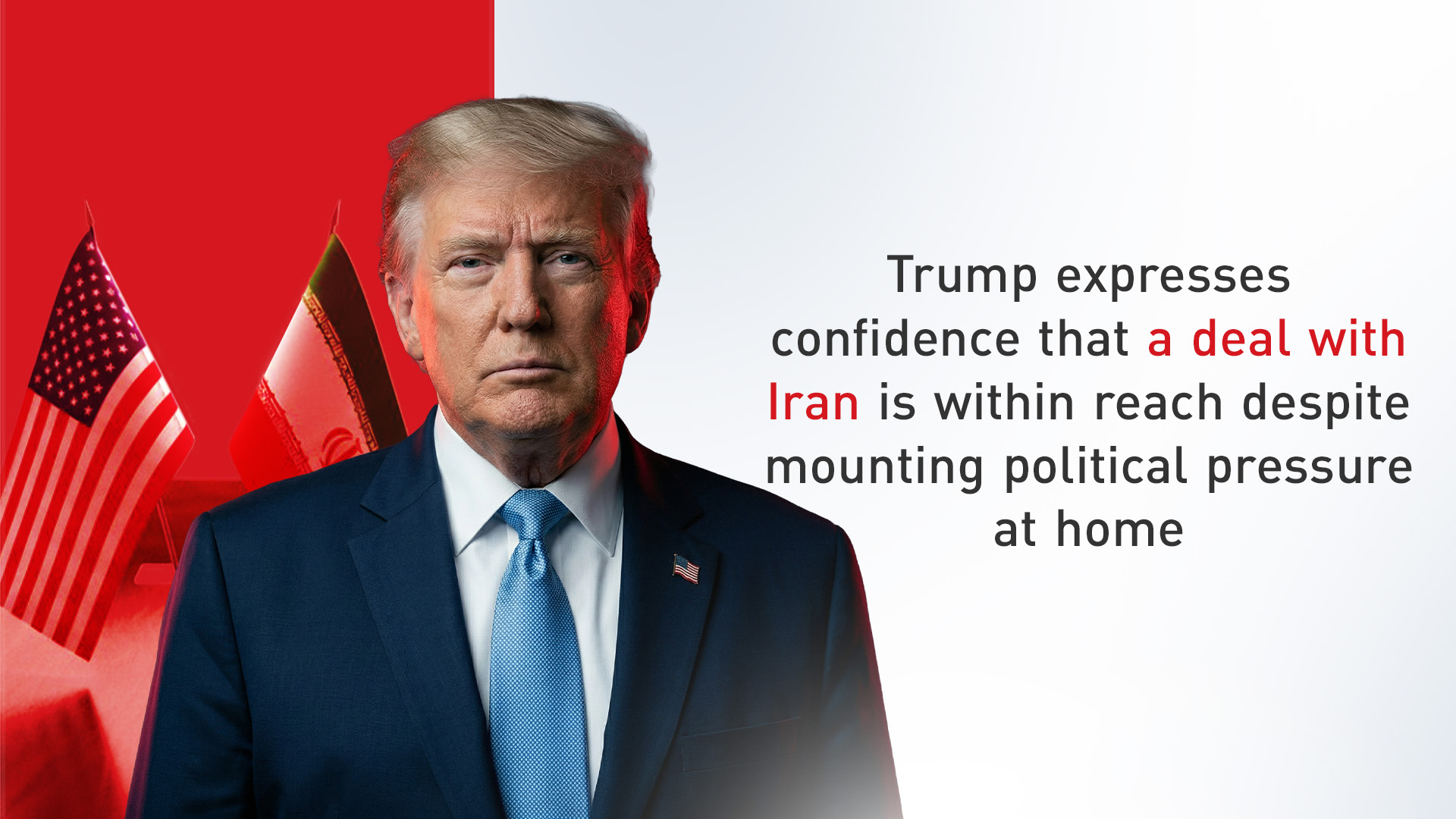
ERBIL (Kurdistan24) — U.S. President Donald Trump said Monday that Iran is eager to reach an agreement with Washington, while criticizing political opponents and some members of his own party for what he described as unhelpful commentary on the ongoing negotiations.
In a post published on his Truth Social platform, Trump expressed confidence that a potential deal with Tehran would benefit both the United States and its allies.
“Iran really wants to make a deal, and it will be a good one for the U.S.A. and those that are with us,” Trump wrote.
The president also took aim at Democrats—whom he referred to as “Dumocrats”—as well as “various seemingly unpatriotic Republicans,” arguing that their public criticism makes it more difficult for him to negotiate effectively.
Trump said political commentators and opponents have repeatedly urged him to either accelerate or slow down negotiations, while offering conflicting advice on whether to pursue military action against Iran.
“But don’t the ‘Dumocrats’ [Democrats], and various seemingly unpatriotic Republicans, understand that it is MUCH tougher for me to properly do my job and negotiate, when political hacks keep negatively ‘chirping,’ at levels never seen before, over and over again, that I should move faster, or move slower, or go to war, or not go to war, or whatever,” he wrote.
The president sought to reassure supporters that the diplomatic process would ultimately produce positive results, adding: “Just sit back and relax; it will all work out well in the end — It always does!”
Trump's remarks come amid continued international attention on U.S.-Iran relations and efforts to reach a new understanding over Tehran’s nuclear program.
While details of any potential agreement remain unclear, the administration has repeatedly indicated that diplomacy remains its preferred path for addressing concerns surrounding Iran’s nuclear activities and regional security issues.
The comments also underscore the domestic political pressures surrounding negotiations with Iran, a longstanding and contentious issue in U.S. foreign policy that has often drawn sharp divisions between Democrats and Republicans, as well as among different factions within the Republican Party itself.
Meanwhile, Iran's chief negotiator, Mohammad Bagher Ghalibaf, reiterated Tehran's conditions for any agreement with Washington, stressing that Iranian officials would not endorse a deal that failed to safeguard the country's interests.
"We will not approve any agreement until we are certain that the rights of the Iranian people have been upheld," Ghalibaf said in remarks broadcast on Iranian state television on Sunday.
He added that Tehran's negotiating team "neither trusts the enemy's words nor its promises," underscoring longstanding Iranian skepticism toward U.S. commitments.
His comments came as Iran and the United States continued exchanging proposals aimed at establishing a framework for a broader agreement to end the conflict that erupted on Feb. 28 and spread across the Middle East.
Reports by The New York Times and Axios on Saturday said Trump had returned a revised framework proposal to Tehran containing what were described as tougher conditions, though details of the changes were not immediately disclosed.
Iran has consistently maintained that any future agreement must include meaningful sanctions relief and the unfreezing of Iranian assets held abroad.
Tehran also views its control over the strategic Strait of Hormuz — a critical artery for global energy shipments — as a sovereign right, making the waterway's status another key consideration in negotiations with Washington.