How Trump Made Artificial Intelligence a Central Part of His Political Playbook
The U.S. President has turned Truth Social into a gallery of A.I.-crafted personas, Naruto Uzumaki, king, fighter pilot, Mount Rushmore icon, marking an evolution in how American leaders speak directly to the public.
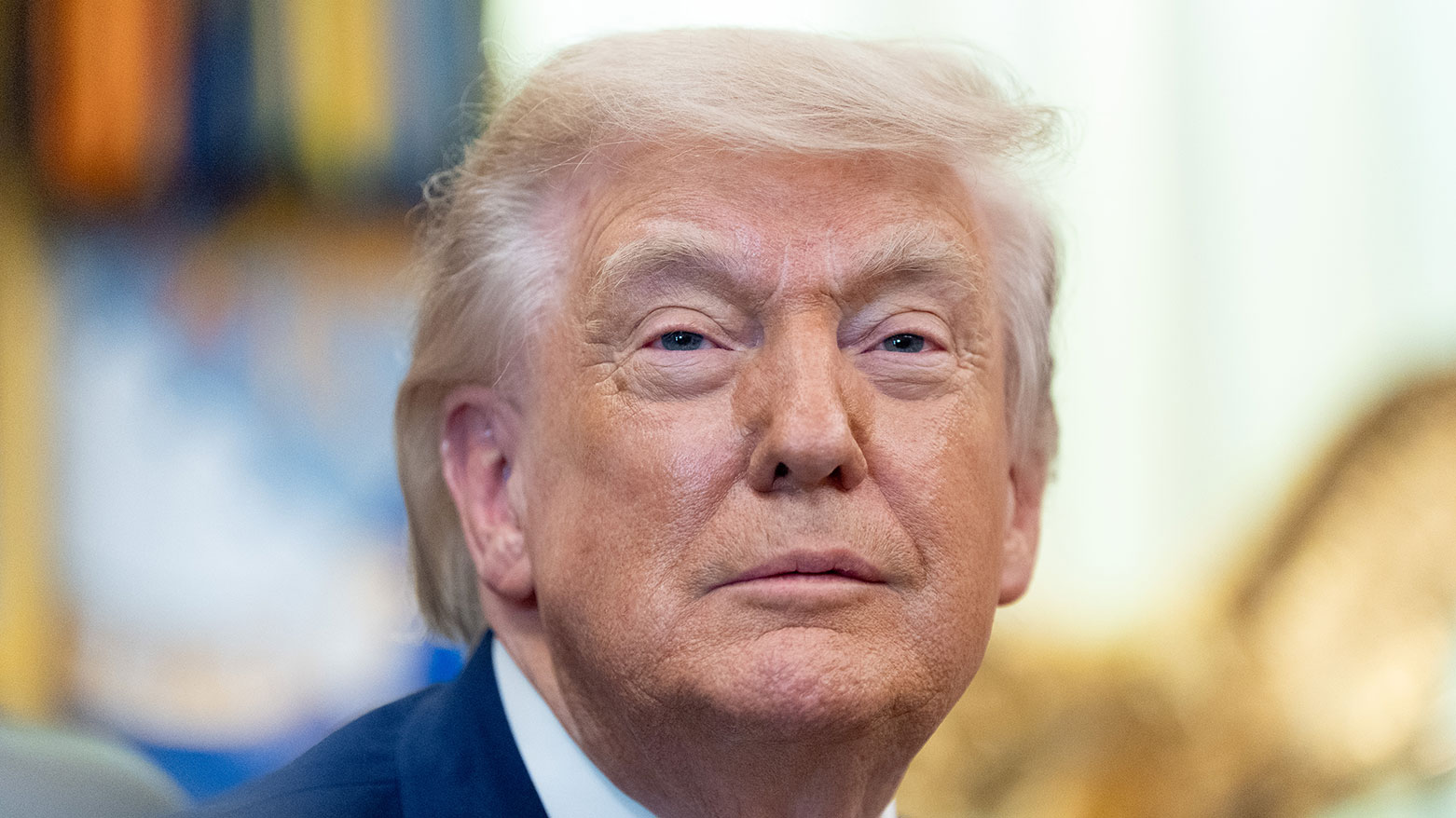
ERBIL (Kurdistan24) - Late one evening in early June, President Donald J. Trump posted a striking image to Truth Social with no caption: his face carved into Mount Rushmore alongside George Washington, Thomas Jefferson, Theodore Roosevelt and Abraham Lincoln.
The rendering, unmistakably generated by artificial intelligence, captured the grandeur of the South Dakota monument while inserting the 79-year-old president into its pantheon.
Within hours, the post had ricocheted across the platform he owns, drawing tens of thousands of likes, shares and admiring comments from supporters who saw it as playful symbolism rather than literal claim.
It was the latest in a now-familiar ritual.
Since reclaiming the White House in January 2025, President Trump has posted dozens of A.I.-generated images and videos to Truth Social, depictions of himself as Naruto Uzumaki, the titular character and main protagonist of the manga series Naruto, a crowned fighter pilot streaking over protesting crowds, a sunbathing resort developer in a reimagined Gaza, a conductor at the Kennedy Center or even, briefly in April 2026, a white-robed healer that some interpreted as Christ-like (a post he quickly deleted, later explaining he had viewed it as a doctor tending the sick).
The visuals are bold, often humorous and always larger than life.
They arrive unannounced, unfiltered and unapologetic, part of a communications style that has made the president one of the most prolific users of generative artificial intelligence in American politics.
The phenomenon matters because it reveals something larger than any single meme.
President Trump has embraced A.I. not as a novelty but as a core instrument of branding, storytelling and direct voter outreach, a tool that lets him bypass traditional media gatekeepers and craft his own visual narrative in real time.
In doing so, he has accelerated a broader shift already underway in political communication, one that echoes earlier leaps from radio to television and from cable news to social media.
What began as occasional experiments has become a steady drumbeat, showing how generative tools can amplify a leader's voice while testing the boundaries of authenticity in an era when images can be conjured in seconds.
The practice traces its roots to late 2022, when President Trump, then out of office and building Truth Social as an alternative to platforms that had barred him, first shared A.I.-generated visuals, according to a detailed review by The New York Times.
Usage remained sporadic until the 2024 presidential campaign, when the tools matured and the volume surged.
The Times counted at least 19 A.I. images or videos posted in support of his re-election bid, including one of Elon Musk beside a "D.O.G.E." logo long before that idea became policy reality, and a flurry of lighthearted scenes featuring the candidate cuddling cats, ducks and dogs after a debate exchange drew criticism.
By early 2025 the pace had quickened.
In February, President Trump shared an A.I. video envisioning "Trump Gaza", golden high-rises, money raining from the sky and a resort-lined beach bearing his name. In May came the pope image, which he shrugged off with characteristic humor when questioned.
By October, videos had grown more cinematic: one showed the president in a fighter jet, crown atop his head, releasing payloads on "No Kings" protesters below.
Throughout 2025 and into 2026, recurring motifs emerged, President Trump as monarch, superhero, historical colossus or triumphant showman, often juxtaposed with satirical jabs at opponents.
The U.S. President went as far as using A.I-generated content during the recent Iran war which began in late February.
The posts mix self-mythologizing with broad public appeal, delivered in the rapid-fire cadence that has defined his platform since its inception.
This evolution mirrors technological turning points in American politics.
Just as Franklin D. Roosevelt's fireside chats humanized radio and John F. Kennedy mastered the television camera, President Trump has seized generative A.I. to speak in the visual language of the moment.
Political strategists note the efficiency: a few typed prompts can produce polished, shareable content that once required expensive ad buys or Hollywood production crews.
Historians of media could draw parallels to the advent of short-form video on platforms like TikTok, but with a crucial difference, the U.S. President controls the pixels themselves.
President Trump's comfort with the technology aligns with his administration's broader approach to A.I. policy.
On his first full day in office in January 2025, he signed Executive Order 14179, "Removing Barriers to American Leadership in Artificial Intelligence," revoking predecessor restrictions that he argued had slowed innovation.
By July, the White House had released "America's A.I. Action Plan," a 25-page blueprint emphasizing deregulation, data-center permitting, youth education in A.I. and export of American technology stacks to counter Chinese competition.
Additional orders followed: accelerating federal adoption of trustworthy A.I., preempting state laws deemed burdensome to developers, and, in June 2026, a directive promoting advanced A.I. innovation and security through public-private partnerships.
The administration has framed these steps as essential to sustaining United States dominance in a global race.
Officials point to streamlined permitting for data centers, incentives for domestic semiconductor production and a deliberate rejection of what they call "ideological bias" in federal A.I. systems.
Engagement with industry has been pragmatic and forward-looking, with the president frequently highlighting American ingenuity, the same ingenuity that now populates his Truth Social feed with custom-crafted visions of strength and success.
Technology experts and media scholars see deeper implications. Generative A.I. lowers the cost of political storytelling to near zero, enabling leaders to test messages instantaneously and tailor them to niche audiences.
For supporters, President Trump's posts foster a sense of intimacy and fun, a President who laughs at himself while projecting unyielding confidence.
Critics worry about blurred lines between satire and reality, yet the President's defenders counter that the content is transparently fantastical, more akin to editorial cartooning than deception. Either way, the experiment has normalized A.I. as a legitimate communications medium.
As the tools grow more sophisticated, capable of lifelike video and audio, the opportunities expand.
Voters may soon receive personalized A.I.-generated town halls or policy explainers from their elected leaders.
Historians may one day view President Trump's Truth Social gallery as the opening chapter in that transformation: a moment when a sitting president treated generative A.I. not as a threat to truth but as an extension of his own voice.
In the end, the Mount Rushmore post and its predecessors are more than digital curiosities.
They illustrate how one politician has bent emerging technology to the timeless craft of persuasion, and in doing so, helped define the terms on which future leaders will meet the public. In an age of artificial intelligence, President Trump has shown that the most potent images may be the ones a leader creates himself.
|
Summary: U.S. President Donald Trump has become one of the most prominent political figures harnessing generative A.I. for communication and branding, posting dozens of A.I.-generated images and videos on Truth Social since late 2022, from campaign memes in 2024 to cinematic self-portraits as king, pilot and Mount Rushmore icon in his second term. This practice, paired with his administration's deregulatory A.I. agenda (Executive Order 14179, the 2025 A.I. Action Plan), underscores a larger transformation: A.I. is democratizing political storytelling, allowing direct, rapid, visual messaging that bypasses traditional media and signals the technology's expanding role in modern governance. |