The June 7 Decision: How the 2017 Independence Referendum Reshaped Kurdish Politics
Nine years after the June 7, 2017 decision to hold an independence referendum in Kurdistan Region, the vote remains a foundational milestone in modern Kurdish political history.
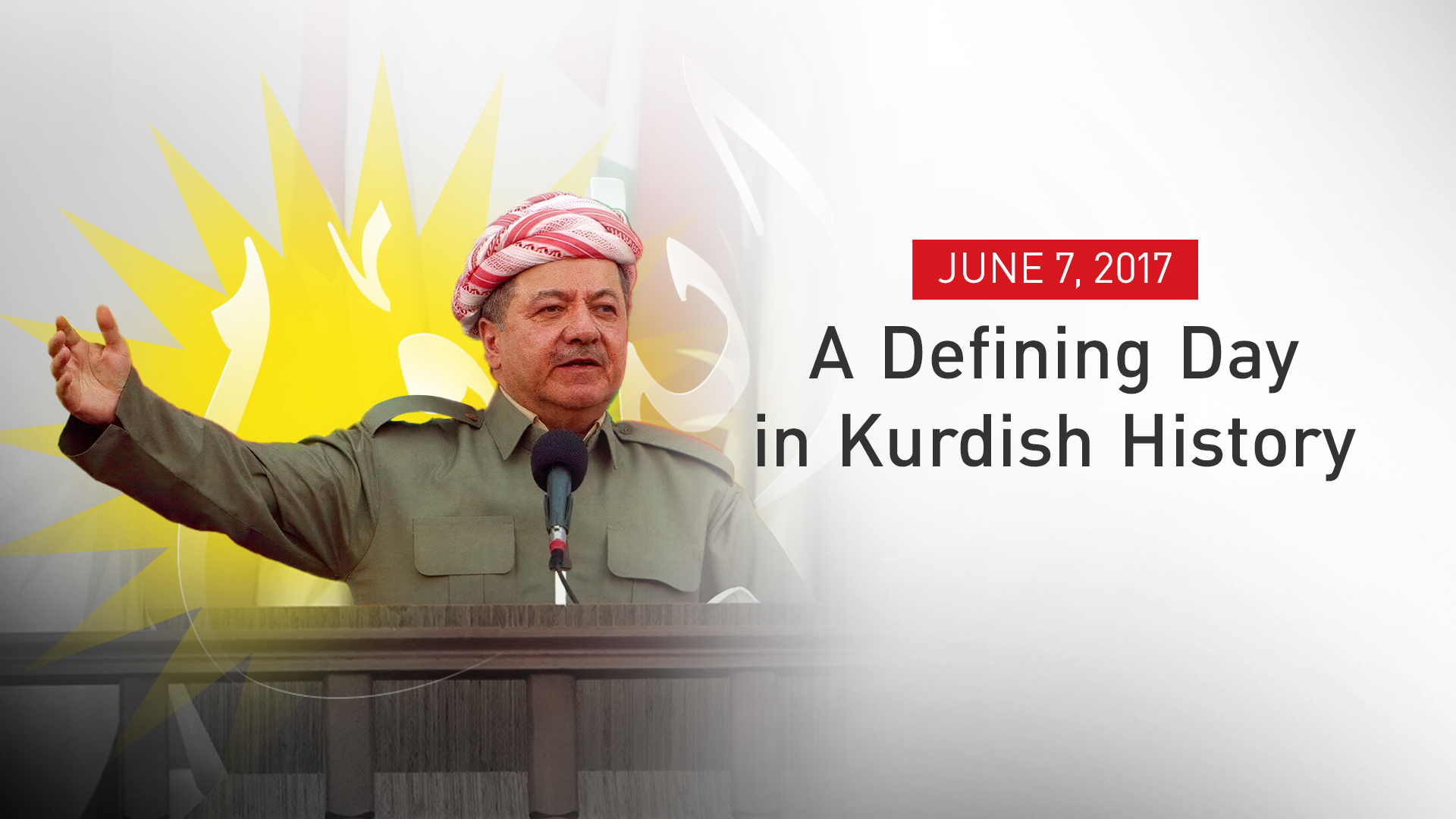
ERBIL (Kurdistan24) - On June 7, 2017, Kurdish leaders gathered in Erbil to make a choice that would permanently alter the geopolitical landscape of the Middle East. Nine years later, in 2026, that decision, to hold an independence referendum, remains one of the most consequential milestones in modern Kurdish history.
What began as a bold assertion of self-determination has evolved into a foundational pillar of Kurdish political identity.
Rather than fading into the archives of unfulfilled national aspirations, the decision made nearly a decade ago serves as an active reference point for governance, federalism, and the limits of autonomy in the region.
The path to the June 7 decision was paved by years of systemic political and financial friction.
Following the 2003 U.S. Operation Iraqi Freedom, the Kurdistan Region entered a federal framework outlined by the 2005 Iraqi Constitution.
However, the years that followed were defined by escalating disputes over budget allocations, oil export rights, and the implementation of Article 140 regarding Kurdistani territories.
By 2014, when the Islamic State (ISIS) swept through western and northern Iraq, the dynamics shifted dramatically.
Kurdish Peshmerga forces became crucial global allies in the fight against the terrorist group, effectively securing territories that federal forces had abandoned, including the strategic, oil-rich city of Kirkuk.
This pivotal military role, combined with deepening frustrations over what Erbil viewed as Baghdad's persistent violations of constitutional power-sharing agreements, convinced Kurdish leadership that a historic window had opened to formalize their people's long-standing desire for statehood.
The June 7 Conclave and Strategic Formulation
The definitive turning point occurred during an expansive meeting on June 7, 2017.
Chaired by President Masoud Barzani, the session brought together the region's major political factions, including the Kurdistan Democratic Party (KDP), the Patriotic Union of Kurdistan (PUK), and various nationalist, Islamic, and ethnic and religious component parties.
Operating under the newly formed High Referendum Council, these factions made the strategic choice to pursue a democratic referendum rather than a unilateral declaration of independence.
The reasoning was diplomatic: a public vote would establish an undeniable democratic mandate.
This mandate was intended to provide legal and moral leverage for subsequent, structured negotiations with Baghdad and the international community, mapping out a peaceful transition toward sovereignty.
Read More: Kurdistan Marks Eight Years Since Decision to Hold Independence Referendum
A National Carnival Under Global Scrutiny
The announcement triggered an intense public mobilization within the Kurdistan Region, transforming the lead-up to the vote into what contemporary observers described as a widespread national festival. However, this domestic enthusiasm stood in sharp contrast to severe international blowback.
The upcoming ballot attracted immediate global attention and resistance.
Major international powers, including the United States, the European Union, and the United Nations, actively pressured Erbil to postpone the vote, fearing it would fragment the anti-ISIS coalition and destabilize the fragile Iraqi state.
Regionally, the reaction was hostile.
Neighboring heavyweights Türkiye and Iran issued stark warnings, threatening economic blockades, border closures, and joint military maneuvers, while Baghdad denounced the entire initiative as strictly unconstitutional.
The Verdict of the Ballot Box
Despite intense external pressure, the referendum took place as scheduled on September 25, 2017. The exercise saw massive voter turnout across the Kurdistan Region and the Kurdistani territories under KRG control.
The results were mathematically definitive: more than 92 percent of voters cast their ballots in favor of independence.
International observers present at the time characterized the voting process as remarkably transparent and aligned with democratic standards.
For the millions who participated, the vote was a historic, direct expression of popular will, an explicit declaration of self-determination by a stateless nation that had endured a century of marginalization.
Geopolitical Aftershocks and Regional Containment
The backlash from Baghdad and neighboring states was swift and punitive.
In October 2017, the Iraqi central government, coordinating with Ankara and Tehran, implemented severe economic and political restrictions. International airspace over the Kurdistan Region was closed, borders were restricted, and Iraqi federal forces, alongside state-backed militias, reasserted control over Kurdistani territories, including Kirkuk.
This coordinated containment effort significantly reduced the KRG's territorial and economic reach, neutralizing the referendum's immediate political utility.
The international community, prioritizing regional stability and the territorial integrity of Iraq, largely looked away, leaving Erbil to navigate deep economic strain and political isolation.
Nine Years Later: Identity, Institutional Reality, and 2026
Nearly a decade later, in 2026, the referendum's practical and symbolic legacy presents a complex, multi-layered picture.
While the vote did not result in an independent state, it remains deeply embedded in Kurdish collective memory. For Erbil, the 92 percent "yes" vote serves as a permanent, non-negotiable legal and political archive of the people's will.
In contemporary discourse, the strategic focus has shifted from immediate secession to preserving the constitutional rights of the federal Kurdistan Region against ongoing centralizing pressures from Baghdad.
Younger generations of Kurds view the 2017 vote with a mix of historical pride and pragmatic realism, recognizing it as a symbolic high-water mark of national unity, even if its material promises remain unfulfilled.
President Barzani Legacy: Statesmanship and National Will
The decision continues to define the political legacy of President Masoud Barzani. As the primary architect of the referendum, President Barzani faced immense diplomatic pressure to back down.
Supporters view his refusal to yield as an act of historic statesmanship, cementing his role as the guardian of the Kurdish national cause.
By prioritizing the popular will over external threats, President Barzani's leadership ensured that the referendum became a defining chapter in the long struggle for Kurdish identity, demonstrating that the aspiration for self-determination could not be erased by temporary geopolitical setbacks.
Self-Determination on the Global Stage
The Kurdish experience echoes broader international debates surrounding stateless nations, federalism, and the limits of democratic expressions of political will.
Like similar movements in Catalonia or Scotland, the 2017 Kurdish referendum highlighted the inherent tension between the international state system's commitment to territorial integrity and the principle of self-determination.
It underscored the structural challenges faced by autonomous regions within fragile federal systems when constitutional mechanisms fail to protect minority rights.
|
Summary On June 7, 2017, a broad political consensus led by President Masoud Barzani and supported by major parties including the Kurdistan Democratic Party (KDP) and the Patriotic Union of Kurdistan (PUK), resolved to hold an independence referendum in the Kurdistan Region on Sept. 25, 2017. Despite significant regional and international pressure, the vote proceeded, with more than 92% of participants backing independence in what was widely described as a highly participatory process. Nine years later, the decision is regarded as a defining moment in modern Kurdish political history, symbolizing sustained claims to self-determination and shaping the region’s contemporary political identity. |