Kurdistan Region Upgrades Wheat Procurement Strategy as Record Harvest Challenges Local Supply Chains
With silos bracing for a massive surplus, the Kurdistan Regional Government has rolled out a new electronic registration system and mobilized the private sector to ensure the entirety of this year's wheat crop is successfully purchased.
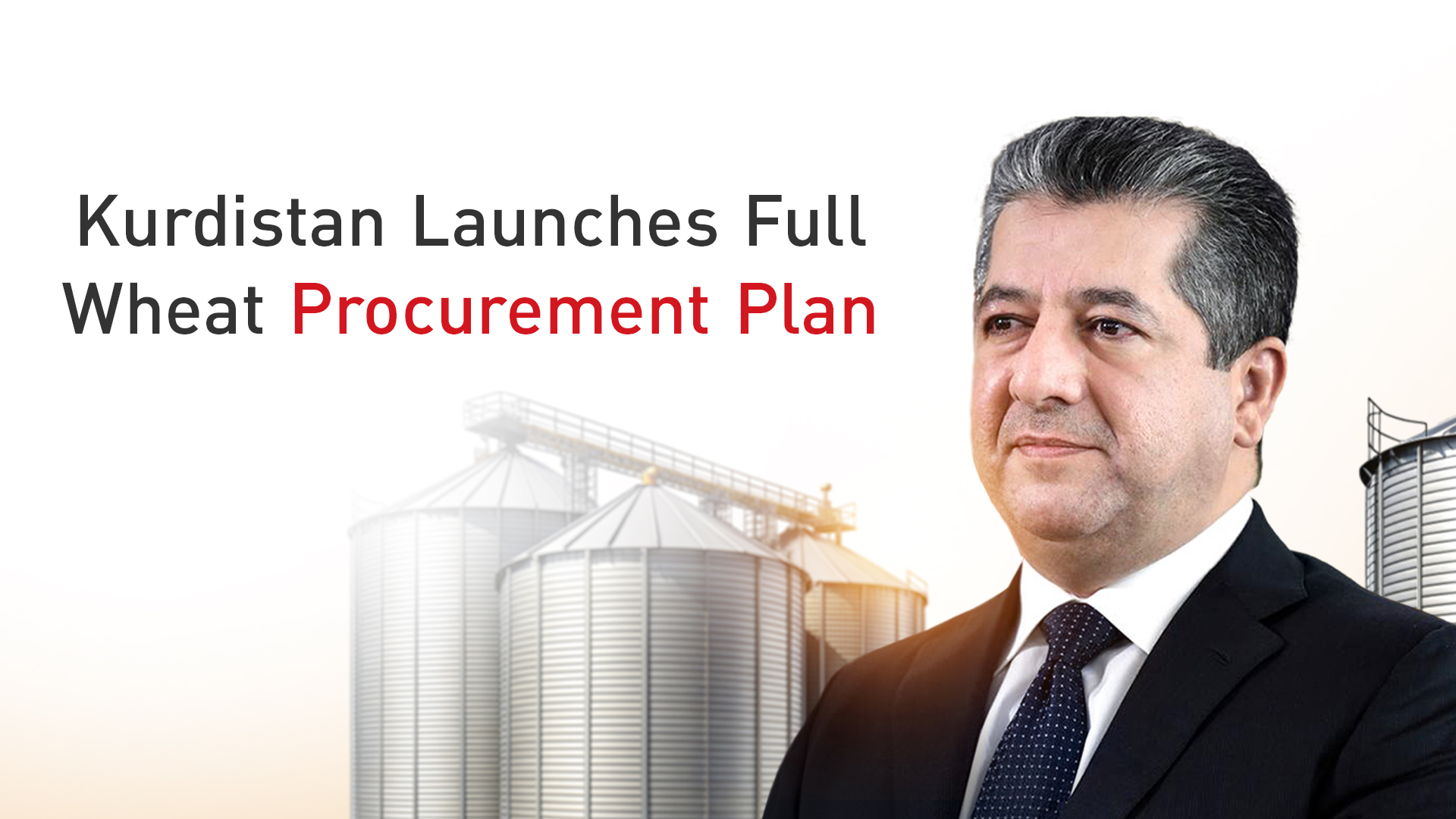
ERBIL (Kurdistan24) - The Kurdistan Region's wheat procurement season has officially opened under the pressure of an extraordinarily abundant harvest, prompting regional authorities to overhaul their agricultural supply chain to ensure farmers are fully compensated.
Facing widespread anxiety among local growers that restrictive state purchasing caps would leave significant portions of their crop unsold, Prime Minister Masrour Barzani has issued a directive establishing a comprehensive procurement strategy.
The initiative aims to guarantee that the entirety of the region's wheat yield is absorbed, utilizing a combination of state silos and new private-sector mechanisms.
According to a followup by Kurdistan24, the logistical backbone of this year's harvest season features a newly implemented, fully electronic queuing system.
The digital portal is designed to eliminate the protracted, physical lines of heavy transport trucks that have historically clogged the roads outside regional grain silos during the summer months.
The Erbil Grain Trade Directorate emphasized that the new protocol is strictly mandatory.
Farmers must register their deliveries through a designated online portal, receiving a confirmation SMS that assigns them a specific delivery date.
The directorate warned that missing the assigned slot results in forfeiture, necessitating a complete re-registration, and that any data discrepancies discovered during onsite verification will lead to immediate denial of entry.
These stringent logistical measures are attempting to manage a severely constrained federal purchasing framework. Nawzad Sheikh Kamil, Director of Trade for the Kurdistan Region, told Kurdistan24 that the state currently plans to accept a total of 400,000 tons of wheat from Kurdish farmers.
The procurement allocation is geographically divided, with Sulaymaniyah slated to deliver 150,209 tons, followed by Erbil with 122,680 tons, Duhok at 116,083 tons, and Halabja providing 11,028 tons.
The pricing structure for this state quota introduces a two-tiered system.
According to Kamil, 292,000 tons of wheat designated as falling "within the plan" will be purchased at a premium rate of 700,000 Iraqi dinars (IQD) per ton. An additional 108,000 tons classified as "outside the plan" will be accepted at a reduced rate of 500,000 IQD per ton.
However, farmers across the region have expressed deep frustration that these federally mandated limits fail to reflect the reality of their fields.
This year's exceptionally high yield far exceeds the 400,000-ton cap, raising fears of widespread financial loss.
In response, Kamil noted that Prime Minister Barzani has formed a dedicated committee tasked specifically with mobilizing the private sector to procure the massive surplus that state silos are legally restricted from buying.
The regional government's aggressive mobilization occurs as federal authorities in Baghdad begin to acknowledge the scale of the surplus.
According to a separate Kurdistan24 analysis detailing ongoing agricultural policy tensions, Iraqi Trade Minister Mustafa Nizar al-Ani recently conducted inspection tours in Erbil and Duhok, stating that the federal government aims to procure the maximum amount of wheat possible.
During his visits, Nizar conceded that the total acreage of wheat cultivation in the Kurdistan Region has vastly exceeded original federal projections.
While the current 400,000-ton limit remains in place, the minister promised an imminent adjustment to the state's purchasing plan, indicating that Baghdad may pursue international exports for grain procured beyond its domestic food security requirements.
In the interim, regional authorities continue to press for immediate relief.
Sarwar Hawari, Deputy Minister of Trade and Industry, previously emphasized that the current federal quota remains disproportionately low compared to the 4.5 million tons Baghdad aims to procure nationwide.
As negotiations with the federal government over expanding the quotas slowly proceed, the KRG's immediate implementation of digital queuing systems and private-sector partnerships reflects a critical tactical pivot.
For the farmers navigating the new electronic portals, the success of these regional mechanisms will determine whether a record-breaking harvest translates into economic prosperity or logistical paralysis.
|
Summary The Kurdistan Region launched its wheat procurement season with a new electronic queuing system to manage a record harvest. With federal quotas capped at 400,000 tons, Prime Minister Masrour Barzani formed a committee to ensure the private sector purchases all surplus crops to protect farmers. |