Erbil Tourism Projects Open for Investment with Full Infrastructure Ready
The most revealing detail in this tourism push is not the scale of the 24 projects, but the government's decision to pre-build the fundamentals, land access, utilities, and legal guarantees, before investors arrive, effectively shifting risk from capital markets onto public infrastructure planning.
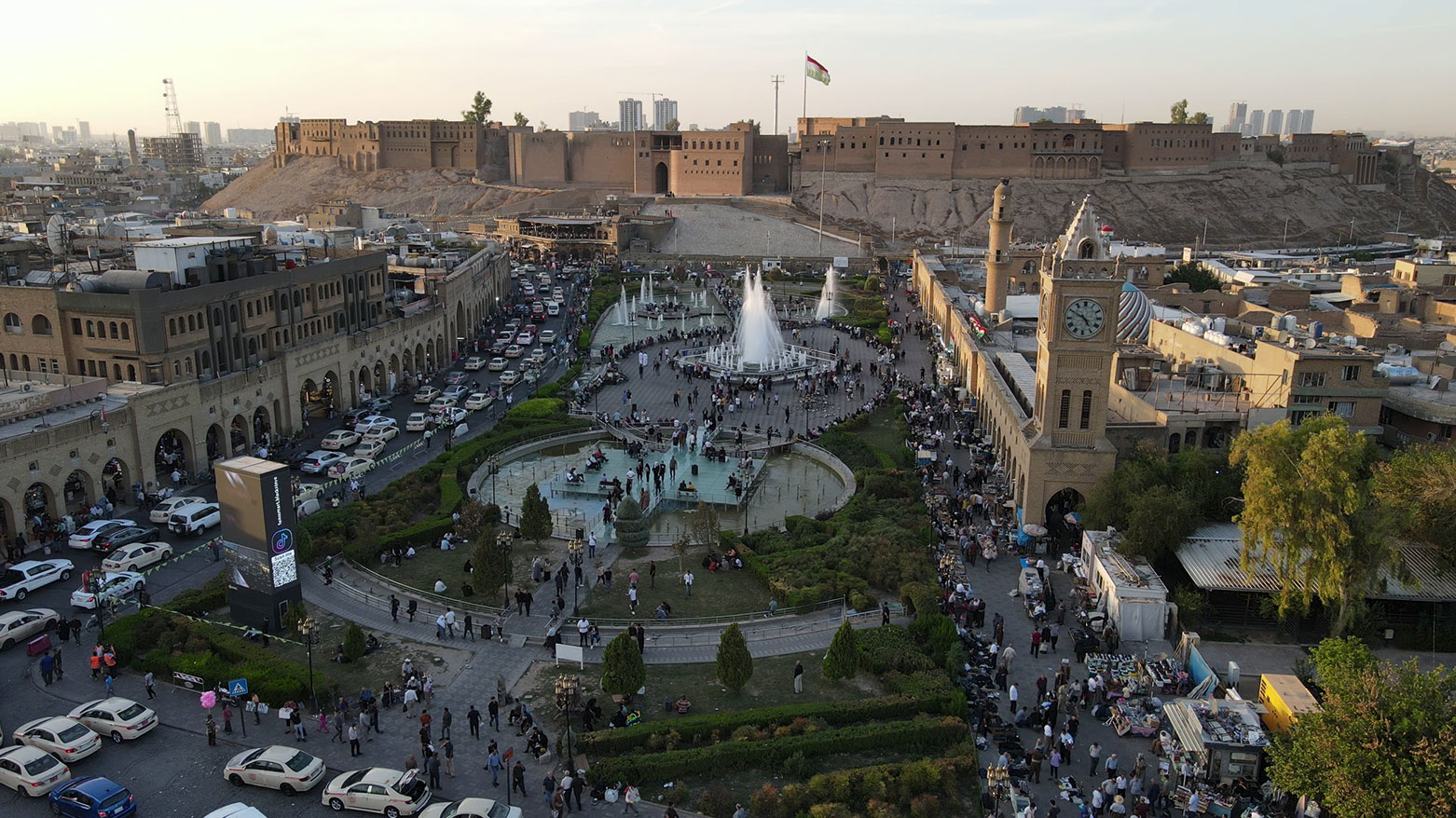
ERBIL (Kurdistan24) - As the Kurdistan Regional Government intensifies efforts to diversify its economy away from oil dependence, it has unveiled an ambitious new investment roadmap aimed at transforming the region's tourism sector.
The plan features 24 strategic tourism projects spread across various provinces and independent administrations.
Read More: KRG Opens 24 Tourism Investment Opportunities with Tax-Free Incentives
The cornerstone of the initiative is a proactive, infrastructure-first approach: the government has already secured the land and provided essential utilities for these sites, effectively offering investors "shovel-ready" opportunities.
This strategy marks a significant shift in regional economic policy.
Speaking previously at the Middle East Tourism Exhibition, Prime Minister Masrour Barzani emphasized the government's commitment to building a sustainable, non-oil revenue base.
"Our government is committed to providing all necessary facilities for investment and growth in this sector, aiming to transform it into a sustainable source of revenue for the Kurdistan Region," Prime Minister Barzani stated.
He noted that tourism serves as a powerful vehicle to introduce the region's history, culture, and geography to the international community.
Erbil as the Tourism Anchor
The roadmap places Erbil province squarely at the center of the development vision.
Already the political capital and a major commercial hub, Erbil possesses immense untapped tourism potential.
The city is anchored by the ancient Erbil Citadel, recognized as one of the oldest continuously inhabited sites in the world, and is surrounded by spectacular natural landscapes, including the resort town of Shaqlawa, Mount Safin, and the Soran Independent Administration.
The Board of Investment and the General Board of Tourism have identified three flagship investment zones within Erbil province, each designed to leverage specific geographic and cultural assets.
The first is the Cheniran Village Project near Shaqlawa. Located roughly a one-hour drive from Erbil International Airport, the 200-dunam (50,000-square-meter) site is envisioned as a premier mountain retreat.
Surrounded by dense forests and characterized by a cool microclimate, the pre-serviced land is slated for the development of luxury hotels, tourist villas, event venues, and recreational facilities.
The second focal point is the Tawska Eco-Tourism Project, situated on the slopes of Mount Safin, 47 kilometers from the capital.
Spanning 16 dunams (40,000 square meters) of land owned by the Ministry of Agriculture and Water Resources, the site has been formally integrated into the region's tourism master plan.
Developers are invited to build eco-friendly hotels, festival grounds, and outdoor sports facilities aimed at capturing the growing market for adventure and nature-based tourism.
The third initiative, the Gopal Riverside Tourism Complex, capitalizes on critical transit infrastructure. Located in the Darashakran sub-district along the main highway connecting Erbil and Duhok, the 18-dunam (45,000-square-meter) site sits along the Great Zab River.
The government envisions this location as a year-round hub featuring concert halls, local product exhibitions, and specialized waterfront recreation, capturing traffic moving between the region's two major northern cities.
An Infrastructure-First Investment Model
The KRG's strategy of preparing these sites in advance is a calculated move to mitigate investor risk.
By ensuring that paved roads, electricity, water, and internet connectivity are already extended to the project boundaries, the government aims to dramatically reduce the bureaucratic friction and initial capital expenditure that often delay large-scale developments.
This infrastructure-led approach is bolstered by some of the most aggressive financial incentives in the Middle East.
According to the Board of Investment guidelines, approved projects benefit from a 10-year exemption from all taxes and non-customs duties. Furthermore, imported raw materials receive a five-year customs exemption.
Crucially, the region's investment law permits 100 percent foreign ownership and guarantees the unrestricted repatriation of profits and original capital.
These legal protections are designed to reassure international capital and position the Kurdistan Region as a highly competitive destination for hospitality investment.
Economic Diversification and Long-Term Stability
The rollout of these 24 projects reflects a profound macroeconomic imperative.
The Kurdistan Region, like much of Iraq, remains heavily exposed to the volatility of global energy markets. Developing a robust tourism industry offers a pathway to sustainable job creation, particularly in the construction, service, and hospitality sectors, while generating reliable, non-oil revenue streams.
By structuring the investment process around fully serviced land and robust legal incentives, the KRG is moving beyond rhetorical commitments to diversification.
The ultimate success of the roadmap, however, will depend on execution.
Transforming these three pristine Erbil zones from prepared blueprints into functional tourism hubs will require sustained investor interest, the continued expansion of supporting regional infrastructure, and the maintenance of a stable political and security environment.
For now, the KRG has laid the literal groundwork; the region is waiting to see if international and domestic capital will build upon it.
Interested investors can initiate legal procedures through the official website at invest.gov.krd or by visiting the offices of the Board of Investment.
|
Summary The KRG has launched a new investment roadmap featuring 24 strategic tourism projects across the Kurdistan Region. Highlighting three "shovel-ready" zones in Erbil, the initiative offers fully serviced land and 10-year tax exemptions to attract investors and diversify the economy. |