Massive Anti-Corruption Drive in Iraq Nets 67 Officials in 24 Hours
Iraq launched its largest anti-corruption crackdown since 2003, arresting 67 lawmakers, officials and business figures in 24 hours. Authorities say hundreds more arrests could follow as Baghdad, with KRG cooperation, targets entrenched graft and stolen state funds.
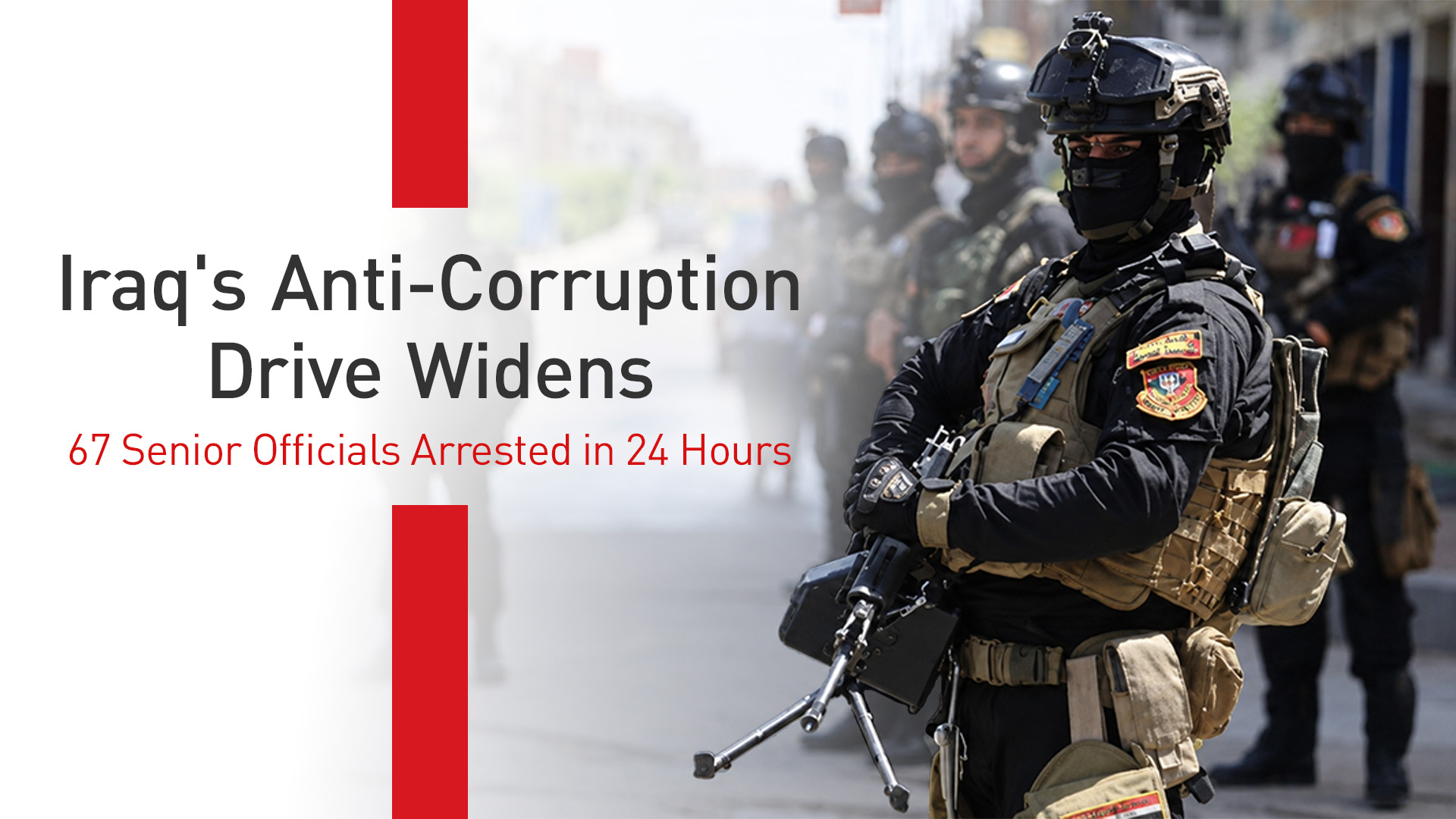
ERBIL (Kurdistan24) - Iraq has entered what officials describe as the opening stage of one of the country's most expansive anti-corruption campaigns in more than two decades, with authorities announcing the detention of dozens of prominent political and administrative figures during the first day of a nationwide operation aimed at recovering public funds and reinforcing institutional accountability.
According to security sources, 67 individuals were arrested within the first 24 hours of the campaign.
Those detained reportedly include current and former members of parliament, senior government officials, business executives and investors who are under investigation over allegations ranging from financial corruption and embezzlement of public assets to illicit enrichment and money laundering.
The scale of the operation immediately distinguished it from previous anti-corruption initiatives in Iraq, not only because of the number of high-profile figures involved, but also because of indications from informed sources that the arrests represent only the initial phase of a broader enforcement effort expected to continue in the coming days.
Officials familiar with the campaign said investigators intend to pursue additional suspects as part of a longer-term strategy designed to strengthen oversight of state institutions and recover misappropriated public resources.
While the reported plans remain subject to ongoing judicial procedures, authorities have indicated that the current operation forms part of a sustained institutional effort rather than an isolated series of arrests.
The extensive security measures accompanying the campaign underscore the seriousness with which federal authorities are approaching the investigations.
Elite security formations, including the Counter-Terrorism Service (CTS), have been deployed across Baghdad's Green Zone and other strategic locations as authorities seek to prevent suspects from evading judicial proceedings.
Security officials also reported heightened monitoring at Iraq's international airports and border crossings, alongside restrictions intended to prevent individuals under investigation from leaving the country while legal proceedings continue.
Reports that some wanted individuals attempted to flee or conceal themselves have not altered the government's stated commitment to pursuing investigations through established legal channels.
In his first public remarks following the launch of the operation, Iraqi Prime Minister Ali al-Zaidi described the campaign as the beginning of a broader governmental effort to safeguard public resources and reinforce the authority of state institutions.
Al-Zaidi said the government bears responsibility for protecting the country's wealth and emphasized that corruption would no longer be tolerated within state institutions.
Read More: Iraq Prime Minister Vows No Mercy in Stage One of Corruption Crackdown
He further stated that the implementation of the rule of law remains central to the government's constitutional responsibilities and that efforts to strengthen accountability would continue through legal mechanisms.
The federal government has presented the campaign as a coordinated institutional undertaking involving judicial authorities, oversight bodies and security agencies rather than the initiative of any single institution.
That approach reflects an emphasis on strengthening governance through constitutional processes while allowing investigations and subsequent judicial proceedings to unfold under the supervision of Iraq's competent legal authorities.
Consistent with Iraqi legal principles, those detained remain subjects of investigation, and the allegations against them are expected to be examined through the country's judicial system, where the presumption of innocence continues to apply until any court reaches a final determination.
The current investigations also appear closely connected to broader corruption inquiries that have gathered momentum over recent months.
Iraqi officials have linked the latest campaign to evidence uncovered following the May 2026 arrest of former Oil Ministry Undersecretary Adnan al-Jumaili, widely known by the nickname "Oil Whale."
Read More: Exclusive - Iraq Anti-Corruption Sweep Expands: Key Arrests Revealed
According to federal authorities, that investigation uncovered significant quantities of cash, gold and high-value properties allegedly accumulated through corrupt practices, prompting investigators to expand their examination of wider financial networks.
Beyond the arrests themselves, the operation has also highlighted growing cooperation between Baghdad and the Kurdistan Regional Government (KRG) within Iraq's constitutional framework.
Following formal requests submitted by the federal government and the Federal Integrity Commission, Kurdish security forces detained three individuals residing in Erbil who were wanted in connection with corruption investigations.
The suspects, Ziad al-Janabi, Hind al-Abbasi and Mohammed al-Mayahi, were subsequently transferred to federal authorities at the Sherawa checkpoint after legal procedures governing the handover had been completed.
As previously reported by Kurdistan24 correspondent Hoshmand Sadiq, Kurdish security personnel remained at the crossing until all required administrative and legal protocols had been finalized, illustrating the procedural coordination underpinning the transfer.
Read More: Kurdistan Region Arrests Three Corruption Suspects, Hands Them Over to Baghdad
The operation has coincided with public remarks from senior Kurdistan Democratic Party (KDP) Politburo member Hoshyar Zebari, who sought to clarify the Kurdistan Region's position as federal anti-corruption investigations expand.
Writing on X, Zebari reaffirmed that the Kurdistan Region has long served as a refuge for political dissidents, advocates of civil liberties and individuals fleeing persecution. At the same time, he drew a clear distinction between protecting political freedoms and providing sanctuary for individuals accused of criminal conduct or corruption.
According to Zebari, the Kurdistan Region's democratic identity does not extend to shielding suspects sought under lawful judicial procedures. He stressed that those accused of embezzling public resources or other criminal offenses should not expect to evade accountability by relocating to the Region.
His comments complement the practical cooperation already demonstrated through the transfer of suspects to federal authorities, reinforcing the KRG's stated commitment to working with Baghdad through constitutional and legal mechanisms.
Rather than altering the Kurdistan Region's longstanding role as a haven for those facing political persecution, Zebari's remarks framed legal cooperation against corruption as fully consistent with that constitutional tradition.
Read More: Kurdistan Will Not Shelter Corruption Suspects, Asserts Senior KDP Official Hoshyar Zebari
The coordinated handovers also illustrate the practical functioning of Iraq's federal system when institutions at both the regional and federal levels act within their respective legal authorities.
By adhering to formal judicial requests and established transfer procedures, both governments have emphasized the importance of due process while advancing investigations into alleged financial misconduct.
Whether the current campaign ultimately delivers lasting institutional reform will depend on developments that extend well beyond the initial arrests.
For now, however, the breadth of the operation, the mobilization of multiple state institutions and the visible coordination between Baghdad and Erbil collectively mark one of Iraq's most consequential anti-corruption efforts since 2003.
As investigations continue, the government's stated objective remains the recovery of public funds, the strengthening of institutional accountability and the reinforcement of public confidence in the rule of law. The coming stages of the campaign, and the judicial proceedings that follow, are likely to provide an important measure of Iraq's capacity to pursue corruption cases through constitutional institutions while maintaining legal safeguards and cooperation across its federal system.
|
Summary Iraq has launched one of its largest anti-corruption campaigns since 2003, with 67 lawmakers, officials and business figures arrested in the first 24 hours. The operation also highlights constitutional cooperation between Baghdad and the Kurdistan Region in pursuing corruption investigations. |