Trump Reaffirms Commitment to NATO After Early Clash, Pledges More Support for Ukraine
U.S. president softens tone behind closed doors at Ankara summit as allies boost defense spending, commit billions for Kyiv, while security concerns surround his new Air Force One
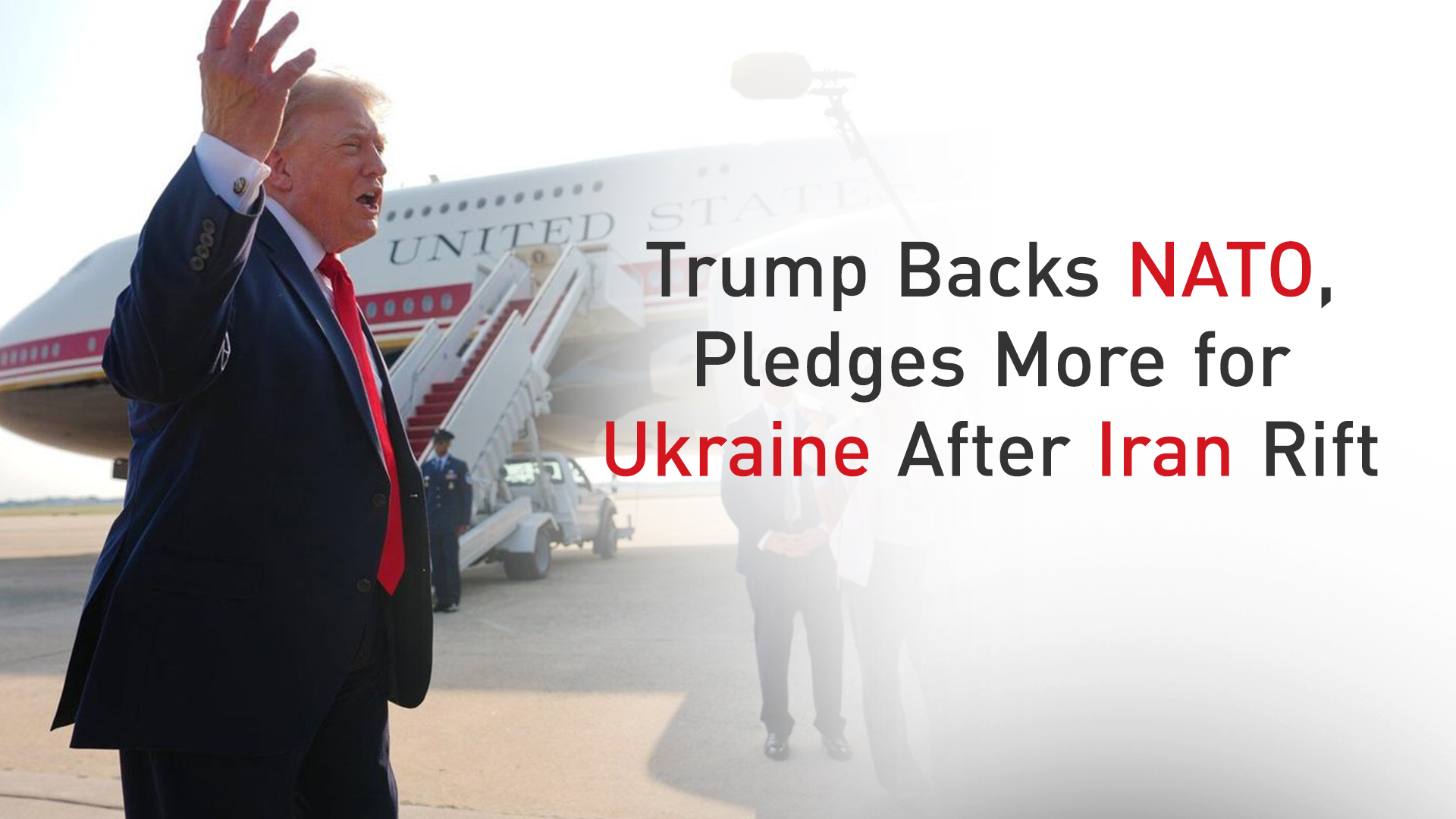
ERBIL (Kurdistan24) — U.S. President Donald Trump ended a turbulent NATO summit in Ankara on Wednesday by reaffirming Washington's commitment to the alliance and praising what he described as unprecedented unity among member states, despite beginning the day with sharp criticism over Europe's stance on Iran and longstanding disputes with several allies.
The dramatic shift in tone came after a closed-door meeting with leaders of the alliance's 32 member states, where Trump sought to reassure partners that the United States remained committed to NATO's collective defense framework.
"It was amazing, actually. The unity in that room was incredible, really a love, it was sort of pretty wild," Trump told reporters after the summit.
"This was a tremendously successful summit."
According to a source familiar with the discussions, Trump told fellow leaders during the private session, "We want to remain with you," helping ease concerns over Washington's long-term commitment to the alliance.
The summit concluded with NATO leaders reaffirming their "ironclad commitment" to Article 5—the alliance's mutual defense clause, under which an attack on one member is considered an attack on all.
European allies seek to reassure Washington
European leaders used the summit to showcase increased defense spending, aiming to demonstrate that they are taking greater responsibility for the continent's security—a long-standing demand of Trump.
German Chancellor Friedrich Merz said the gathering reinforced NATO's cohesion while strengthening Europe's role within the alliance.
"I'm returning to Germany with the sense that we have made a major contribution: that NATO is holding together, that it is becoming stronger, and that it is becoming more European," Merz said.
The atmosphere contrasted sharply with Trump's remarks earlier in the day, when he criticized NATO members for failing to support recent U.S. military operations against Iran.
"I'm very upset with NATO... because of what they did with Greenland, and... because of the fact that they didn't want to help us with the number one state sponsor of terror, that's Iran," Trump said before the summit.
He also renewed pressure on Spain over defense contributions and reiterated his interest in acquiring Greenland from Denmark, reviving one of his most controversial foreign policy ambitions.
However, officials who attended the private discussions said Trump's rhetoric softened considerably once formal talks began.
"There is a strong contrast between what Trump says in public and what he actually says inside," one participant told AFP.
Spanish Prime Minister Pedro Sánchez later described relations with Washington as "very positive," while Trump himself struck a conciliatory tone aboard Air Force One, saying Spain had been "very generous today."
Estonian Prime Minister Kristen Michal said Trump delivered "constructive" messages urging Europe to invest more heavily in defense rather than issuing confrontational demands.
Lithuanian Foreign Minister Kęstutis Budrys cautioned against interpreting Trump's public outbursts as evidence of divisions within NATO.
"I wouldn't see in it an indicator that we are somehow weakening NATO, and that the transatlantic bond is not there," Budrys said.
Ukraine receives renewed backing
Russia's war against Ukraine remained another major focus of the summit.
Meeting Ukrainian President Volodymyr Zelensky on the sidelines, Trump pledged to authorize Ukraine to manufacture Patriot air defense missile systems under license.
"We're going to give a license to you to make Patriots. That's pretty cool, right," Trump told Zelensky.
Ukraine has faced mounting pressure from intensified Russian missile attacks in recent weeks while struggling with dwindling supplies of U.S.-made Patriot interceptor missiles.
Trump also suggested that Ukraine's recent long-range strikes inside Russian territory could contribute to ending the conflict.
"It's an escalation, but it's also an escalation that can help lead to an end," he said, reiterating his belief that both Zelensky and Russian President Vladimir Putin remain interested in negotiating a settlement.
In their final communiqué, NATO's European members and Canada pledged to provide €70 billion ($80 billion) annually in military assistance to Ukraine in both 2026 and 2027.
NATO Secretary General Mark Rutte dismissed concerns that disagreements with Trump had weakened the alliance.
"I always felt that families where sometimes you have a heart-to-heart, and sometimes you fight each other a bit are much stronger," Rutte said.
Security concerns surround new Air Force One
Following the summit, Trump departed Turkey aboard the older Air Force One aircraft while his recently acquired Boeing 747-8—donated by Qatar's royal family—flew separately to RAF Mildenhall in the United Kingdom.
Trump said on his Truth Social platform that he wanted U.S. service members stationed in Britain to have the opportunity to tour the new aircraft.
"Everybody is so excited, and we thought that they should be the first. For old time's sake, we'll be taking the former Air Force One, from Turkey," he wrote.
However, the unusual decision fueled speculation that security concerns prompted the switch, particularly after the United States launched fresh military strikes against Iran during Trump's visit to Turkey.
According to The New York Times, citing unnamed U.S. officials, the Secret Service recommended using the older presidential aircraft because the newly retrofitted jet still lacks some of the defensive capabilities of the existing Air Force One fleet, although officials said the decision was not triggered by any specific threat.
Reporters traveling with the president were instructed to keep window shades closed during takeoff without explanation.
Asked whether Iran posed a credible threat to his safety, Trump referred to previous alleged assassination plots against him.
"I have a threat all the time. I'm number one on their list," he said.
Later, aboard the new aircraft after transferring in Britain for the flight to Washington, Trump told reporters, "You're probably on a dangerous flight because of the sleazebags we have to deal with," in an apparent reference to Iran.
The Boeing 747-8, donated by Qatar last year, entered presidential service on July 1 after undergoing rapid modifications and security upgrades. It features a redesigned red, white and navy-blue livery, while two purpose-built next-generation Air Force One aircraft remain under construction by Boeing after years of delays.
The Qatari donation has continued to generate criticism in Washington, with opponents raising ethical, constitutional and national security concerns over accepting an aircraft valued at hundreds of millions of dollars from a foreign government.