Trump Warns Houthis of 'Major Military Punishment' After Red Sea Attacks
President Donald Trump warned that renewed Houthi attacks in the Red Sea would trigger major U.S. military action against both the Iran-backed group and Tehran, as regional diplomacy struggles to contain escalating tensions.
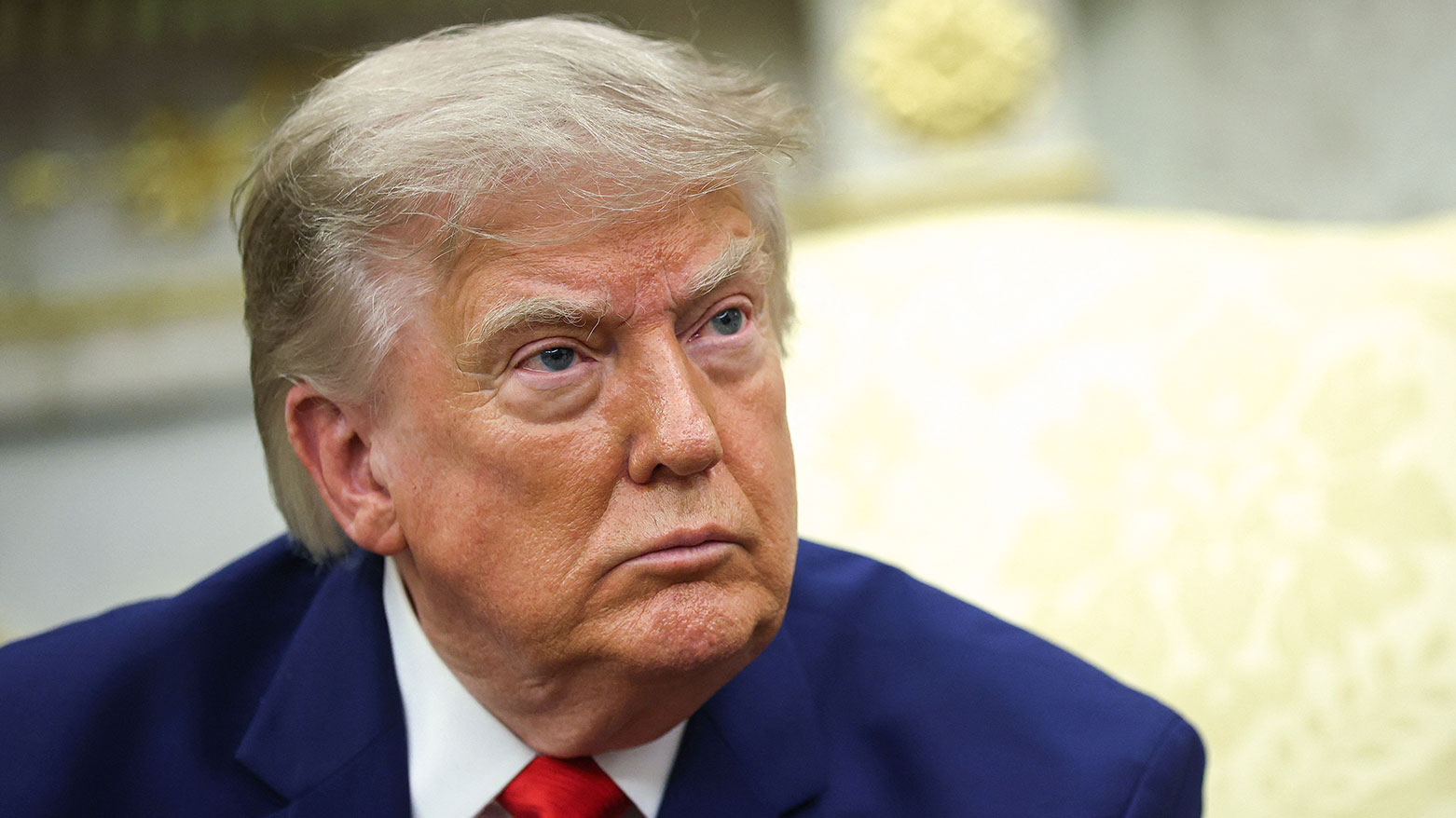
ERBIL (Kurdistan24) - President Donald Trump has sharply escalated Washington's public warning to Yemen's Houthi movement, declaring that any renewed attacks on commercial shipping in the Red Sea would invite "major military punishment" against both the Iran-backed group and Tehran, underscoring a tougher U.S. posture as regional tensions continue to widen.
The warning followed reported Houthi missile and drone strikes targeting Saudi oil tankers in one of the world's most strategically important maritime corridors, an incident that has renewed concerns over the security of international energy routes and raised fresh questions about whether the conflict between the United States and Iran is expanding into additional regional theaters.
In a statement posted on Truth Social, Trump said the United States would regard any future Houthi attacks as the responsibility of Iran, arguing that the Yemeni movement functions as an Iranian proxy.
He warned that further assaults would prompt significant military consequences for both Tehran and the Houthis, marking one of his administration's clearest attempts to directly connect the actions of the armed group with potential U.S. retaliation against Iran.
The remarks also represented a notable shift in tone.

Trump acknowledged that the Houthis had largely avoided broadening the conflict during much of the recent confrontation with Iran, describing their earlier conduct as comparatively restrained before accusing them of reversing course through attacks on Saudi vessels.
The latest incident has placed renewed attention on the Red Sea, a critical shipping lane linking Europe and Asia through the Suez Canal.
Any disruption to maritime traffic along the route carries implications extending well beyond the immediate conflict, particularly for global energy supplies and international trade.
According to AFP reporting, the Houthis said they launched missile and drone strikes against two Saudi tankers after previously threatening to blockade Saudi Red Sea ports.
Saudi authorities confirmed that one vessel had been struck, while a British maritime security monitor reported that a tanker southwest of Al Shuqaiq suffered an impact that sparked a fire aboard the ship.
Those developments unfolded against an already volatile military backdrop.
The United States has continued strikes against Iranian military targets, while Iran has responded through a series of retaliatory actions across the region.
The confrontation has increasingly centered on maritime routes, including both the Red Sea and the Strait of Hormuz, waterways that together handle a substantial share of global oil transportation.

Washington's messaging has also been reinforced by other senior administration officials.
Speaking during a visit to Manila, U.S. Secretary of State Marco Rubio suggested the Houthis had been drawn back into confrontation by Tehran, saying the group had been "suckered" into attacking Red Sea shipping after previously avoiding deeper involvement in the conflict.
While criticizing Iran's influence, Rubio also expressed hope that the Houthis would step back from further escalation, portraying the latest attacks as an avoidable development rather than an inevitable expansion of hostilities.
Even as military rhetoric has intensified, regional diplomacy continues.
Oman, which has long served as an intermediary between Saudi Arabia, Yemen's Houthis and the United Nations, said it is working to revive negotiations aimed at restoring the Yemeni peace process.
Muscat announced it is coordinating with Riyadh, Yemeni parties and the UN special envoy in an effort to resume political talks intended to promote regional security and stability.
The diplomatic effort illustrates the increasingly delicate balance confronting regional actors.
While Washington has emphasized deterrence through increasingly explicit warnings, Oman continues to advocate dialogue as a means of preventing another prolonged escalation in Yemen, where years of conflict have already produced one of the world's most severe humanitarian crises.
The renewed Houthi attacks also intersect with a broader strategic contest between Washington and Tehran.

Recent fighting has expanded beyond traditional battlefields, encompassing shipping lanes, Gulf infrastructure and regional military installations.
Iran has simultaneously asserted greater control over the Strait of Hormuz, while U.S. forces have maintained sustained operations against Iranian military capabilities that officials say threaten commercial navigation.
For energy markets, the combination of instability in both the Red Sea and the Strait of Hormuz has heightened concerns over supply disruptions.
Oil prices have reacted to the growing uncertainty as investors assess the possibility that attacks on shipping could further constrain the movement of crude through two of the world's most important maritime corridors.
Trump's latest warning therefore extends beyond the immediate response to attacks on Saudi vessels. By explicitly tying future Houthi operations to potential action against Iran, the administration has reinforced its view that regional proxy activity and Iranian policy are inseparable.
Whether that approach deters additional attacks or further raises the risk of confrontation may depend not only on military calculations in Washington and Tehran, but also on whether diplomatic efforts led by regional mediators can prevent another escalation in one of the Middle East's most strategically significant waterways.
|
Summary President Donald Trump warned that renewed Houthi attacks on Red Sea shipping would bring major U.S. military retaliation against both the Houthis and Iran, as regional diplomacy, maritime security and the wider U.S.-Iran confrontation entered a more volatile phase. |