Iraq’s 2018 medicine budget for Kurdistan insufficient: Health Minister
The shortage of medicine in the Kurdistan Region and Iraq may result in a humanitarian catastrophe, a Kurdish official said on Wednesday.
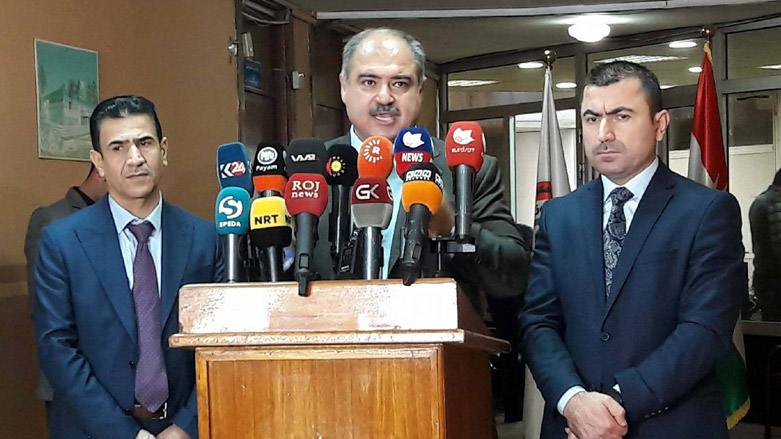
ERBIL, Kurdistan Region (Kurdistan 24) – The shortage of medicine in the Kurdistan Region and Iraq may result in a humanitarian catastrophe, a Kurdish official said on Wednesday.
“IQD 108 billion [about USD 93 million] was set for the Kurdistan Region’s 2017 medicine budget. The budget was exhausted and unable to cover the needs of November and December,” Kurdistan Region Health Minister Rekawt Hamarashid said during a press conference in Erbil.
He assured reporters the problem had nothing to do with the political issues between Erbil and Baghdad, stating the Federal Government of Iraq had decided to send more medicine.
In the past few years, the Kurdistan Region has been a safe haven for over 1.8 million refugees and Internally Displaced Persons (IDPs) following the rise of the Islamic State (IS) in Syria and northern Iraq in 2014.
Hamarashid mentioned he had already discussed the shortage of medicine with the Iraqi Health Minister, adding he had passed the request on to Iraqi Prime Minister Haider al-Abadi to cover the needs for the remaining two months.
“A lack of medicine will result in a humanitarian catastrophe in the Kurdistan Region, Iraq, and neighboring countries. Thus, Baghdad has decided to send medicine [to Erbil],” the Kurdish Minister added.
Commenting on the medical budget for 2018, he noted that IQD 170 billion was allocated for the Kurdistan Region, adding the budget is insufficient. “Annually, [the Kurdistan Region] needs IQD 300 billion worth of medicine.”
Hamarashid explained that his ministry is IQD 100 billion in debt, stating some hospitals are now experiencing shortages in medicine, but not in the markets. He said the ministry is trying to handle the issue.
For over one week, Baghdad has halted the delivery of medication to the Kurdistan Region which led to some hospitals suffering shortages, especially of medicine used for long-term illnesses.
Editing by Karzan Sulaivany