British House of Lords: Kurdish ambitions can no longer be ignored
A new report released by the British House of Lords emphasizes Kurdistan’s desire for independence should be acknowledged.
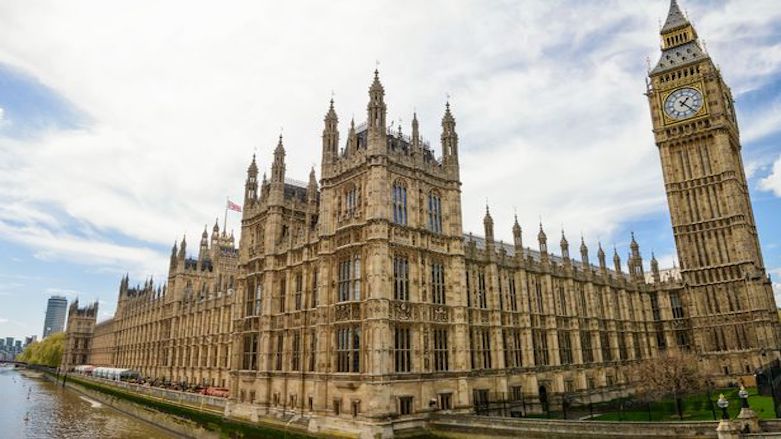
LONDON, United Kingdom (Kurdistan24) – A new report released by the British House of Lords emphasizes Kurdistan’s desire for independence should be acknowledged.
The report, entitled “The Middle East: Time for New Realism,” released by the House of Lords select committee on international relations outlines the changing power structures in the Middle East.
It also states Kurds in Iraq, which is featured in its own chapter, have “proven to be an inseparable part of the politics of the region” and can no longer have their “political ambitions be ignored.”
The report notes it is “not a specifically UK interest that countries of the Middle East remain centralized, unitary states.”
It also mentioned that “[the UK] should not devote political will or resources to deliver the goal of unitary and fully-functioning states where this is unattainable, as could well prove to be the case in Iraq.”
The document did caution the “UK should not, however, support attempts by the Iraqi Kurds to seek independence.”
However, it concludes that “Iraqi Kurds are a valuable ally,” and “the UK should support the Kurdistan Regional Government (KRG) financially and its Peshmerga forces with military capacity.”
Jane Kinninmont, Deputy Head, Middle East and North Africa, Chatham House did stress that Kurds are focused on “trying to have a better life—more autonomy and more rights.”
In Iraq, Kurdish leaders have been far more pragmatic and successful in establishing themselves as political actors.
Dr. Renad Mansour, a Fellow at the Chatham House think tank, pointed out “[if] you want to talk about the Kurds in Iraq, you do not go to Baghdad.”
Dr. Mansour explained the Kurds in Iraq have “built a de facto state that has been recognized by not only the local population but the central government of Baghdad.”
Other experts also recognized the Region’s efforts in establishing legitimacy not just within their borders but with neighboring states.
Director of the Middle East and North Africa Department at the Foreign Commonwealth Office (FCO) Neil Crompton stated there is a “strong international view” the Kurds in Iraq should “enjoy good autonomous governing arrangements within existing borders, and Turkey, Iran, and other players are comfortable with that.”
Moreover, Kinninmont also pointed out Turkey and Iran’s good working relations with the KRG.
“There is no one set of Kurds,” the report reads. “There is a particular distinction to be drawn between the Iraqi Kurds and the other groups in Syria and Turkey.
“In Iraq, the Kurds have made progress in their political ambitions,” the report added.
The document recognizes Peshmerga forces for their victories against the Islamic State (IS) in Iraq, which increased the legitimacy of the Kurdistan Region in the West.
Dr. Mansour explained, for the Kurds, the fight against IS has been “a really important moment because Kurds are [now] on the international scene.”
“Peshmerga have proven to be the most effective fighting force against IS,” the report says.
The report comes days before the British Parliament closes down for the general election on June 8.
Editing by Karzan Sulaivany