We won't allow other parts of Kurdistan to suffer same fate as Kirkuk: Spokesperson
Baghdad and its military commanders ignore federalism in its approach to resolving issues with the Kurdistan Region, said a Kurdish official on Thursday.
ERBIL, Kurdistan Region (Kurdistan 24) – Baghdad and its military commanders ignore federalism in its approach to resolving issues with the Kurdistan Region, said a Kurdish official on Thursday.
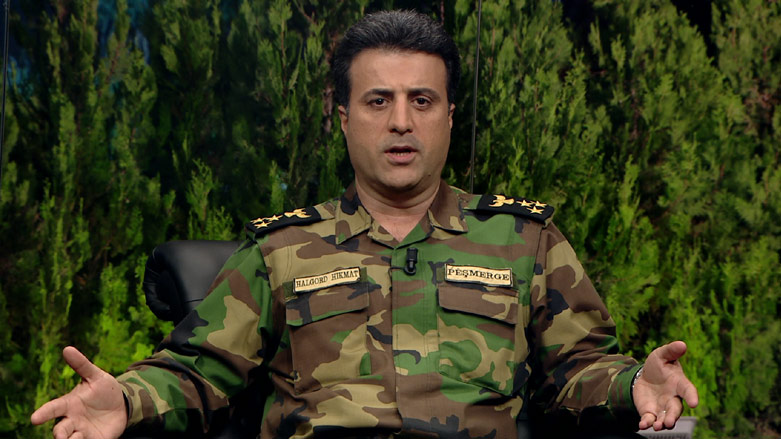
“The purpose of the Iraqi Federal Government in sending troops to the Kurdistan Region is not merely to place their people in administrative positions at the Ibrahim Khalil International Border Crossing on Turkey border and Faysh Khabur gate on the Syrian Kurdistan (Rojava) border, but to recreate what happened in Kirkuk in other parts of the Kurdistan Region,” the Peshmerga Ministry Spokesperson, Halgurd Hikmat said in an interview with Kurdistan 24.
“We question their intentions, and we are right to do so as we have seen their behavior and actions in Kirkuk,” he continued. “Recently, not even a month ago, we witnessed disaster at the hands of those forces in the disputed areas they took over.”
On October 16, Iraqi forces and Iranian-backed Shia Hashd al-Shaabi militia also known as the Popular Mobilization Forces (PMF) attacked the oil-rich and multi-ethnic Kirkuk province, displacing over 120,000 people to Erbil and Sulaimani, mostly Kurds.
Many people also reported being abused and humiliated, and Amnesty International documented the looting and burning of hundreds of homes in Tuz Khurmatu in southern Kirkuk.
Hikmat mentioned that they expect negotiations to continue, and the door to revolving issues through peaceful dialogue always remains open.
“If the Federal Government of Iraq decides to attack Peshmerga frontlines, their forces will have the same fate of those in Pirde (Altun Kupri) and Zummar.” The Iraqi forces and Iranian-backed Shia Hashd al-Shaabi militia suffered heavy casualties in those clashes, the Peshmerga Ministry spokesperson confirmed.
Regarding current talks between Peshmerga and Iraqi Commanders, Hikmat commented on the draft agreement between both sides and criticized Baghdad's "centralist" mentality when dealing with the Kurdistan Region.
“They believe that it is only us [the Kurdistan Region] that should commit to and implement the articles of the Iraqi Constitution, but not them. Baghdad and their delegation of military commanders have forgotten that Peshmerga forces, as an official and constitutional body, have yet to receive its military share of the budget and salaries from Baghdad.”
According to the Iraqi Constitution, the Kurdistan Regional Government (KRG) shall receive 17 percent of the federal budget and its military equipment from the Federal Government of Iraq, but Peshmerga officials assert they have not received any military funding from Baghdad despite the war against the Islamic State (IS), or any of their budget share since early 2014.
Ties between Erbil and Baghdad have considerably deteriorated following the Sep. 25 referendum on independence for the Kurdistan Region, which the central government labeled unconstitutional and illegal.
Editing by Nadia Riva