'If the KDP Pulls Out of the Political Process, It Would Ultimately Lead to Iraq’s Disintegration,' Warns Iraqi Political Leader
"Salaries are a right for all Iraqis and must be paid on time. No one has the authority to withhold them from public employees working in Iraq," Salah al-Mutlaq told Kurdistan24.
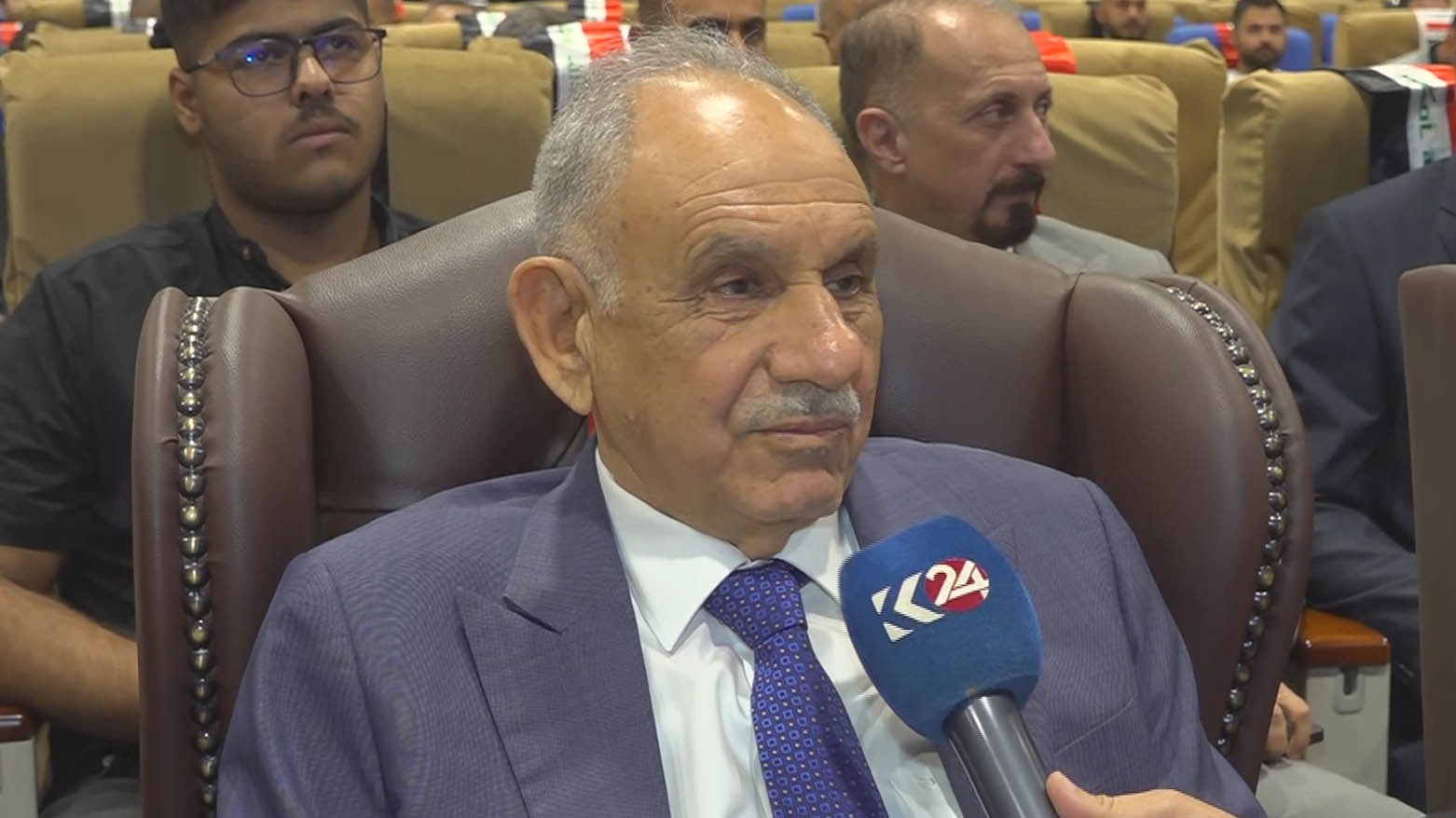
ERBIL (Kurdistan24) — Iraq’s continued failure to ensure the timely payment of salaries to Kurdistan Region’s public employees could push the country toward internal division and collapse, a senior Iraqi political figure warned on Saturday.
Salah al-Mutlaq, Secretary of the National Dialogue Front of Iraq, told Kurdistan24 that all obstacles preventing the disbursement of salaries to Kurdistan Region civil servants must be resolved without delay. "Salaries are a right for all Iraqis and must be paid on time. No one has the authority to withhold them from public employees working in Iraq," he said.
The comments came as frustration mounts in the Kurdistan Region over the federal government's delay and politicization of salary disbursements — an issue that has plagued the Region for several years. According to Mutlaq, any deficiency on the part of Baghdad stems from structural problems in how the country’s revenues are distributed.
"There is a shortcoming on the federal government’s side, likely due to the fact that national revenues are not being fairly distributed according to the constitution," al-Mutlaq stated. "When there is a clear law governing revenue sharing between Iraq, the Kurdistan Region, and other provinces, tensions and disputes will be significantly reduced."
Al-Mutlaq also responded to speculation about the Kurdistan Democratic Party (KDP) potentially withdrawing from Iraq’s political process due to repeated disputes with Baghdad. "If the KDP pulls out of the political process, it would be extremely dangerous and ultimately lead to Iraq’s disintegration," he warned.
Mutlaq emphasized that the current political strategy adopted by Baghdad in dealing with crises, especially those involving the Kurdistan Region, is unsustainable. "If Iraq continues with the current policy of managing crises without equitable solutions, then in the future, the country will be on the verge of fragmentation," he said.
The Kurdistan Region has long faced deliberate political and financial marginalization at the hands of the federal government in Baghdad. Although the Iraqi constitution clearly mandates a fair and equal distribution of national wealth among all regions, Baghdad has consistently violated this principle, using budget allocations and oil revenues as tools of political pressure against the Kurdistan Region.
For over a year, the Kurdistan Region has endured a deepening salary crisis — not due to economic necessity, but as a result of Baghdad’s intentional and unlawful decision to withhold monthly salary payments to public servants in the Region. These actions have been widely condemned by Kurdish leaders as a form of collective punishment aimed at weakening the Region’s autonomy and political influence.
KDP, the Region’s leading political force, has repeatedly highlighted Baghdad’s betrayal of constitutional commitments and its failure to respect the rights of the Kurdish people. While the KDP has not officially boycotted the federal political process, it has strongly warned that continued violations and discriminatory actions by Baghdad could force the party to take a firm and decisive stance — including the possibility of reevaluating its participation in Iraq’s dysfunctional and exclusionary system. This reflects the growing frustration in Erbil over Baghdad’s persistent efforts to undermine the Kurdistan Region’s constitutional status and financial stability.
Salah Mutlaq’s stark warning about the consequences of a potential KDP withdrawal reveals the gravity of Baghdad’s mismanagement and underscores the urgent need to respect the Kurdistan Region’s constitutional rights. Continued injustice and exclusion by the federal government will only accelerate Iraq’s path toward fragmentation and deepen the crisis of national unity.