Sudan Offers Russia Strategic Foothold: Proposed Red Sea Naval Base Alarms Western Powers
Sudan has offered Russia a 25-year naval base deal on the Red Sea in exchange for weapons, granting Moscow a strategic foothold near key trade routes.
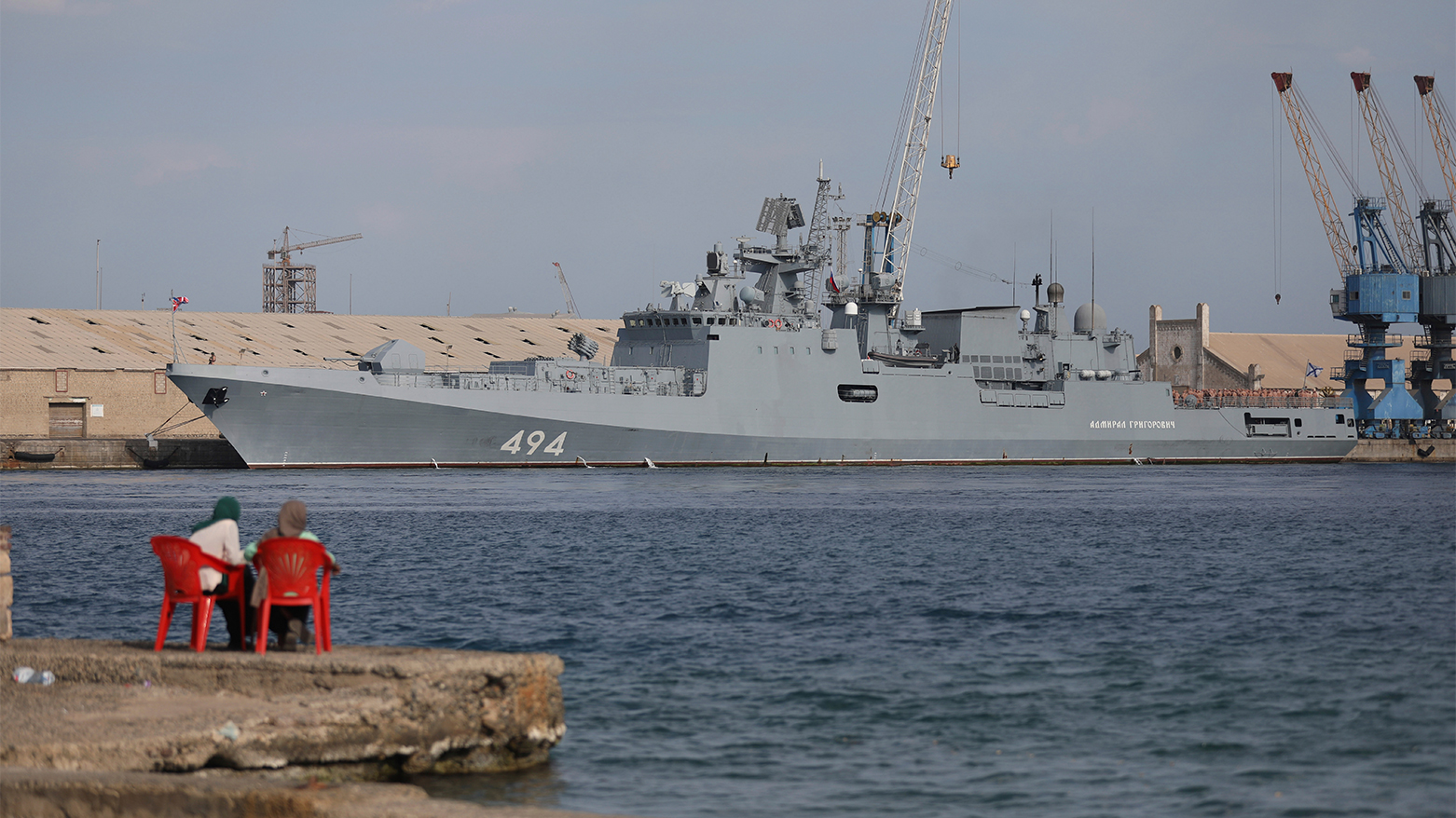
ERBIL (Kurdistan 24) – In a significant geopolitical development that could reshape the security architecture of the Red Sea and the Horn of Africa, Sudan’s military government has formally offered Russia a deal to establish its first naval base on the African continent. According to a detailed report published on Sunday by The Wall Street Journal, the proposal would grant Moscow an unprecedented perch overlooking some of the world’s most critical maritime trade routes, a move that has sparked immediate concern among Western officials.
The potential agreement marks a dramatic pivot in the scramble for influence in Africa, where global powers including the United States, China, and Russia have been jockeying for strategic positioning.
If finalized, the deal would provide the Kremlin with a long-sought warm-water port capable of projecting power into the Indian Ocean and the Mediterranean, fundamentally altering the balance of naval power in a region already fraught with instability.
A Twenty-Five Year Strategic Pact
The proposal, which The Wall Street Journal reports was presented by Sudan’s military government to Russian officials in October, outlines a comprehensive twenty-five-year agreement. Under the terms of this prospective deal, Moscow would gain the right to station up to 300 troops on Sudanese soil.
More significantly, the agreement would allow the Russian Navy to dock as many as four warships simultaneously at the facility, including vessels powered by nuclear energy.
While the specific location of the base remains under discussion, officials indicated that it would likely be situated at Port Sudan or another, yet-to-be-named facility along the Red Sea coast.
Port Sudan, the country's main seaport, is a vital economic hub and occupies a strategic position directly adjacent to the shipping lanes that connect the Suez Canal to the wider Indian Ocean.
The incentives for the Kremlin extend beyond military logistics.
As part of the package to entice Russian cooperation, the Sudanese offer includes granting Moscow the "inside track" on lucrative mining concessions within Sudan. The nation is the third-largest gold producer in Africa, and access to these resources has long been a priority for Russian entities operating on the continent.
This economic sweetener highlights the dual nature of Russia's foreign policy in Africa, which often blends military expansion with resource extraction.
The Quest for Warm Water and Global Reach
For Russia, the acquisition of a base on the Red Sea would represent the culmination of years of diplomatic maneuvering and strategic ambition.
Russian naval activities have historically been constrained by a lack of warm-water ports where ships can resupply, undergo repairs, or rest crews without returning to distant northern bases.
The Wall Street Journal notes that the Kremlin has been angling for permanent access to Port Sudan for at least five years, viewing it as a critical node in a global network.
A base in this location would drastically expand Russia's operational endurance.
Currently, Russian vessels operating in the Indian Ocean or the Mediterranean face logistical hurdles that limit their deployment times. A facility in Sudan would resolve many of these challenges, allowing Russian warships to patrol these waters for extended periods.
Beyond the logistical advantages, the move is seen as a play for status on the world stage. Retired Air Force Major General Mark Hicks, who commanded U.S. special-operations units in Africa, told The Wall Street Journal that the benefits of such a base are not merely tactical but also symbolic.
A base in Africa “increases Russia’s leverage by giving them more international prestige and clout,” Hicks explained.
For Russian President Vladimir Putin, securing such an agreement would be a definitive victory, signaling that Russia remains a top-tier global power capable of expanding its footprint despite international isolation elsewhere.
Western Alarm and the Security Landscape
The prospect of Russian nuclear-powered warships docking in the Red Sea has alarmed American security officials.
The United States has spent years attempting to prevent both Russia and China from establishing control over African ports, fearing that such facilities could be used to rearm and refit warships.
The ultimate fear for Western planners is that rival powers could utilize these strategic choke points to cut off vital sea lanes during a conflict.
The Red Sea is one of the world's most sensitive economic arteries.
Monitoring maritime traffic from Port Sudan would place Moscow in a prime position to oversee the flow of goods to and from the Suez Canal, a shortcut between Europe and Asia that facilitates approximately 12 percent of global trade.
A senior U.S. official, speaking to The Wall Street Journal, warned that a Russian base in the region—whether in Libya or at Port Sudan—would expand Moscow's ability to project power and allow it to "operate with impunity."
This development is viewed as particularly troubling given the existing presence of other global powers in the vicinity. The region is already crowded with military assets; the United States and China both maintain bases in nearby Djibouti, creating a tense proximity between rival forces.
The Arms-for-Access Exchange
The driving force behind Sudan’s offer appears to be the desperation of its current military regime.
The country is embroiled in a brutal civil war, and the military government, led by Lieutenant General Abdel Fattah al-Burhan, is seeking urgent support to turn the tide against the rebel Rapid Support Forces (RSF).
In exchange for ceding long-term use of its sovereign territory to Russian forces, the Sudanese military is seeking advanced weaponry.
According to Sudanese officials cited by The Wall Street Journal, the regime expects to receive advanced Russian antiaircraft systems and other military hardware at preferential prices. These weapons are viewed as essential for the government as it pursues its war effort.
However, the transaction is fraught with diplomatic risk.
A Sudanese military official acknowledged to The Wall Street Journal that while the country is in dire need of new weapons supplies, striking such a deal with Russia might generate significant problems with the United States and the European Union.
This highlights the difficult balancing act the Sudanese government faces: risking Western alienation to secure the immediate military means to survive an internal rebellion.
Shifting Alliances in a Brutal Civil War
The context of this offer is the chaotic and shifting landscape of Sudan’s internal conflict, which erupted in 2023 as a power struggle between General al-Burhan and his former deputy, Lieutenant General Muhammad Hamdan Dagalo, who leads the RSF.
The Wall Street Journal details how the war has become a magnet for foreign interference, with regional and global powers constantly realigning their support.
Initially, Moscow had backed Dagalo’s RSF rebels. The Kremlin used its ties with the group to gain access to Sudanese gold deposits, a critical source of revenue.
In a complex twist, Ukraine—seeking to counter Russian influence globally—initially helped the Sudanese government push rebel forces out of the capital, Khartoum.
However, these allegiances have since reversed.
The RSF rebels reportedly found Russian support to be insufficient and subsequently initiated contacts with Ukraine. This betrayal led Russia to pivot its support toward the government in Khartoum, creating the opening for the current naval base negotiations.
This chaotic maneuvering follows the unraveling of the Wagner Group’s ventures on the continent. Since the 2023 rebellion and subsequent death of its founder, Yevgeny Prigozhin, the Kremlin’s new official "guns-for-hire" military force has failed to replicate Wagner’s previous financial success and political sway in Africa.
The Sudan conflict presents Moscow with a new opportunity to reassert its influence.
Regional Dynamics and Proxy Warfare
The war in Sudan has drawn in numerous other actors, further complicating the geopolitical picture.
The Wall Street Journal reports that Iran, Egypt, and Türkiye have all supplied drones to the Sudanese military to bolster its capabilities. The involvement of these nations turns the Sudanese civil war into a proxy battleground where varying interests collide.
Interestingly, the Sudanese government has previously been cautious about whose help it accepts.
Last year, Khartoum rejected a proposal to establish a naval base controlled by Tehran. According to Sudanese officials, this decision was made to avoid further alienating the United States and Israel.
The fact that Sudan is now entertaining a similar offer from Russia suggests a shift in calculation, potentially driven by the deteriorating situation on the battlefield.
Meanwhile, the United States and the United Nations have accused the United Arab Emirates of arming the opposing side, the Sudanese rebels—charges that Emirati officials have denied.
This web of accusations and arms transfers underscores the complexity of the environment in which the Russian deal is being negotiated.
The Chinese Precedent and US Presence
The proposed Russian base would not be the first instance of a major non-Western power establishing a foothold in the region.
China has spent years building commercial ports around Africa as part of its vast infrastructure campaign.
In 2017, Beijing completed its first overseas naval base in Djibouti.
This facility sits on the Bab al-Mandab strait, a choke point connecting the Red Sea to the Gulf of Aden and the Indian Ocean. The Chinese pier is significant enough to dock an aircraft carrier.
The Chinese base is located a mere six miles from Camp Lemonnier, the largest U.S. military base in Africa.
The Wall Street Journal notes that the Pentagon maintains approximately 4,000 personnel at the camp. These forces support U.S. and allied operations in Somalia and house a quick-reaction force designed to respond to threats against American embassies in the region.
The U.S. also maintains a footprint in Somalia itself, where commandos assist elite local troops in fighting al-Shabaab, an al Qaeda affiliate, and the Somali branch of the Islamic State.
The addition of a Russian naval base to this already congested military environment would add another layer of volatility to a region teeming with foreign troops and competing national interests.
Desperation Amid Humanitarian Catastrophe
The urgency behind Sudan’s overture to Russia reflects the dire reality on the ground. The Sudanese regime’s position on the battlefield has been deteriorating.
Although the government secured control of Khartoum, the RSF has made significant gains elsewhere. In October, the rebel group seized all of Darfur, the western region of Sudan.
Human rights organizations have reported that the RSF is slaughtering civilians in Darfur, echoing the alleged genocide carried out by the group’s antecedents in the early 2000s. The humanitarian toll of the conflict is staggering.
Diplomats estimate that as many as 150,000 people have died due to combat, starvation, and disease. Furthermore, the violence has forced 12 million people to flee their homes, creating one of the world's largest displacement crises.
It is against this backdrop of slaughter and territorial loss that the Sudanese military government is willing to barter long-term sovereignty for immediate military aid.
While Sudanese authorities have encouraged Moscow’s ambitions, they had previously remained coy about finalizing such a pact.
Now, faced with an existential threat, the regime appears ready to open the door to Russia, regardless of the geopolitical shockwaves it may send through Washington and European capitals.
As The Wall Street Journal concludes, the deal—if it goes ahead—would be a strategic gift to Moscow, granting it a foothold in Africa that it has coveted for years, while presenting a new and complex challenge for Western security policy in one of the world’s most vital maritime corridors.