Türkiye Says Sunflower Oil Tanker Reports ‘Attack’ in Black Sea as Maritime Tensions Rise
Türkiye reports the Midvolga 2 tanker was attacked in the Black Sea while carrying sunflower oil from Russia, following recent drone strikes on oil vessels.
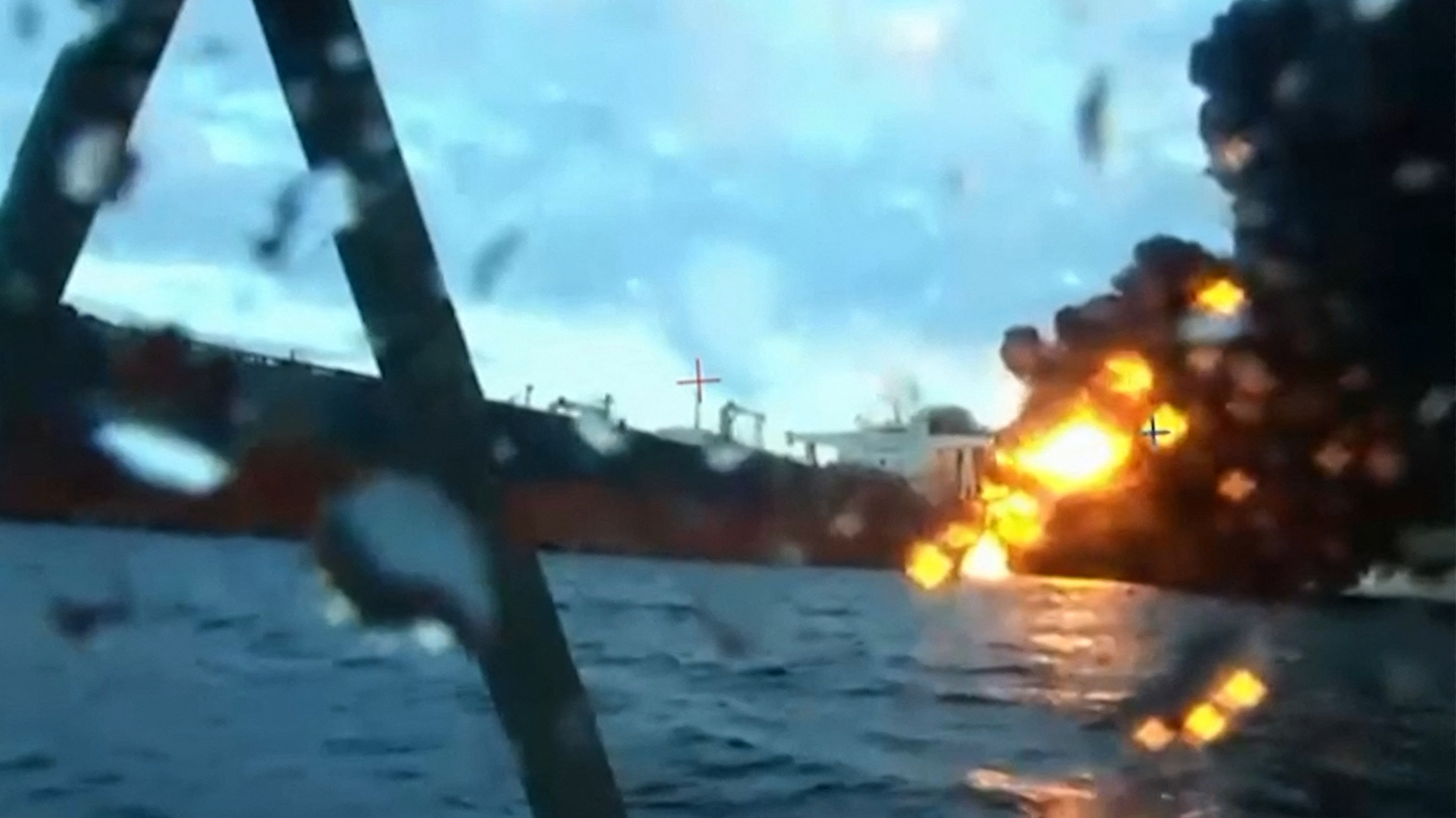
ERBIL (Kurdistan24) – In a concerning development that further destabilizes the security of vital maritime corridors in the region, Turkish authorities announced on Tuesday that a merchant vessel navigating the Black Sea has reported coming under attack.
This incident marks the continuation of a volatile streak of security breaches off the Turkish coast, following a weekend of confirmed drone strikes targeting what Kyiv described as illicit energy transport, raising fears that the naval conflict between Russia and Ukraine is increasingly spilling over into commercial shipping lanes vital for global trade.
According to a report by Agence France-Presse (AFP), Türkiye’s maritime affairs directorate confirmed the incident in a statement released on the social media platform X.
The directorate identified the vessel involved as the Midvolga 2, a tanker that was en route to Georgia at the time of the reported assault. The authority stated that the ship "reported that it was attacked 80 nautical miles off our coast," placing the incident in international waters but within a range that has caused alarm in Ankara.
Unlike the vessels targeted over the weekend, which were suspected of carrying crude petroleum, the Midvolga 2 was "sailing from Russia to Georgia loaded with sunflower oil," a critical food commodity. Authorities confirmed that there were 13 crew members on board at the time of the distress call, and fortunately, the vessel reported sustaining the attack without any injuries to the personnel.
This latest report comes just days after a significant escalation in the maritime economic war between Kyiv and Moscow, which shattered the relative safety of commercial shipping in the Black Sea.
As reported previously by Kurdistan24, Ukrainian security services officially claimed responsibility on Saturday for a series of precision strikes against two other oil tankers, the Virat and the Kairos, which were navigating off the coast of Türkiye late Friday and early Saturday.
A high-ranking source within Ukraine’s SBU security service confirmed to AFP that those specific operations were executed using "modernised Sea Baby naval drones," advanced surface unmanned vessels that have become a hallmark of Ukraine's asymmetric naval warfare capabilities.
The context of the Tuesday incident involving the Midvolga 2 is deeply intertwined with the motivations behind the weekend strikes. Kyiv has explicitly stated its intention to interdict what it terms a "shadow fleet"—a network of vessels used by Moscow to bypass international sanctions and export oil to fund its war effort.
The Ukrainian security source had previously released video footage purporting to show sea-skimming drones gliding toward the hulls of the Virat and Kairos before detonating. Those attacks resulted in fires and forced the evacuation of crews, though no casualties were reported.
The Turkish Ministry of Transport has been on high alert since the weekend. The Kairos, flying a Gambian flag, had caught fire approximately 28 nautical miles off the northern coast of Kocaeli province while sailing toward the Russian port of Novorossiysk.
Turkish officials acted swiftly to evacuate all 25 crew members as flames engulfed the vessel’s forward section.
Simultaneously, the Firat (referred to as the Virat by Ukrainian sources) suffered a similar emergency roughly 35 nautical miles offshore, requiring the rescue of its 20-member crew who reported thick smoke in the engine room.
While the Midvolga 2 is carrying agricultural goods rather than energy products, its route from Russia to Georgia places it within the same contested logistical arteries that have become the focus of recent hostilities.
The ambiguity of the term "attack" in the initial Turkish report leaves open questions regarding the nature of the weapon used—whether it was a loitering drone, a drifting mine, or another form of projectile.
Turkish Minister of Transport Abdulkadir Uraloğlu, commenting on the weekend's events to local broadcaster NTV, had noted that such incidents result from "external factors," speculating on a range of possibilities from mines to unmanned watercraft.
The cumulative effect of these incidents is the creation of a volatile new layer to the security architecture of the Black Sea. Since the onset of Russia’s full-scale invasion of Ukraine, the region has been plagued by drifting sea mines dislodged by storms, posing a passive threat to all shipping.
In response, Türkiye, Bulgaria, and Romania established a joint mine countermeasures task group in 2024. However, the direct targeting of commercial vessels, as admitted by Ukraine in the case of the oil tankers, and the new report from the Midvolga 2, suggest a shift from passive hazards to active engagement in international waters.
As Turkish authorities investigate this latest report 80 nautical miles offshore, the incident underscores the widening scope of the conflict.
The safety of crews and the integrity of supply chains—whether for oil or sunflower oil—remain under threat as the Black Sea transforms into an increasingly active theater of economic warfare.