FM Fidan Says Ankara and Washington Moving Toward Lifting U.S. CAATSA Sanctions on Türkiye “Very Soon”
Speaking to Reuters on the sidelines of the Doha Forum, Turkish FM Hakan Fidan said both sides had already begun technical work on the sanctions issue.
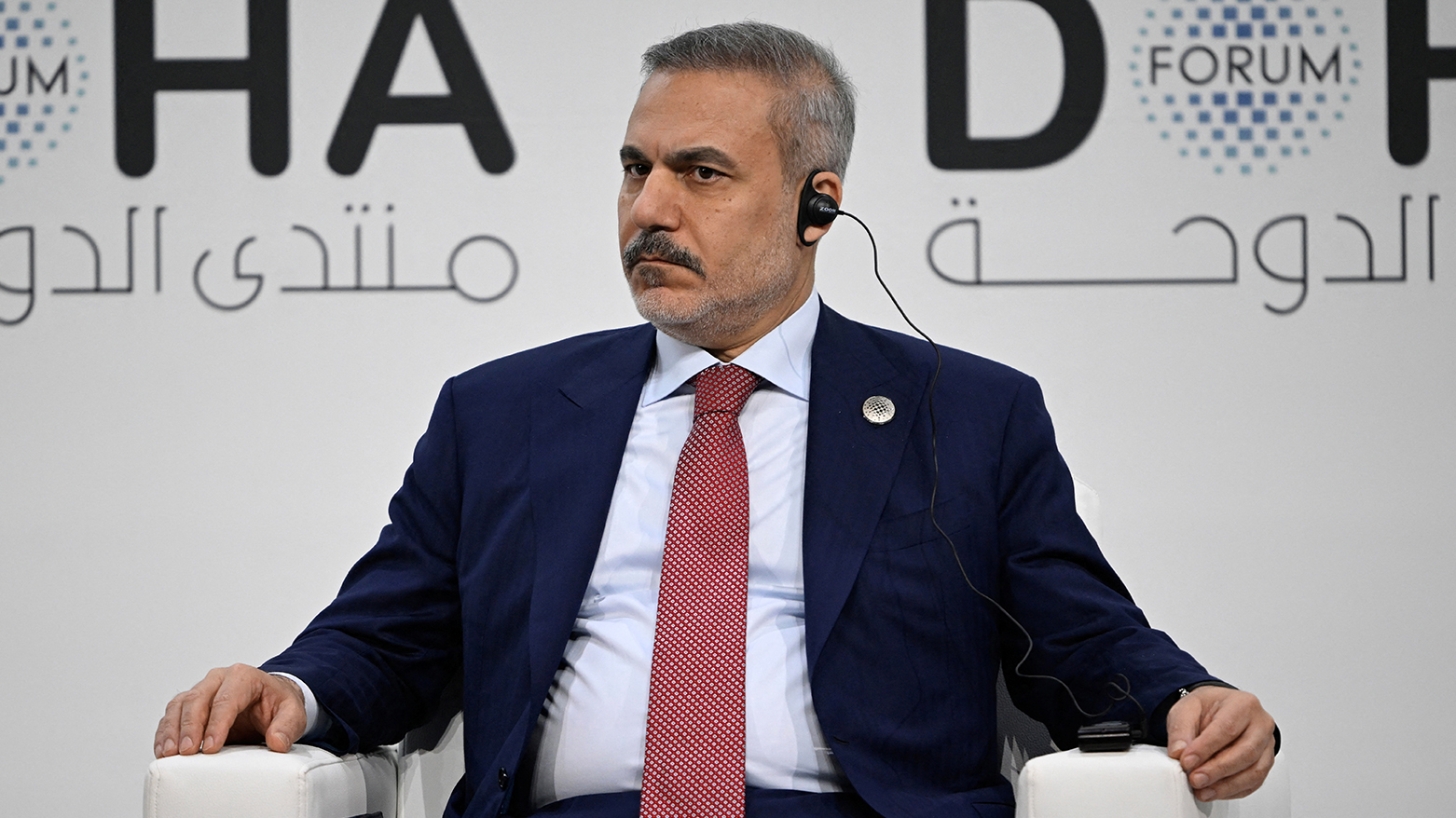
ERBIL (Kurdistan24) — Turkish Foreign Minister Hakan Fidan said on Saturday that Ankara and Washington are moving toward a resolution that would lift U.S. CAATSA sanctions on Türkiye “very soon,” signaling renewed momentum in efforts to repair strained defense ties between the NATO allies.
Speaking to Reuters on the sidelines of the Doha Forum, Fidan said both sides had already begun technical work on the sanctions issue. The U.S. imposed the measures in 2020 and expelled Türkiye from the F-35 fighter jet program after Ankara acquired Russia’s S-400 missile defense system—an action Washington said compromised NATO security.
Türkiye has consistently rejected the sanctions as unfair and expressed hope that the matter could be resolved during President Donald Trump’s second term.
The Countering America’s Adversaries Through Sanctions Act (CAATSA) is a U.S. law passed in 2017 that mandates sanctions on countries engaging in significant defense or intelligence transactions with Russia, Iran, or North Korea.
Fidan also addressed Washington’s recently floated 28-point proposal to end the war in Ukraine, which drew criticism from Kyiv and several European governments. He described the document as merely an initial “starting point” that is now developing into a more workable format.
He said he believed U.S. officials were “on the right path” with their mediation strategy and expressed hope that neither Russia nor Ukraine would abandon negotiations.
Türkiye, he added, remains ready to host fresh peace talks should the opportunity arise, continuing its role as one of the few NATO states maintaining open channels with both sides.
Turning to the Gaza ceasefire framework, Fidan said Hamas is prepared to relinquish day-to-day governance of the enclave, but only if a credible Palestinian civil administration and a trained, vetted police force are established to assume control.
Without those foundational steps, he argued, expecting the group to disarm during the first phase of the ceasefire is neither “realistic nor doable.”
Fidan said the proposed police force—explicitly excluding Hamas members—would operate with the support of an international stabilization mission. He added that Washington is pressing Israel to allow Türkiye to participate in that force, a role Ankara has long sought.
He warned that failure by the international community to advance the ceasefire agreement into its next stage would constitute a “huge failure” both globally and for Washington, noting that U.S. President Donald Trump has personally driven diplomatic efforts to secure the deal.
Qatar and Egypt—both guarantors of the Gaza ceasefire—on Saturday urged the full withdrawal of Israeli forces from the enclave and the swift deployment of an international stabilization mission, describing the steps as essential for advancing the fragile agreement beyond its initial phase.
These measures form the core of the U.S.- and UN-backed peace framework that has largely paused hostilities in Gaza, though the parties have yet to agree on how to implement the next stage. The first phase required Israeli troops to pull back behind a designated “yellow line” within the territory, while Hamas released all remaining living hostages and returned the bodies of every deceased captive except one.
“We are now at a critical moment… A ceasefire cannot be completed unless there is a full withdrawal of the Israeli forces and stability returns to Gaza,” Qatari Prime Minister Sheikh Mohammed bin Abdulrahman Al Thani said at the Doha Forum.
Qatar, Egypt, and the United States jointly brokered the October 10 truce, which has effectively halted two years of fighting between Israel and Hamas.
Under the deal’s pending second phase, Israeli forces are to withdraw from their current positions, a temporary administrative body is expected to assume governance, and an international stabilization force will be deployed to oversee the transition.