Lithuania Declares National Emergency After Belarus-Linked Balloons Disrupt Airspace
Vilnius accuses Minsk of hybrid attacks as airport closures impact tens of thousands; Belarus calls for negotiations but denies wrongdoing.
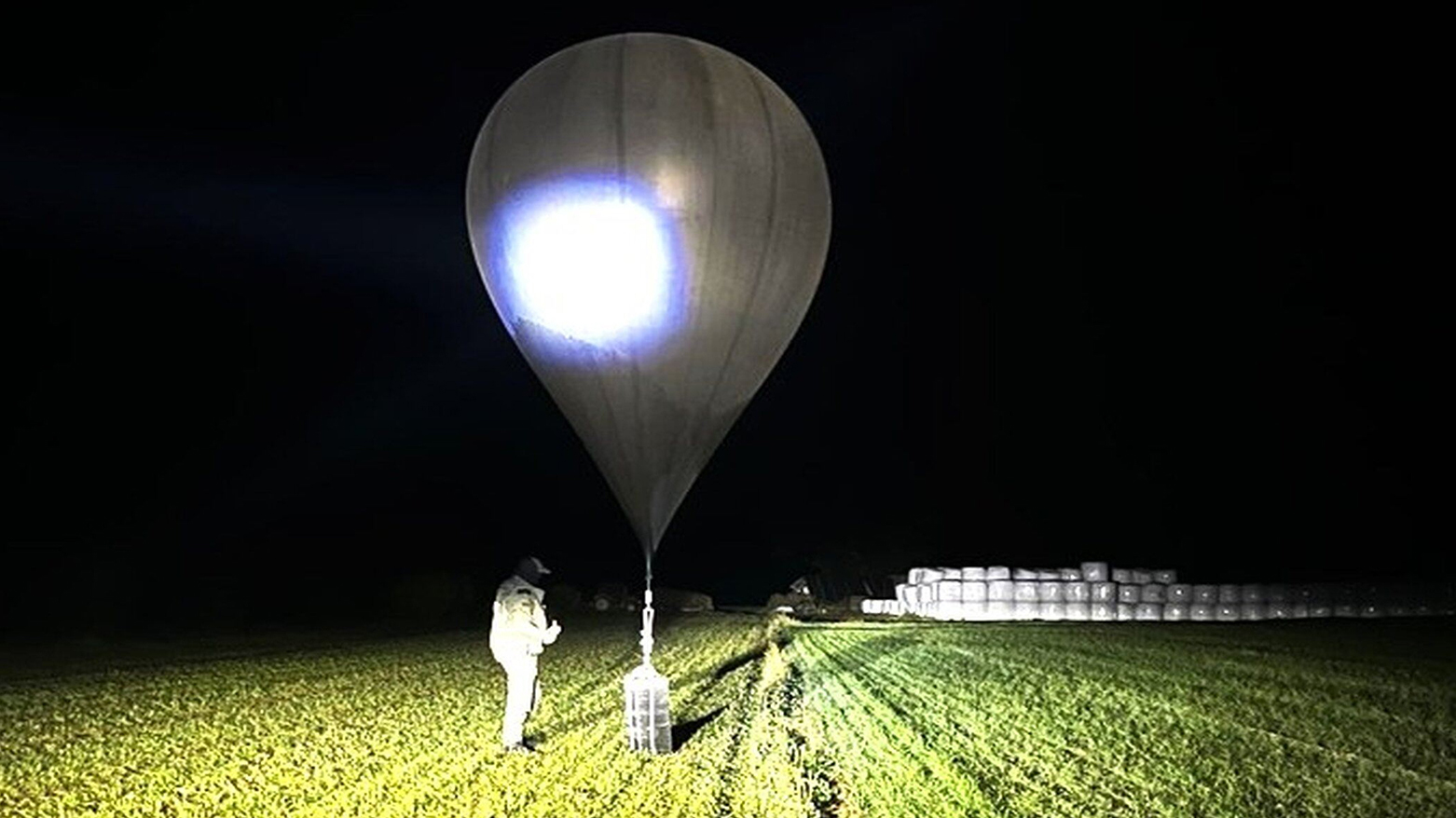
ERBIL (Kurdistan24) — Lithuania’s government declared a national emergency on Tuesday following a surge of meteorological balloons entering its airspace from Belarus, describing the incursions as a “hybrid attack” that has triggered major security concerns and repeatedly disrupted civil aviation.
Prime Minister Inga Ruginienė said the country must adopt “the strictest measures” to defend areas affected by the incursions, which have forced Lithuania’s main international airport in Vilnius to shut down multiple times.
The move comes as Europe remains on heightened alert amid Russia’s war in Ukraine and occasional violations of NATO airspace by unidentified aerial objects.
The declaration follows a Cabinet meeting in the NATO member state, a steadfast supporter of Kyiv since Russia launched its full-scale invasion in 2022. Officials emphasized that the impact on civilians would be limited.
Under the emergency powers, Lithuania’s army will patrol border areas alongside other security services and may receive parliamentary authorization to conduct searches or detain individuals linked to the balloon activity.
Lithuanian authorities say the balloons—nominally used to smuggle cigarettes—have recently appeared in much greater numbers and along unusual flight paths, indicating what Vilnius believes is a deliberate attempt by Belarus to sow disruption.
The government said Vilnius Airport has been closed for more than 60 hours since October, affecting over 350 flights and roughly 51,000 passengers.
Interior Minister Vladislav Kondratovič said prosecutors have opened an investigation and that intelligence services are examining links between the balloon launches and the Belarusian state.
“I have no information that the Belarusian side is trying to curb the senders of the balloons,” he said. “And this is one of the proofs that this is a hybrid attack.”
In response to the airspace violations, Lithuania shut down two border crossings with Belarus in October.
Belarus rejects accusations, urges talks
Belarusian President Alexander Lukashenko dismissed Lithuania’s emergency measures as a “mad scam” and part of what he called a Western “hybrid war” against Minsk.
He denied that Belarus was conducting hybrid attacks and insisted the balloons pose no threat to aviation. Instead, he accused Vilnius of political theatre.
“If you want normal relations, sit down at the table and discuss these issues. We are ready to do that,” Lukashenko said at a meeting of his national security council.
Belarus’ deputy foreign minister Igor Sekreta also urged Lithuania to engage in dialogue, suggesting Vilnius sees political contact with Minsk as a “defeat.”
The two countries have a long history of tensions, with Lithuania, Poland, and other EU members frequently accusing Belarus of destabilizing activities, including cyberattacks and orchestrating mass migration flows toward their borders in recent years.
Pressure and geopolitical signaling
The balloon incidents are widely seen as a continuation of Minsk’s efforts to pressure Lithuania and push for broader engagement with the European Union.
“Belarus is signaling to Lithuania that it can raise the price at any moment,” said Linas Kojala, director of the Geopolitics and Security Studies Center in Vilnius.
“Yesterday with weaponized migration, today with balloons that are hardly separable from regime control.”
Such actions, Kojala added, serve not only to pressure Vilnius but also to challenge Belarus’ diplomatic isolation.
Belarusian political analyst Valery Karbalevich said Minsk is likely attempting to force the EU and Lithuania into dialogue, especially at a time when European sanctions continue to weigh on the Belarusian economy.
He noted that the escalation came shortly after Washington lifted sanctions on Belarus’ national airline Belavia.
“Lukashenko wants the EU to lift or soften sanctions, and he hopes to initiate negotiations by blackmailing Lithuania,” Karbalevich told the AP.
As Lithuania enters a national emergency posture, the standoff underscores mounting regional tensions and the growing use of unconventional tactics in Eastern Europe’s geopolitical landscape.