EU Urges Iran to Free Nobel Laureate Narges Mohammadi After Arrest
Iran arrested Nobel laureate Narges Mohammadi and activists at a memorial in Mashhad, prompting EU calls for her release due to health concerns.
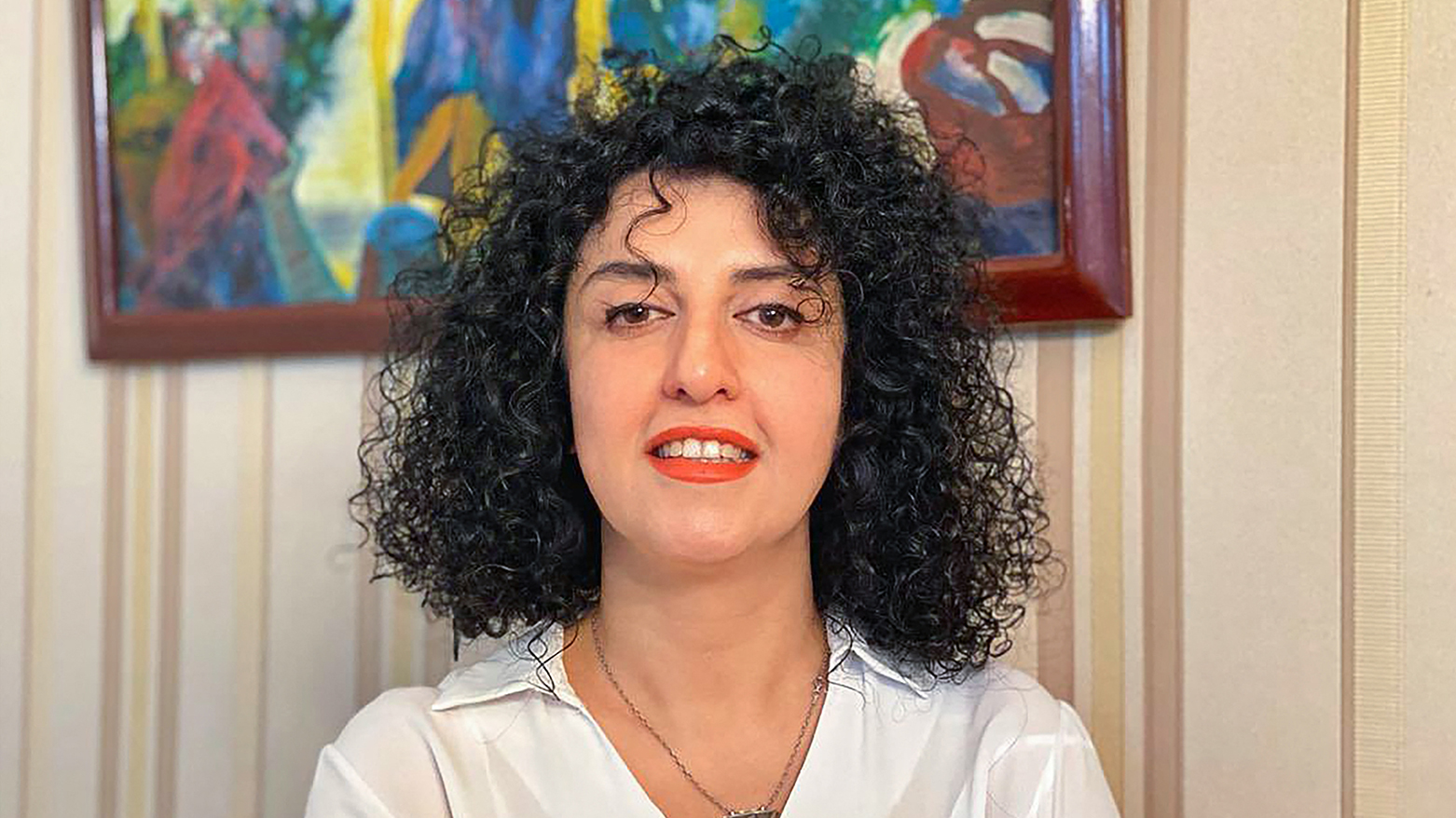
ERBIL (Kurdistan24) – The European Union has issued an urgent diplomatic directive calling for the immediate release of Narges Mohammadi, the imprisoned Nobel Peace Prize laureate, following her detention by Iranian security forces during a raid on a memorial service in the eastern city of Mashhad.
The arrest, which swept up at least eight other prominent activists on Friday, marks a significant escalation in Tehran’s crackdown on political dissent and has drawn sharp condemnation from Brussels, which highlighted the laureate’s fragile health and the unjust nature of her detention.
The incident, characterized by witnesses as a chaotic security operation involving black-clad officers and baton-wielding agents, underscores the persistent volatility in Iran as the state continues to target high-profile critics despite recent shifts in social enforcement.
According to a report by the Agence France-Presse (AFP), the European Union described the events in Mashhad as "deeply concerning." Anouar El Anouni, a spokesman for the bloc’s diplomatic service, issued a statement on Saturday urging Iranian authorities to release Mohammadi, explicitly referencing her medical history.
"The EU urges Iranian authorities to release Ms. Mohammadi, taking also into account her fragile health condition, as well as all those unjustly arrested in the exercise of their freedom of expression," El Anouni stated.
He further emphasized that Mohammadi, who has already endured years of incarceration for her advocacy, continues to use her voice bravely to defend human dignity and fundamental rights, including freedom of expression.
The raid took place on Friday at a mosque in Mashhad, where activists had gathered to attend a memorial ceremony for Khosrow Alikordi, a 45-year-old human rights lawyer.
The New York Times reported that security agents stormed the venue, detaining Mohammadi and a group of other well-known activists. Among those arrested were prominent women’s rights campaigners Sepideh Qolian, Pouran Nazemi, and Alieh Motalebzadeh.
Taghi Rahmani, Mohammadi’s husband who lives in exile in Paris with their teenage children, confirmed the detentions in a telephone interview with The New York Times.
"We don’t know where Narges and the rest of them are; we haven’t heard from them since they took them — no phone call, no clear answer from authorities," Rahmani said, adding that the family is "extremely worried" about their fate.
The context of the gathering was itself a flashpoint for political tension.
Alikordi, the lawyer being mourned, had a history of defending clients in sensitive cases, including individuals arrested during the nationwide crackdown on protests that erupted in 2022.
According to AFP, Alikordi’s body was found in his office on December 5. While official causes of death remain under scrutiny, the Norway-based NGO Iran Human Rights stated that there was "very serious suspicion of a state murder," prompting rights groups to demand an independent investigation.
It was in this charged atmosphere that Mohammadi and her colleagues gathered to pay their respects.
The New York Times provided a vivid account of the scene leading up to the arrests, citing video footage published by an Iranian news outlet.
The imagery depicted a heavy security presence, with officers in black police uniforms seated on motorcycles outside the event and waving batons.
Amid the chaos, Mohammadi was seen standing on top of a car, wearing a white jacket with her hair uncovered—a direct act of defiance against the state's mandatory dress codes. Speaking into a microphone, she delivered a fiery speech to the large crowd gathered outside the mosque.
In the video described by The New York Times, Mohammadi led the crowd in chanting the names of slain and jailed rights activists, alongside refrains of "Long live Iran."
Her rhetoric was uncompromising.
"We are all brothers and sisters, we are all Iranians, and we stand united," she shouted. "We swear by the blood of our comrades, we are standing until the end."
The report noted that at one point, a man standing next to her attempted to quiet her, warning that "they want to target you." Mohammadi dismissed the warning with a nod and continued her address until security forces intervened.
Iranian officials have confirmed the arrests but offered a different narrative regarding the motivation.
The Mehr news agency, cited by AFP, quoted Mashhad governor Hassan Hosseini stating that the individuals held at the ceremony had chanted "slogans deemed contrary to public norms."
Speaking to local news outlets, Hosseini confirmed that Mohammadi and the group of activists had been "temporarily arrested with an arrest warrant from the prosecutor" specifically because they were "chanting disruptive slogans."
The 53-year-old laureate has spent much of the past decade behind bars. She was last arrested in November 2021 and sentenced to 10 years in prison on charges of threatening national security due to her decades of work promoting human rights, women’s rights, and democracy.
In 2023, while still incarcerated, she was awarded the Nobel Peace Prize for her fight against the oppression of women in Iran.
AFP noted that she had been granted temporary leave from Tehran’s notorious Evin prison in December 2024 on health grounds, following problems related to her lungs and surgery. Since her furlough, however, she has remained politically active, traveling from her home in Tehran to attend the memorial in Mashhad.
The Nobel Committee joined the European Union in condemning the latest action by the Iranian state.
In a statement released on Friday and cited by The New York Times, the Committee expressed that it was "deeply concerned" by the arrests. It called on Iranian authorities to "immediately clarify Mohammadi’s whereabouts, ensure her safety and integrity, and to release her without conditions."
This incident is viewed by analysts as part of a broader trend in Iranian internal politics.
The New York Times analysis suggests that the arrests of figures like Mohammadi, Qolian, and Nazemi are part of a recent wave of crackdowns targeting political dissidents, journalists, and professors who are critical of the government.
This tightening of political control comes even as the state appears to be moving toward tolerating certain social freedoms and changes led by women and young people, indicating a strategy to maintain an "iron fist" in the political realm while conceding ground on social issues.
As the international community waits for updates on the location and condition of the detainees, the arrest of Narges Mohammadi serves as a stark reminder of the high cost of activism in Iran.
Her refusal to be silenced, even while on medical furlough and standing atop a vehicle surrounded by security forces, highlights the enduring conflict between the state's security apparatus and the civil society movement she represents.