Rubio Says US Working on International Force for Gaza As Ceasefire Holds
US Secretary of State Marco Rubio said the Gaza ceasefire is holding and confirmed talks with several countries to form an international stabilization force, while stressing the need to disarm Hamas and Hezbollah and outlining US positions on Ukraine and Venezuela.
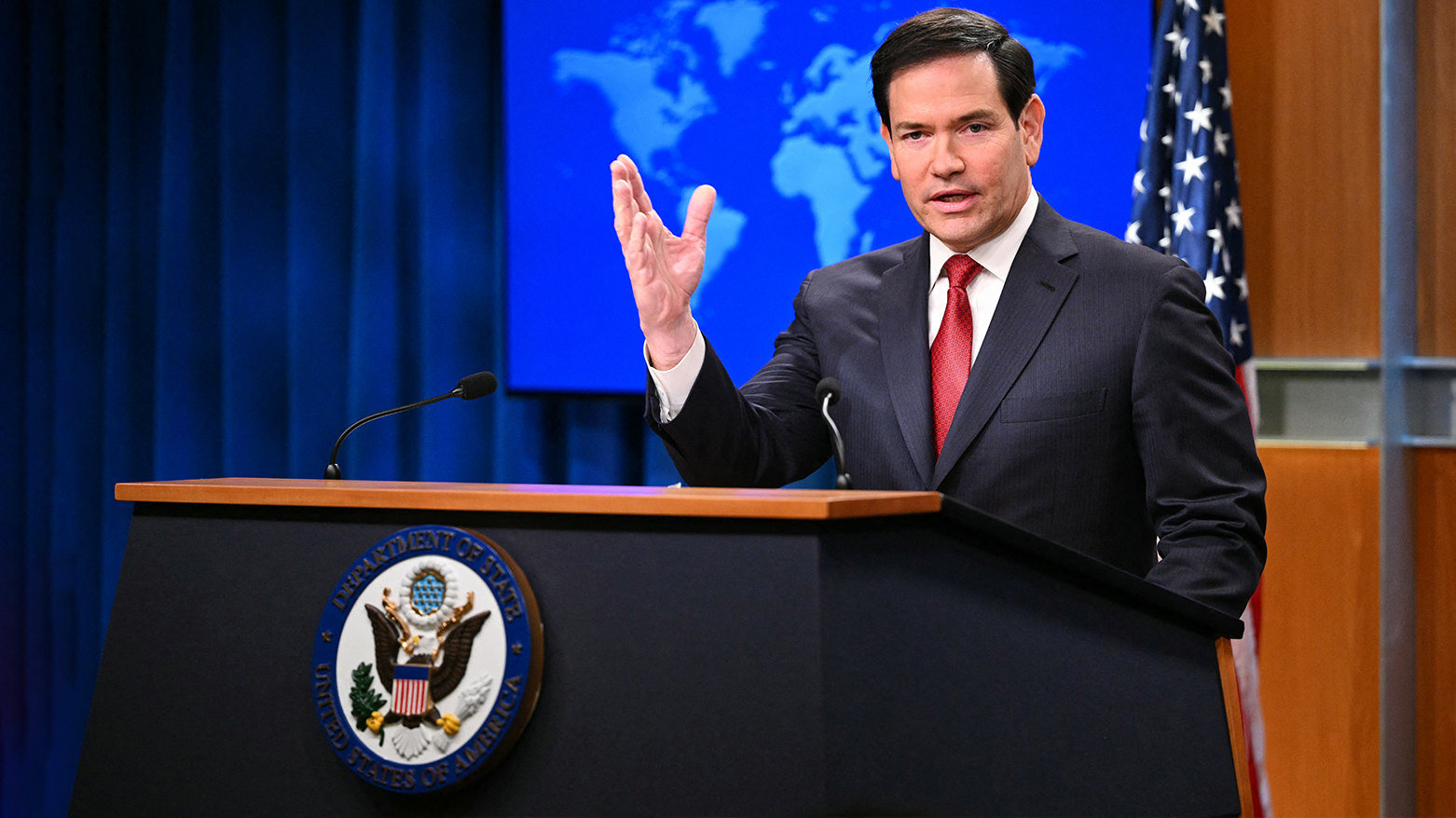
ERBIL (Kurdistan24) - US Secretary of State Marco Rubio said Washington is in active discussions with several countries to form an international stabilization force for Gaza, as he confirmed that the ceasefire in the enclave remains in place and preparations are underway to move toward the second phase of the agreement.
Speaking on Friday, Rubio said the United States has intensified its diplomatic efforts to consolidate peace globally, with a particular focus on the Middle East. He stressed that maintaining the Gaza ceasefire requires sustained work and international coordination.
“We have begun contacts and discussions with a number of countries regarding the formation of an international stabilization force in Gaza,” Rubio said, adding that significant work still lies ahead to safeguard the agreement and ensure lasting stability.
Rubio expressed confidence that several countries are acceptable to all parties and have shown readiness to take part in such a force, underscoring Washington’s belief that broad international involvement is essential to maintaining calm in Gaza.
Addressing Hamas, Rubio warned that peace would remain unattainable if the group continues to pose a future threat to Israel. He emphasized that disarming Hamas is a critical step toward achieving a sustainable settlement.
“If Hamas remains committed to its current position and continues to threaten Israel, peace will never be achieved,” he said, describing the group’s disarmament as a “very important step.”
Turning to Lebanon, the US Secretary of State said there is broad international agreement on the need for a strong Lebanese state. He stressed that Hezbollah must be disarmed, reiterating that no party wants the group to continue serving Iran’s interests in the region or to remain a threat to Israel and US partners.
On the war in Ukraine, Rubio said notable progress has been made in talks, while cautioning that the road to peace remains long. He reiterated that Washington does not seek to impose any agreement on the parties involved.
“We are not imposing peace on anyone,” Rubio said. “The final decision rests with Ukraine and Russia, but any agreement involves giving and taking. For progress to be achieved, the United States must assess the demands of both sides.”
Rubio also launched sharp criticism of the Venezuelan government, accusing it of allowing its territory to be used by terrorist groups. He alleged that Venezuela is cooperating with criminal networks, Hezbollah, Iran, and drug-trafficking organizations.
In his remarks, Rubio said the United States has embarked on a fundamental overhaul of its foreign policy, aiming to act in a manner “worthy of the greatness of the United States” and to pursue peace and stability more effectively worldwide.
Rubio’s comments come amid intensified US diplomatic activity across multiple fronts. Washington has emphasized ceasefire consolidation in Gaza while simultaneously pressing for the disarmament of armed groups it views as destabilizing forces in the region.
At the same time, US officials have reiterated that progress toward ending the war in Ukraine requires sustained dialogue without externally imposed outcomes, while maintaining pressure on governments accused of supporting militant and criminal networks.
Rubio’s remarks underline Washington’s push for an expanded international role in stabilizing Gaza, alongside a broader strategy linking peace efforts in the Middle East and Europe with sustained pressure on armed groups and governments the US accuses of undermining regional and global stability.