Al-Hakim Urges State Monopoly on Arms as Iraq Races to Form New Government
Ammar al-Hakim urges state control of all weapons, swift government formation, and strong leadership to uphold law, sovereignty, and economic reform in post-election Iraq.
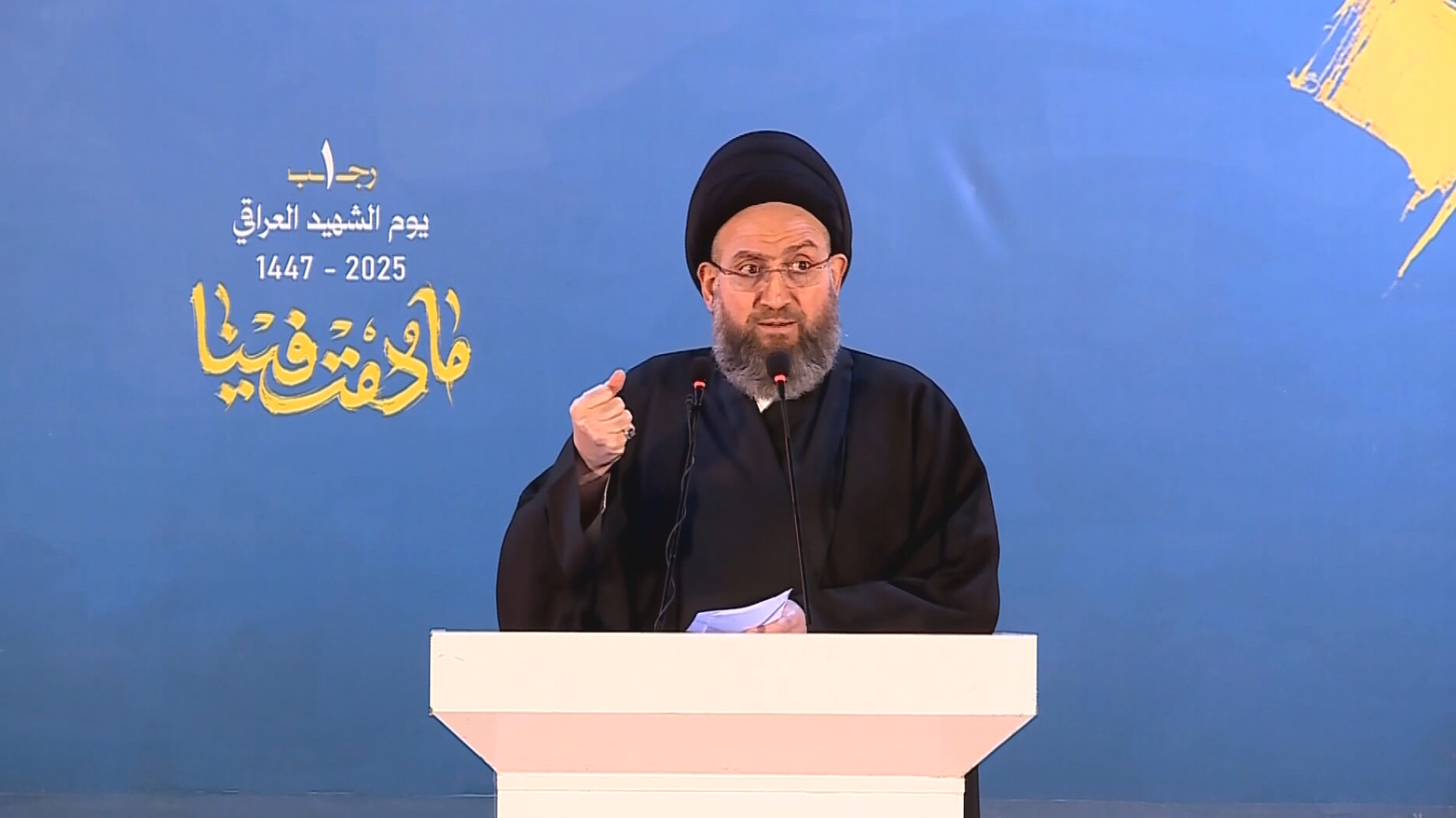
ERBIL (Kurdistan24) — Ammar al-Hakim, the head of the al-Hikma Movement, issued a strident call on Friday for the strict centralization of weapons under state authority, warning that the proliferation of arms outside government control threatens the integrity of Iraq’s political process.
Speaking during a pivotal moment for the Iraq’s leadership transition, al-Hakim emphasized that the formation of the next government must be expedited to prevent constitutional violations, asserting that the country’s stability hinges on establishing an administration free from external interference and coercion.
The address outlines a vision for a sovereign Iraq where the rule of law supersedes factional interests.
Al-Hakim’s remarks come as the country navigates a complex post-election landscape, where the pressure to translate ballot box results into tangible governance is mounting.
"We do not accept weapons being outside the authority of the state and used as a tool to pressure us and our brothers," al-Hakim declared, framing the monopoly on violence not merely as a security preference but as a fundamental constitutional imperative.
The Imperative of State Authority
In his speech, al-Hakim sought to redefine the concept of state prestige, moving beyond rhetorical slogans to the practical application of law.
He argued that the "mentality of statecraft" requires a proactive rather than reactive approach to governance.
This distinction is crucial as political factions negotiate the composition of the future government. According to the Al-Hikma Movement leader, the legitimacy of the state is eroded when armed groups operate with impunity or utilize their arsenals to dictate political outcomes.
"According to the constitution and the instructions of the Supreme Religious Authority, the law must be above everyone, and weapons must be only in the hands of the state," al-Hakim said.
His comments reflect a deep-seated concern regarding the intersection of paramilitary power and political leverage. By insisting that national decisions must be "solely Iraqi," al-Hakim positioned himself as a defender of national sovereignty, explicitly rejecting "external orders and interference."
The urgency of his message was underscored by a call to respect constitutional timelines.
Al-Hakim warned that delaying the government formation process disrupts state interests and mars the beginning of the new political phase with legal violations. "It is not acceptable to start building a new phase with constitutional violations," he noted, urging political stakeholders to place the country’s welfare above partisan gains.
Profile of the Next Prime Minister
Al-Hakim also provided a detailed criterion for the next Prime Minister, calling for a figure capable of decisive leadership.
The future head of government, he argued, must view all Iraqis equally and possess the "courage of statesmanship" to confront crises rather than evade them. In a clear admonition against weak leadership, he stated that the premier must not compromise on the interests of the people.
This focus on strong, centralized leadership dovetails with al-Hakim’s identification of the economy as the "real war" facing Iraq.
He stressed that the upcoming administration must prioritize the economic file, specifically monitoring actions that impact the nation's financial health.
"The wealth and resources of this country must no longer be allowed to be wasted," he said, advocating for a diversification strategy that elevates the agriculture and tourism sectors alongside traditional revenue streams.
Divergent Views from Washington
While al-Hakim’s address projected a narrative of internal sovereignty and state control, perspectives emerging from Washington offer a starkly different assessment of the political dynamics in Baghdad.
As Iraqi leaders deliberate on government formation, U.S. policymakers are scrutinizing the role of Iran-backed militias and their influence on the very institutions al-Hakim seeks to strengthen.
In a recent interview with Kurdistan24, U.S. Republican Congressman Cory Mills (Florida) warned that Iran-backed militias are actively destabilizing Iraq and the Kurdistan Region.
Mills, who has lived in the Kurdistan Region and traveled extensively throughout Iraq—from Zakho to Basra—argued that the influence of these groups extends deep into the state’s economic infrastructure, disrupting oil exports and state institutions like the State Organization for Marketing of Oil (SOMO) and the port of Umm Qasr.
The Congressman’s assessment highlights a critical tension in U.S.-Iraq relations.
While al-Hakim calls for decisions free from external interference, Mills contends that certain Iraqi political figures are enabling Tehran to exploit Iraqi state resources. Notably, Mills specifically cited "people like al-Hakim," alongside Hadi al-Amiri and Qais Khazali, as figures who are "pro-Iranian more so than pro-Iraq."
According to Mills, these alignments allow Iran to "thrive and make more and more money off the ministries and off the central bank and off the government." This characterization stands in sharp contrast to al-Hakim’s Friday speech, in which he vehemently championed the "prestige of the state" and the protection of Iraqi wealth from waste.
The Broader Regional Context
The juxtaposition of al-Hakim’s domestic calls for order and the skeptical view from Capitol Hill underscores the geopolitical complexities facing the new government.
Mills suggested that Iran’s current posture in Iraq is driven by "desperation" following setbacks in Syria and the loss of key proxy leaders like Hassan Nasrallah of Hezbollah and Sinwar of Hamas.
As Washington reassesses its regional strategy, possibly moving toward a more assertive approach under the influence of President Donald Trump’s foreign policy appointees, the pressure on Baghdad to curb militia activity is likely to intensify.
Mills also questioned the structural foundations of Iraq’s governance, specifically the 2005 constitution and Article 76, which he described as fostering a "sectarian democracy."
He warned that such systems have historically failed, drawing parallels to pre-apartheid South Africa and Northern Ireland. "We need to start thinking about what Iraq’s 2005 constitution actually did," Mills said, advocating for a reassessment of the political framework to ensure long-term stability.
Economic Stakes and the People's Mandate
Despite the divergent views on political allegiance, both al-Hakim and international observers agree on the centrality of the economy. While Mills focuses on how militias drain the oil sector and central bank, al-Hakim emphasizes the need to develop agriculture and tourism to secure Iraq’s future.
In the concluding portion of his speech, al-Hakim reminded the political class of the ultimate source of their legitimacy: the Iraqi voter.
"The people have had their say at the ballot boxes," he declared. He insisted that the election results must be translated into tangible outcomes—stability, construction, and agreement—rather than prolonged gridlock.
As the deadline for government formation looms, the tension between the aspiration for a sovereign, law-abiding state and the reality of entrenched militia influence remains the defining challenge.
Al-Hakim’s insistence that weapons remain solely in the hands of the state serves as both a policy demand and a warning of the fragility of the current political order. Whether the incoming government can meet these demands while navigating the scrutiny of international partners like the United States remains to be seen.