Russian General Killed in Car Explosion in Moscow
Russian Lt. Gen. Fanil Sarvarov was killed by a car bomb in Moscow; investigators are probing links to Ukrainian special forces amid a pattern of targeted attacks.
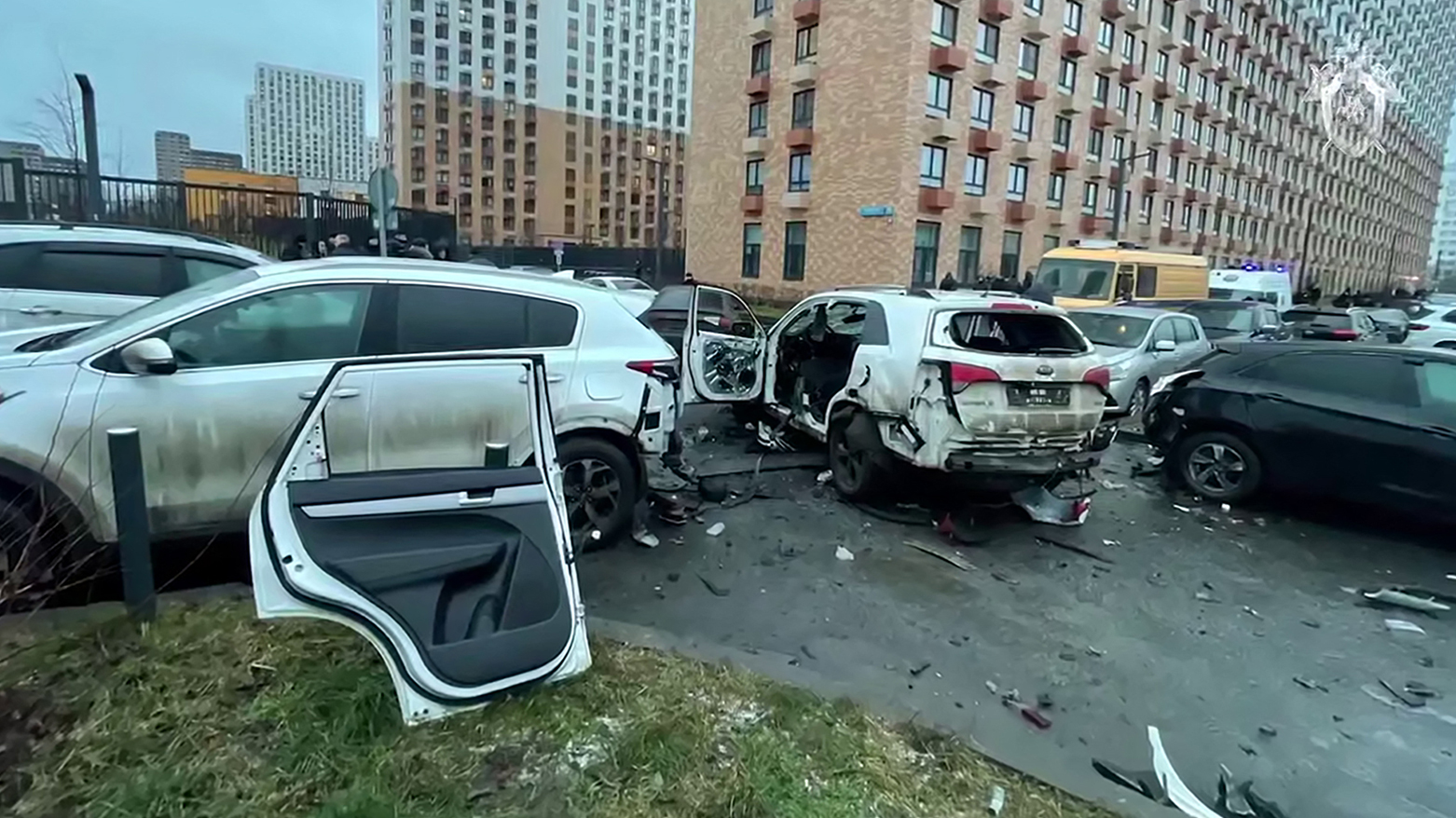
ERBIL (Kurdistan24) — A high-ranking Russian general was killed in the southern district of Moscow on Monday morning after an explosive device detonated beneath his vehicle, according to a statement released by Russian authorities. The assassination marks the latest in a series of targeted attacks against senior military officials and prominent pro-Kremlin figures within the country’s borders.
The investigative committee responsible for examining major crimes in Russia confirmed that it has opened a formal probe into the "murder" of Lieutenant General Fanil Sarvarov.
General Sarvarov held a significant position within the country's military hierarchy, serving as the head of the training department within the General Staff. The incident occurred at approximately 10:39 a.m. local time on December 22, 2025, according to reports from Agence France-Presse (AFP).
In the immediate aftermath of the blast, investigators identified a specific line of inquiry regarding the perpetrators. The committee’s statement explicitly noted the possibility that the attack was "linked" to "Ukrainian special forces."
This allegation aligns with a pattern of accusations Moscow has leveled following similar incidents since the onset of the conflict.
The death of General Sarvarov represents a significant security breach within the Russian capital, striking at the heart of the military establishment.
As the head of the training department, General Sarvarov would have played a central role in the preparation and readiness of Russian forces. His assassination via a car bomb underscores the persistent vulnerability of high-profile officials to covert operations, even far from the active frontlines of the conflict.
Since Moscow deployed troops into Ukraine in February 2022, Kyiv has frequently been blamed for a succession of attacks targeting Russian military officials and public figures supporting the Kremlin’s military campaign.
These incidents have occurred not only in Russian-controlled regions of Ukraine but also deep within Russian territory, including Moscow and Saint Petersburg.
The killing of General Sarvarov bears a striking resemblance to other recent attacks on senior defense officials.
In April, General Yaroslav Moskalik, a deputy of the General Staff, was killed in a similar car blast near Moscow. The targeting of two figures associated with the General Staff within the same year suggests a coordinated effort to dismantle or disrupt the upper echelons of Russia’s military command structure through targeted assassinations.
The incident on Monday follows another high-profile killing that took place exactly one year prior. In December 2024, Igor Kirillov, the head of the Russian radiological, chemical, and biological defense forces, was killed in Moscow. In that instance, the method of attack involved a booby-trapped electric scooter that exploded.
Notably, Ukraine's SBU security service claimed responsibility for the attack on Kirillov, a rare public admission that lends weight to Russian investigators' current suspicions regarding Ukrainian involvement in the death of General Sarvarov.
The campaign of targeted violence has not been limited to uniformed military personnel. It has also extended to influential voices in the Russian media and ideological spheres who have championed the government's military actions.
In April 2023, Maxim Fomin, a prominent Russian military blogger who reported from the frontlines and advocated for the war effort, was killed in an explosion at a café in Saint Petersburg. The blast was caused by a statuette that had been rigged with explosives and presented to Fomin during an event.
Going further back in the timeline of these assassinations, the use of car bombs as a primary tool of these operations was established early in the conflict. In August 2022, Daria Dugina, the daughter of the ultranationalist ideologue Alexander Dugin, was killed when a car bomb detonated.
Dugina was a vocal supporter of the Russian campaign in Ukraine, and her death signaled the beginning of a sustained period of insecurity for the Russian political and military elite.
The cumulative effect of these attacks highlights a sustained and evolving threat environment within Russia. The ability of assailants to plant explosive devices under the vehicles of high-ranking generals in southern Moscow indicates a sophisticated level of operational capability.
While the Russian Investigative Committee continues its work at the scene, the focus remains on the potential involvement of Ukrainian special operatives, a theory that, if proven, would further escalate tensions between the two nations as the conflict approaches the end of its fourth year.
As of Monday afternoon, no group had publicly claimed immediate responsibility for the explosion that killed General Sarvarov. However, the precedent set by the SBU's claim in the Kirillov case, combined with the strategic nature of the target, has firmly placed the spotlight on Kyiv's intelligence and special operations services.
The investigation is ongoing, with Russian authorities seeking to determine how the assailants bypassed security protocols to target a general of the General Staff in broad daylight in the capital.