Iran Rejects Missile Negotiations, Calls Arsenal Non-Negotiable
Iran rejects missile talks as non-negotiable, claiming defense deterrence. Officials admit past nuclear site damage but assert readiness for future conflict.
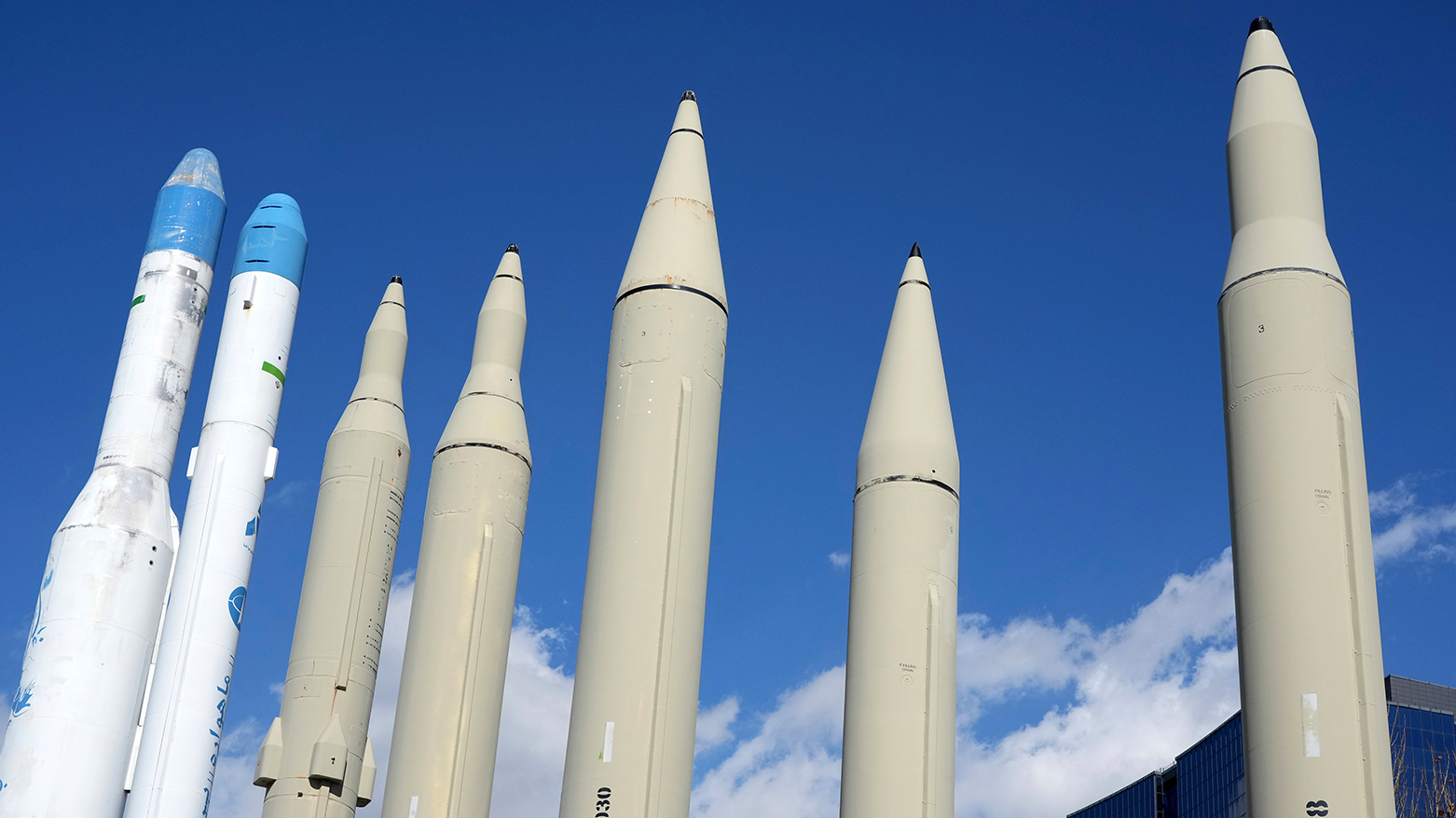
ERBIL (Kurdistan24) — Iranian officials have issued a stern rejection of any potential negotiations regarding the country's ballistic missile program, characterizing the arsenal as an essential and non-negotiable component of national defense, while simultaneously acknowledging the possibility of renewed military hostilities with Israel or the United States.
In a press conference held on Monday, Iranian Foreign Ministry Spokesperson Esmaeil Baghaei addressed recent speculation in Israeli and American media suggesting that pressure might be applied to Tehran to limit its missile capabilities to avoid further military aggression.
Citing reports from the Islamic Republic News Agency (IRNA), Baghaei dismissed the notion that Tehran would bargain over its security infrastructure. "The defensive capabilities of the Islamic Republic of Iran are designed with the aim of deterring aggressors from even imagining an attack on Iran, and this is by no means a matter that can be discussed or bargained over," Baghaei stated.
The comments come against a backdrop of heightened tensions following what officials referred to as a "12-day war" in June, during which Iranian infrastructure was targeted. Baghaei framed the current media narratives as part of a psychological "hybrid war" designed to weaken Iranian resolve. He asserted that the country’s missile program exists solely for the defense of the nation's entity.
Complementing the spokesperson’s remarks, Iranian Foreign Minister Abbas Araghchi offered a stark assessment of the security landscape.
In an interview with Russia Today, cited by the London-based newspaper Asharq Al-Awsat, Araghchi stated that Tehran "does not rule out" the possibility of new Israeli or American attacks on its nuclear facilities. However, he emphasized that the Islamic Republic remains "fully prepared, even more than before," to confront such scenarios.
"This doesn't mean that we welcome another war, but it is exactly to prevent a war. And the best way to prevent war is to be prepared for that," Araghchi said.
The Foreign Minister provided rare insights into the damage sustained during the conflict in June.
According to Asharq Al-Awsat, Araghchi acknowledged that Iranian nuclear facilities in Natanz and Fordow had been "seriously damaged" by U.S. and Israeli strikes. Despite this admission, he asserted that Iran has since rebuilt everything that was destroyed. He drew a distinction between physical infrastructure and intellectual capability, noting, "There is also another fact, that our technology is still there, and technology cannot be bombed."
This stance on nuclear technology dovetails with ongoing friction between Tehran and the International Atomic Energy Agency (IAEA). During his Monday briefing, Baghaei addressed the logistical and legal complexities of inspecting nuclear sites that have been subjected to military attack. He argued that there is "fundamentally no protocol" regarding how to inspect damaged facilities, claiming the situation is without precedent.
Baghaei criticized IAEA Director General Rafael Grossi for pressing Iran on inspection issues while, in Tehran's view, failing to hold the aggressors accountable.
"We were attacked under conditions where our facilities under safeguards were assaulted, while the highest number of inspections of our nuclear program were taking place," Baghaei said, as reported by IRNA. He demanded that the IAEA explicitly condemn the attacks on Iran’s nuclear infrastructure, warning that silence could encourage the repetition of such "crimes."
The diplomatic standoff extends to Iran's relationship with European powers regarding the conflict in Ukraine.
Baghaei categorically denied allegations by the European Council that Iran has provided military aid to Russia for its war in Ukraine. He described the claims as "repetitive" and "illogical," asserting that Tehran has advocated for dialogue to resolve the dispute from the outset.
Addressing the "diplomatic traffic" between Tehran and Moscow, including the recent simultaneous visits of the Russian Deputy Prime Minister to Iran and Foreign Minister Araghchi to Russia, Baghaei described these exchanges as natural for nations with extensive ties.
He noted that the two countries are operating under a newly enforced Comprehensive Strategic Partnership Agreement, aiming to expand cooperation in economic, energy, and transport sectors.
Relations with the United States remain deeply strained, characterized by mutual accusations of bad faith.
Baghaei cited the status of Iranian financial resources in Qatar as a primary example. While an understanding was reached to allow Iran access to six billion dollars of its own assets, Baghaei stated that the U.S. has blocked the use of these funds.
"This issue is considered one of hundreds of examples of bad faith by the United States of America," he said, confirming that the breach of promise continues to prevent Tehran from accessing the money.
Furthermore, Foreign Minister Araghchi revealed to Asharq Al-Awsat that the diplomatic channel with U.S. Special Envoy for the Middle East Steve Witkoff has been inactive for months.
While five rounds of talks occurred between April and June, a sixth round scheduled for mid-June was canceled following the outbreak of hostilities. Araghchi described the current U.S. approach to resuming negotiations as "very wrong."
Regional security dynamics also featured prominently in Monday’s press briefing.
Baghaei condemned what he termed the "wickedness and killing" perpetrated by Israel in Gaza and the West Bank, describing the actions as a "project of colonial erasure." He linked the resurgence of ISIS cells in the region to the destabilization of Syria caused by Israeli attacks and U.S. policies. With the anniversary of the assassination of Qasem Soleimani approaching, Baghaei credited the late commander with preventing the expansion of ISIS terror.
Addressing allegations of Iranian involvement in specific security incidents, Baghaei denied accusations from Israel regarding the murder of nuclear scientist Nuno Loureiro, an MIT professor.
He dismissed the claims as projection, stating, "Criminals think everyone is like themselves." In response to a question about British intelligence allegations related to the AMIA bombing case, Baghaei pointed to historical precedents of Israeli "false flag" operations, specifically citing the 1954 "Lavon Affair" in Egypt, where Israeli agents bombed Western targets to damage Egypt’s relations with the U.S. and UK.
The spokesperson also addressed reports of a U.S. naval blockade or aggression against commercial vessels in the Caribbean, aimed at Venezuela.
Baghaei condemned such actions as a "gross violation of international law" and a threat to global peace, promising that Iran would react appropriately to any aggression against its own national interests.
Regarding the political pressure Iran faces at the United Nations, Baghaei dismissed a recent Canadian-led resolution on human rights as a "political and bloc-based action."
He noted that while the resolution passed, more than half of the UN member states either voted against it, abstained, or did not participate, arguing that the West's ability to weaponize human rights rhetoric has diminished due to its support for Israel's actions in Gaza.
Domestically, the recent appointments of new commanders for the Iranian Army Air Force and Air Defense were framed by Baghaei as a natural evolution of defense strategy following the 12-day war. He stated that it is expected for a powerful country to learn lessons from conflict and continuously strengthen its performance.
As Iran prepares for the possibility of continued hostility in 2026, Foreign Minister Araghchi predicted that Israel would maintain its aggressive behavior due to the "full impunity" granted by Western powers. Nevertheless, Iranian officials reiterated their stance that the "resistance" is deeply rooted in the region and cannot be destroyed by military force.
The statements from both the Foreign Ministry spokesperson and the Foreign Minister delineate a posture of defiance.
By declaring missile defense non-negotiable, demanding accountability from international bodies like the IAEA, and deepening strategic ties with Russia, Tehran appears to be digging in for a prolonged period of friction with the West, relying on its rebuilt infrastructure and "resistance" ideology to weather potential future conflicts.