Armed Groups and Security Vacuums Block Christians’ Return to the Nineveh Plains
Christian families from Nineveh Plains refuse to return 11 years after ISIS, citing control by armed groups and lack of security.
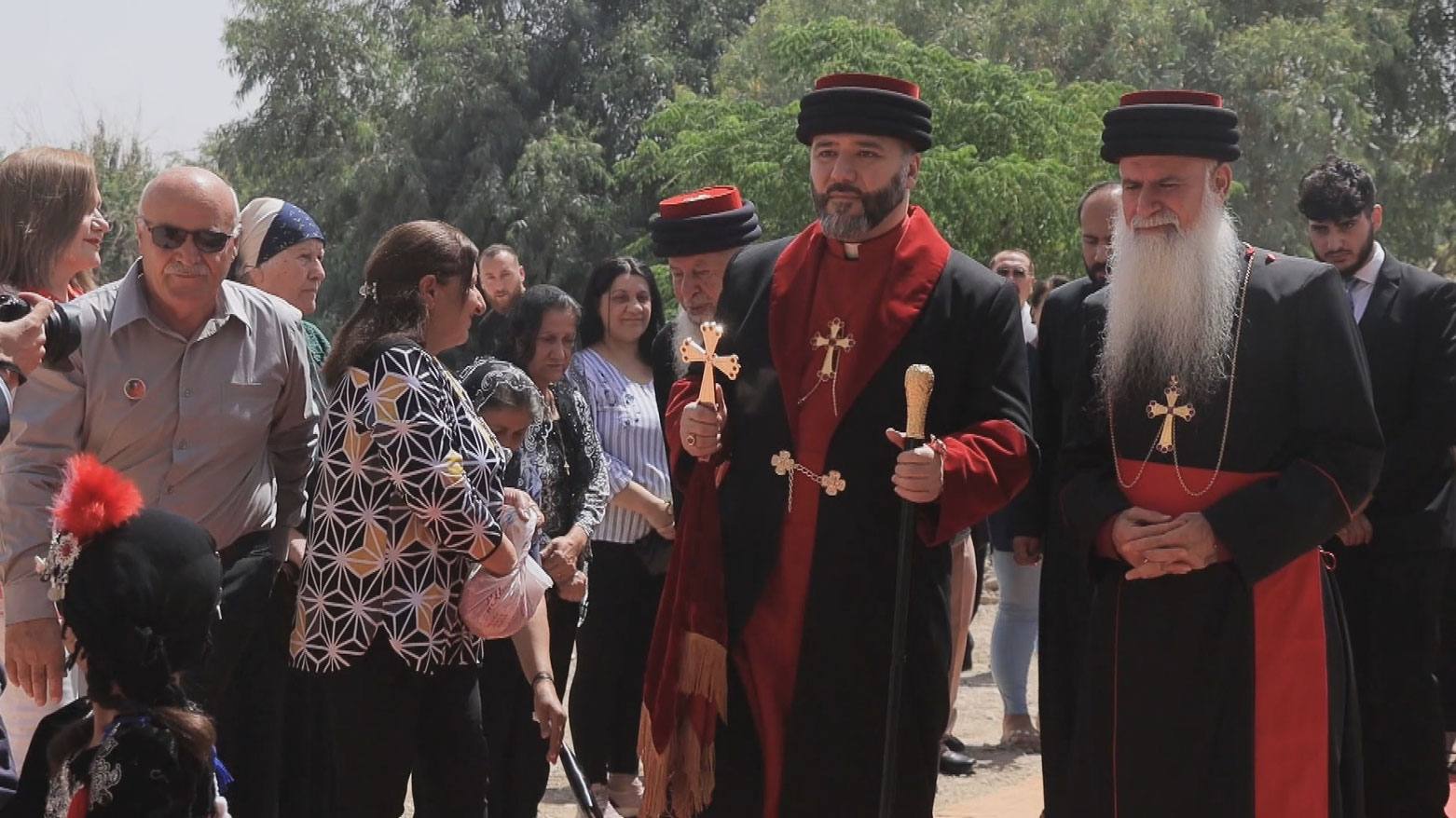
ERBIL (Kurdistan24) — More than a decade after the Islamic State’s assault on northern Iraq fractured the region’s demographic landscape, the Christian communities of the Nineveh Plains remain largely displaced, unable to return to their ancestral homes due to the lingering dominance of irregular armed groups and a pervasive lack of security assurance.
According to a new report by Kurdistan24's correspondent Derman Ba'adri, over 11 years have passed since the jihadist group’s offensive in 2014, yet a significant number of displaced Christians have not resettled in their places of origin.
The reluctance to return is driven primarily by a deep-seated feeling of instability and the continued control of local territories by various armed factions, which has prevented the restoration of normal civilian life in towns such as Hamdaniya and the sub-district of Alqosh in Shekhan District.

The ongoing displacement crisis highlights the gap between the military defeat of ISIS and the restoration of civil authority.
While major combat operations concluded years ago, the security architecture in the Nineveh Plains remains fragmented. Residents and activists describe a reality where the presence of "several different forces" creates an environment of uncertainty that makes the prospect of homecoming untenable for families now living in limbo.
Ramzi Isho, a displaced citizen who spoke to Kurdistan24 correspondent, articulated the collective despair of a community that once viewed their displacement as a temporary disruption.
"We thought it would be a month, 2 or 3 months, and we would return; but now we no longer have faith in returning," Isho said.
His testimony reflects a broader psychological shift among the displaced, who have moved from anticipating a quick return to accepting indefinite exile.
Isho noted that the violence has touched his community personally, stating, "Several of our relatives have also become victims of violence." This legacy of trauma, compounded by the current lack of state control, has eroded confidence in the guarantees offered by authorities.
Diana Botani, another displaced citizen interviewed for the report, emphasized the absence of safety guarantees.
"There is no complete assurance for returning," Botani stated. She pointed specifically to the militarization of the local landscape as the primary deterrent. "The presence of armed groups in the area has made people not feel stability. Citizens in those areas cannot visit their homes and properties with certainty due to the presence of several different forces."
The situation on the ground was corroborated by Amir Alqoshi, a Christian activist monitoring the region.
Alqoshi emphasized that the Christian-inhabited areas of the Nineveh Plains are effectively under the control of armed groups. Consequently, an unstable security situation continues to prevail, preventing the re-establishment of the minority community’s footprint in the region.
The demographic impact of this prolonged instability has been severe.
Before the ISIS attack in 2014, the number of Christians in the Nineveh Plains, particularly in the eastern sector, exceeded 100,000 people. However, the conflict spurred a mass exodus, with approximately 70,000 Christians leaving the area in the wake of the violence.
Despite the passing of more than a decade, the rate of return remains modest relative to the scale of the displacement.
According to the latest statistics cited in the report, only about 30,000 families have returned to the area. This figure underscores the difficulty of reversing the demographic shifts caused by the 2014 conflict when security conditions remain unconducive to civilian life.
The structural nature of these barriers was highlighted by new investigations conducted in 2024 by international and local organizations.
These inquiries concluded that, despite the official end of the war against ISIS, the "complexity of security control" in the Nineveh Plains remains the single biggest obstacle to stabilization and return. The findings suggest that the proliferation of various security actors has created a jurisdictional and operational maze that deters civilians from reclaiming their lives.
In addition to the paramount security concerns, the Christian community is facing compounding economic challenges.
The financial situation, coupled with a lack of basic services and employment opportunities, is driving the displaced population further away. Rather than attempting to navigate the complex security environment of the Nineveh Plains, many Christians are opting for emigration.
Displaced families are increasingly turning toward European countries and the United States as viable alternatives to returning to their places of origin in Hamdaniya District and other parts of the Nineveh Plains.
The lack of economic prospects, when combined with the security vacuum, has made the difficult choice of leaving Iraq entirely more attractive than the risks associated with returning to a home controlled by armed militias.
As the years since the 2014 atrocities mount, the window for preserving the Christian presence in the Nineveh Plains appears to be narrowing.
With armed groups maintaining their grip on the territory and trust in the restoration of order diminishing, the temporary displacement of a historic community is increasingly hardening into a permanent demographic loss for the region.