Turkey’s AK Party Reaffirms Drive to Dismantle PKK, Including Its Syrian and Iranian Affiliates
AK Party Spokesperson Çelik declares the dissolution of the PKK and its extensions, including the SDF and PJAK, as Türkiye's main objective for a terror-free future.
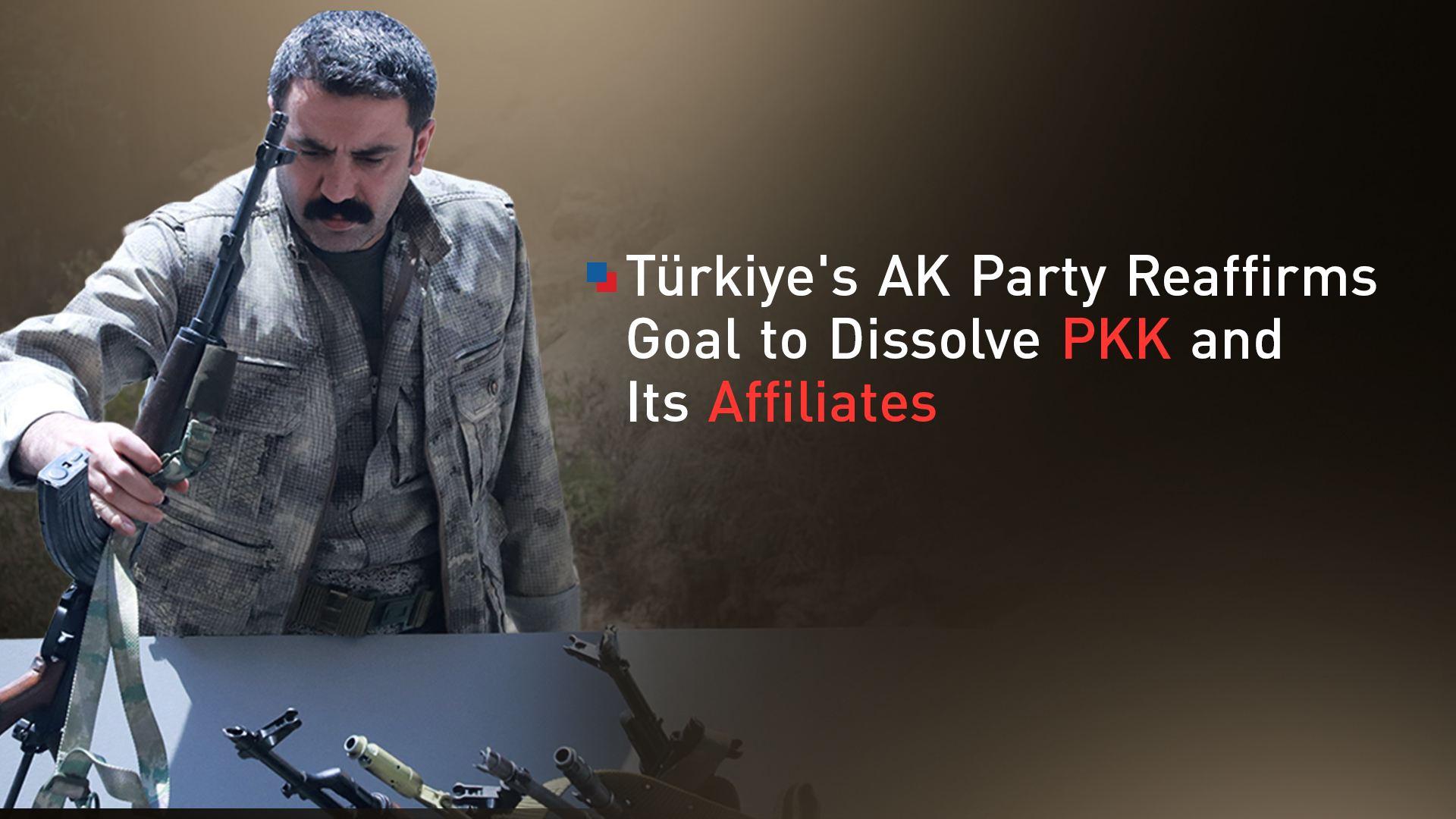
ERBIL (Kurdistan24) — The ruling Justice and Development Party (AK Party) has categorically reaffirmed its strategic objective to dissolve the Kurdistan Workers' Party (PKK) in its entirety, including its affiliates in Syria, Iran, and Europe, framing the goal as central to a broader vision of a "Terror-Free Türkiye."
In a comprehensive statement delivered following a Central Decision and Administration Board (MKYK) meeting chaired by President Recep Tayyip Erdoğan, AK Party Deputy Chairman and Party Spokesperson Ömer Çelik outlined Ankara's uncompromising stance.
"The main objective is the dissolution of the PKK terrorist organization with all its branches and extensions, namely the SDF in Syria, PJAK in Iran, and its ideological and financial illegal structures in Europe," Çelik declared at the party headquarters in Ankara.
The spokesperson’s comments, reported by the state broadcaster TRT Haber, come amid a period of intensified political dialogue within the Turkish parliament regarding the resolution of the decades-long conflict.
Çelik emphasized that while the process involves complex parliamentary negotiations and varying reports from political parties, the ultimate aim remains the total neutralization of the group’s operational capabilities.
A Unified State Strategy
Çelik utilized the press briefing to dispel rumors of internal discord within the Turkish government regarding its policy toward the Syrian Democratic Forces (SDF), the U.S.-backed group that Ankara views as indistinguishable from the PKK.
Responding to speculation about divergent views between the Foreign Ministry and the Defense Ministry, Çelik asserted that the state operates under a singular, integrated strategy directed by President Erdoğan.
"There is no difference of opinion or divergence of views between our ministers and party officials regarding the SDF issue," Çelik stated.
He emphasized that the Foreign Minister, the Defense Minister, and the head of the National Intelligence Organization (MIT) are all executing components of the same directive.
"Our focus is the dissolution of the PKK terrorist organization and the burning and laying down of weapons for this to happen," he added.
This unified stance extends to the assessment of recent developments on the ground in Syria. While acknowledging some positive steps, such as the emptying of certain caves used by militants, Çelik highlighted concerning intelligence regarding new fortifications being constructed by the SDF in Raqqa and Deir ez-Zor.
"We clearly see how these structures were established, how they remain standing today, and against whom their weapon is turned," he remarked, warning that attempts to create an "army within an army" in Syria would lead to a catastrophic civil war scenario.
The March 10 Agreement and Regional Stability
A significant portion of Çelik’s address focused on the "March 10 agreement," a framework intended to integrate Kurdish forces into the Syrian national structure. The spokesperson insisted that adherence to this agreement is the only viable path for the SDF to cease being a threat to both Türkiye and Syria.
Çelik argued that the agreement provides clear guarantees for Kurdish identity and political participation within a unified Syrian state.
"There are very clear and strong expressions regarding the gains of the Kurds in Syria, the recognition of their identities which had been rejected during the Assad regime until now, and their being an inseparable part of Syria," he noted.
However, he warned that the SDF appears to be moving in the opposite direction, potentially influenced by external actors.
Without naming specific nations but alluding to "imperialist centers" and "Zionist massacrism," Çelik cautioned Kurdish groups against becoming pawns in proxy wars. "Saying 'I am making this mistake on behalf of Arabs or Kurds' is a huge delusion," he said.
Parliamentary Process and "Strategic Patience"
Domestically, the AK Party spokesperson praised the work of the parliamentary commission tasked with developing the "Terror-Free Türkiye" framework.
He acknowledged that the process has drawn criticism and revealed differences between political parties but described these contrasts as the essence of parliamentary democracy.
"What matters is the turning of the wheel, the functioning of the processes," Çelik said, urging patience as the state navigates the complexities of disarmament and dissolution.
He described the current phase as one requiring "strategic patience," noting that while progress may seem slow at times, the roadmap is functioning.
The ultimate goal, according to Çelik, is to remove the stress that terrorism has placed on Türkiye’s democracy and rule of law.
"With terror falling off the agenda, it will be possible today to handle many issues discussed at the legal or political level... more clearly and more calmly," he explained.
Brotherhood and National Unity
Throughout his address, Çelik repeatedly invoked the concept of "eternal brotherhood" between Turks and Kurds, framing the fight against the PKK not as an ethnic conflict but as a defense of national unity.
He asserted that Türkiye has never experienced a race war or ethnic fight, and that terror has specifically targeted the cohesion of the nation.
"We will walk to the future within the framework of the principles of common fate and citizenship by protecting our eternal brotherhood and eternal unity around the principle of one homeland, one nation, one state, one flag," he concluded.
The spokesperson’s remarks signal that Ankara intends to maintain intense pressure on the PKK and its affiliates in 2026, combining military vigilance with political pathways for disarmament, provided that the groups accept the sovereignty of the states in which they operate.