SDF Denies Israeli Links Ahead of Crucial Damascus Negotiations on Military Integration
SDF confirms leader Mazloum Abdi will visit Damascus for integration talks while denying reports of covert ties to Israel or Druze militias.
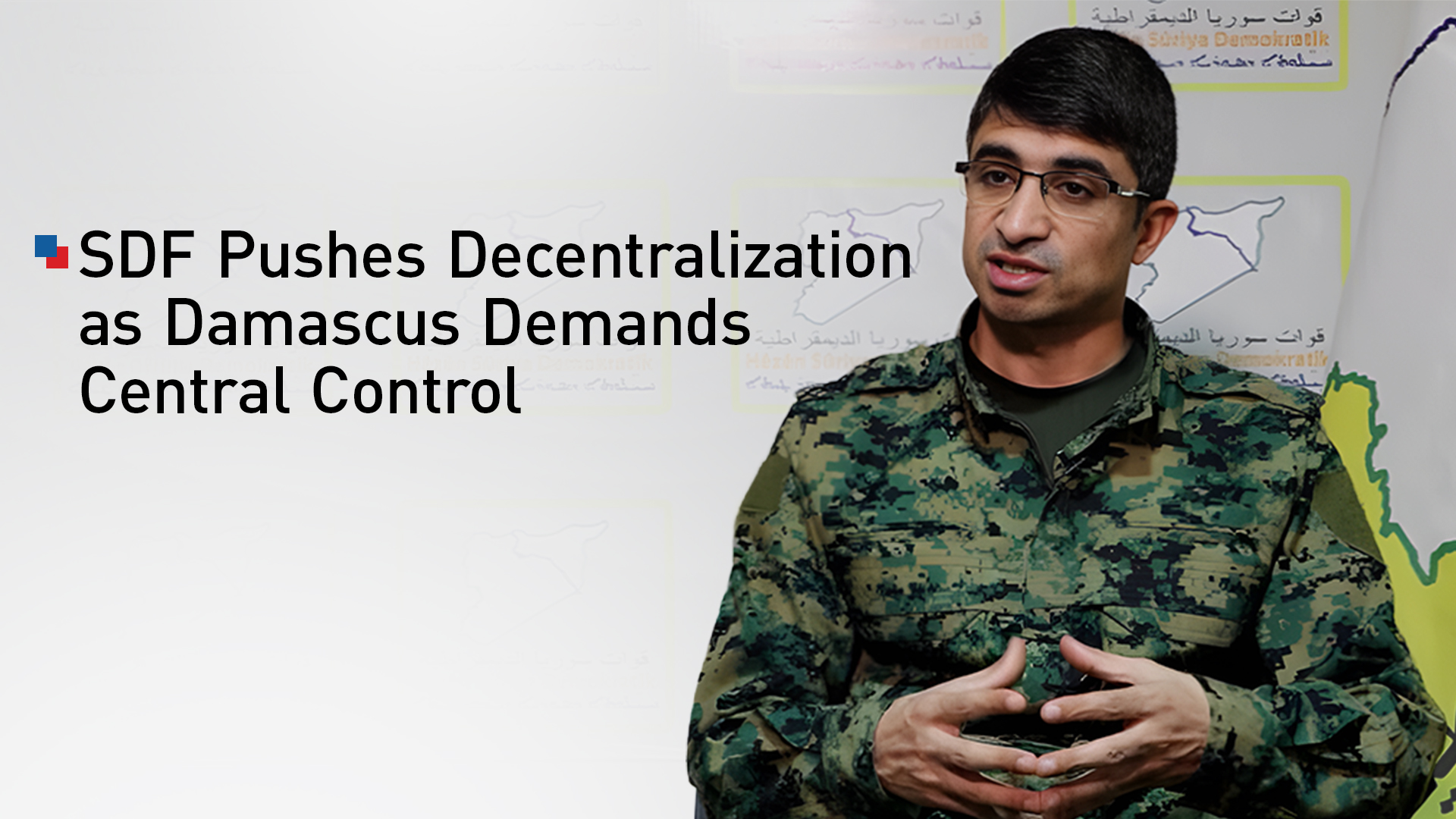
ERBIL (Kurdistan24) — The Syrian Democratic Forces (SDF) confirmed late Thursday that its Commander-in-Chief, General Mazloum Abdi, is scheduled to visit Damascus before the New Year for a critical round of negotiations aimed at integrating the Kurdish-led force into the Syrian Army. The announcement, made by SDF spokesperson Farhad Shami in a televised interview, comes amid intensifying diplomatic pressure and fresh allegations regarding the group’s relationship with Israel and separatist movements in southern Syria.
In a wide-ranging interview with Al-Arabiya on Thursday, Shami outlined the parameters of a tentative "mutual understanding" between the SDF and the Syrian government, now led by President Ahmed al-Sharaa following the collapse of the Assad regime in late 2024.
While acknowledging that significant points of convergence exist regarding military and security files, Shami emphasized that a final agreement remains contingent on resolving disputes over the specific mechanisms of integration and the future administrative structure of the country.
The diplomatic push occurs against a backdrop of volatile regional dynamics, highlighted by a Washington Post investigation published earlier this week alleging that the SDF has served as a conduit for Israeli funding and training to Druze militias in Sweida.
Shami vehemently denied these accusations during the interview, characterizing them as fabrications intended to justify foreign intervention, particularly by Turkey, whose Foreign Minister Hakan Fidan was in Damascus this week warning that the SDF’s alleged coordination with Israel constitutes a "major obstacle" to peace.
The Push for Military Integration
During the interview, Shami stated that the upcoming talks in Damascus would be conducted under the sponsorship of international guarantors, including the United States, France, the United Kingdom, and several Arab nations that have opted to remain unnamed.
The primary objective of General Abdi’s visit is to finalize an agreement that has been in the works since March, when the SDF signed a preliminary deal to merge its semi-autonomous administration with the central government.
"All understandings and commitments are about the mechanism of integrating the Syrian Democratic Forces into the Syrian Army," Shami told Al-Arabiya. "We are all agreed... on the necessity of integrating the Syrian Democratic Forces politically, militarily, and administratively."
However, substantial friction remains regarding how this integration will be implemented.
Shami noted that the government in Damascus holds a specific vision for the merger that differs from the proposal put forth by the SDF and the Autonomous Administration of North and East Syria.
The negotiations have involved an exchange of formal proposals over the last two months, with both sides submitting counter-offers to bridge the gap. Shami indicated that the SDF is seeking a model that preserves the "political and administrative" distinctiveness of the force, rather than a simple dissolution into the national army's ranks.
General Abdi, in a separate statement reported by Agence France-Presse (AFP) on Thursday, reinforced the commitment to the process, asserting that "all efforts" were being made to prevent the collapse of the deal.
He downplayed the looming year-end deadline set in the March agreement, stating that the timeline did not specify a hard expiration for diplomatic efforts or a return to military solutions.
Decentralization vs. Centralization
A core ideological sticking point in the negotiations remains the concept of governance.
The SDF has consistently demanded a decentralized system, a stance Shami reiterated on Thursday. He argued that the centralized model of rule had "failed" in Northeast Syria and other regions over past decades, and that a return to such a system was untenable.
"The form of decentralization must be that the residents of the region manage themselves by themselves," Shami said, clarifying that this constitutes local rule rather than separation.
When pressed by the interviewer on whether this demand amounted to a push for independence, Shami dismissed the notion as a distortion, citing the geopolitical reality of being sandwiched between a "hostile" Turkey and Iraq.
However, this push for decentralization faces stiff resistance from the new Islamist-led authorities in Damascus.
According to AFP, the government of President Ahmed al-Sharaa—formerly known as Abu Mohammed al-Jolani—has rejected these demands.
The tension over governance structures is further complicated by the divergent interpretations of the March 10th agreement, which Shami claimed contained an "implicit agreement" on decentralization, a point the interviewer noted was not explicitly written in the text.
Denial of Israeli Ties and the Druze Connection
The most contentious portion of the interview addressed allegations that the SDF has been acting as a proxy for Israeli interests in southern Syria.
A report published by The Washington Post on December 23 detailed an extensive covert operation by Israel to arm and fund Druze militias in the Sweida province to counter the authority of President Sharaa.
The Post investigation, citing former Israeli officials and Druze commanders, alleged that the SDF had transferred funds to the Druze "Military Council" and provided training to Druze fighters, including women, in Kurdish-controlled areas.
The report claimed that members of the Israeli security establishment funneled $24,000 to Druze commander Tareq al-Shoufi via the SDF to renovate a command center, with an additional sum of up to half a million dollars sent separately by the SDF.
Shami categorically denied these claims, asserting that "there are no foreign elements in the Syrian Democratic Forces" and that the group has "absolutely no" relationship with Israel. He argued that if such ties existed, the SDF would not be subjected to constant attacks by regional actors.
Addressing the specific allegation of training forces loyal to the Druze spiritual leader Sheikh Hikmat al-Hijri, Shami pointed to the logistical impossibility of such operations.
"How would Mr. Hikmat al-Hijri’s forces reach the regions of North and East Syria when more than 500 km separate us?" he asked, noting that territory controlled by the Damascus government separates the two regions.
Shami also refuted the financial allegations, suggesting that the report contained internal contradictions.
He noted that the same Washington Post report detailed direct Israeli airdrops of weapons and supplies to Sweida. "If [Israel] dropped weapons by air, what need do the Druze have for money from the SDF? Israel could drop money as well," he argued.
The Shadow of the "Washington Post" Investigation
The allegations denied by Shami are detailed in the Washington Post report, which outlines a concerted Israeli strategy to fragment Syrian national cohesion following the fall of Bashar al-Assad in December 2024.
According to the report, Israel views President Sharaa with "profound suspicion" due to his past leadership of an al-Qaeda affiliate and has sought to cultivate the Druze minority as a counterweight.
The Post reported that Israeli helicopters began airdropping rifles, ammunition, and body armor to Druze militias as early as December 17, 2024.
The flow of weapons reportedly peaked in April 2025 during clashes between Druze fighters and Islamist gunmen aligned with the new government. While the transfer of lethal aid reportedly ebbed in August after Israel pivoted to negotiations with Sharaa, the Post found that Israel continues to provide nonlethal military equipment and monthly payments of $100 to $200 to approximately 3,000 Druze militiamen.
The report also highlighted the role of Sheikh Hikmat al-Hijri, who the Post describes as leading calls for a self-governing Druze state backed by Israel.
The Post cited a Western official who recalled that Hijri had prepared maps of a proposed Druze state stretching to Iraq. These are the specific "forces loyal to Hikmat al-Hijri" that the SDF is accused of training—a charge Shami dismissed as "lies."
Regional Geopolitics and Turkish Pressure
The accusations of SDF-Israel collusion have been seized upon by Turkey, a key ally of Syria’s new leadership.
Turkish Foreign Minister Hakan Fidan, speaking at a joint press conference in Damascus with Syrian Foreign Minister Asaad Hassan al-Shaibani on Monday, December 23, explicitly linked the stalled integration talks to the SDF’s alleged foreign ties.
"The fact that the SDF carries out some of its activities in coordination with Israel currently represents a major obstacle in the discussions being held with Damascus," Fidan said, according to Anadolu Agency. He added that the SDF had shown "no real intention" of making progress in the negotiations.
Fidan’s visit to Damascus included meetings with Turkish intelligence chief Ibrahim Kalin and Defense Minister Yasar Guler, signaling a high-level coordination between Ankara and Damascus regarding security threats.
During his comments, Fidan emphasized that the repeal of the U.S. Caesar Act sanctions—credited partly to U.S. President Donald Trump—would bolster regional stability and allow for economic recovery, contrasting this potential for stability with the "terrorist" threat Ankara associates with the SDF.
Shami pushed back against the Turkish narrative during his interview, interpreting the accusations of Israeli ties as a pretext for Turkey’s continued military presence on Syrian soil.
He noted that Turkey maintains more than eighty military points and bases within Syria, having established eight new large bases following the collapse of the previous regime. "I believe these Turkish pretexts are to justify its interventions in Syrian affairs," Shami stated.
Internal SDF Dynamics and Ocalan
The interview also touched upon the internal dynamics of the Kurdish movement, specifically regarding the influence of Abdullah Ocalan, the imprisoned leader of the Kurdistan Workers' Party (PKK).
When asked if General Abdi had received a message from Ocalan demanding the removal of foreign elements from the SDF, Shami acknowledged the existence of a message but disputed its content.
"There was a message, but it did not contain these ideas that are currently being presented," Shami said. He clarified that the SDF does not contain foreign elements, describing the non-Syrian Kurds in their ranks as individuals who volunteered during the existential battle against ISIS in Kobani.
Fragile Ceasefire in Aleppo
The urgency of the upcoming talks in Damascus is underscored by recent violence. Aleppo recently witnessed deadly clashes between SDF-aligned forces and government troops, threatening to derail the fragile peace.
When asked about guarantees that such violence would not recur, hami attributed the hostilities to "rogue factions" within the government’s orbit that oppose the reconciliation process.
He stated that the SDF had submitted video evidence and full reports to international mediators, including the United States, proving that the attacks were initiated by Damascus forces or allied militias.
"The Syrian Democratic Forces are committed, and the residents in Sheikh Maqsood are innocent civilians," Shami said, referring to the Kurdish-majority neighborhood in Aleppo that saw heavy fighting. He insisted that the SDF stands by previous de-escalation understandings but warned that the continued presence of undisciplined factions creates ongoing crises.
International Diplomatic Context
The complex negotiations in Syria are taking place within a broader framework of international diplomacy involving the United States and regional powers.
Turkish Foreign Minister Fidan, in his remarks earlier this week, referenced a "Miami 4-party meeting" held last Friday involving officials from the U.S., Egypt, Qatar, and Turkey.
This meeting focused on regional peace plans and the reconstruction of Gaza, but also touched upon broader governance issues in the Middle East.
According to Anadolu Agency, Fidan noted that the U.S. side presented preliminary work on reconstruction and that a second phase of the peace plan might begin in the first weeks of the new year, possibly with a declaration by President Trump.
This international backdrop suggests that the settlement of the Syrian file, including the status of the SDF, is being treated as part of a wider reconfiguration of regional security architecture.
As the year-end deadline approaches, the success of General Abdi’s visit to Damascus remains uncertain.
With the SDF demanding autonomy within a federal system, the Damascus government insisting on centralization, and regional powers like Turkey and Israel exerting influence through military and covert means, the "mutual understanding" described by Shami faces significant tests in the coming days.