Trump Rules Out Immediate Recognition of Somaliland, Diverging From Netanyahu’s Stance
Trump rejected immediate recognition of Somaliland, dismissing Israel's lead and a proposed naval base, stating he must "study" the issue while prioritizing Gaza peace efforts.
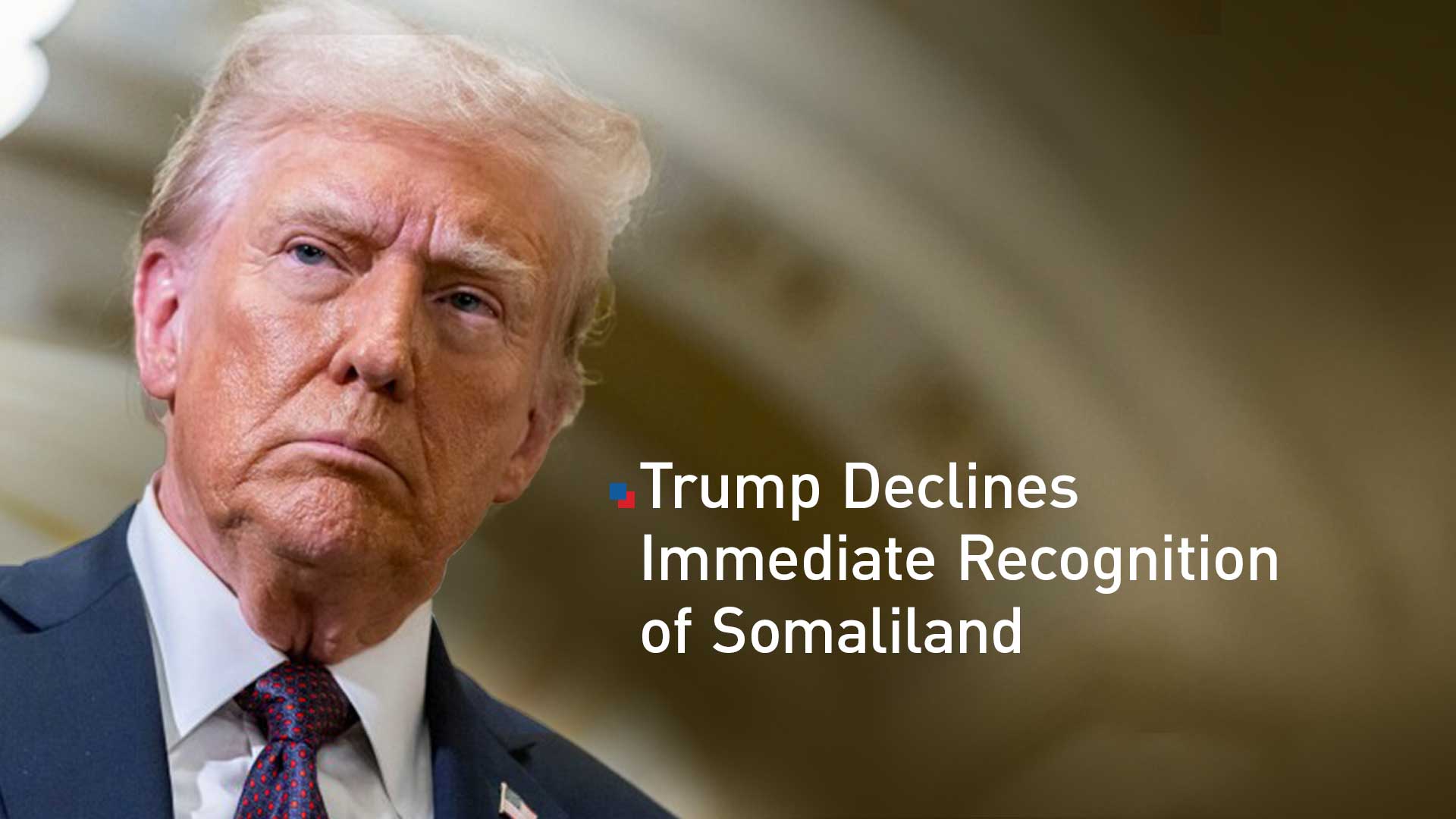
ERBIL (Kurdistan24) — President Donald Trump stated on Friday that he does not intend to immediately follow Israeli Prime Minister Benjamin Netanyahu in recognizing the independence of Somaliland, signaling a divergence in diplomatic priorities between Washington and its close Middle East ally.
In an interview with The New York Post on Friday, the President emphasized that he intends to “study” the situation further, dismissing the urgency of the issue even as Israel became the first nation to formally acknowledge the breakaway republic’s sovereignty.
The comments from the President came shortly after Israel announced its historic decision on Friday to recognize Somaliland, a region that has functioned independently from Somalia since 1991.
Prime Minister Netanyahu, celebrating the diplomatic breakthrough, held a video call with Somaliland President Abdirahman Mohamed Abdullahi, during which he vowed to convey a message to President Trump regarding the territory's potential inclusion in the Abraham Accords.
The Israeli leader expressed his intention to communicate Somaliland’s “willingness and desire” to join the framework of Arab-Israeli normalization during his scheduled meeting with Trump on Monday.
However, speaking from his golf course in West Palm Beach, President Trump expressed skepticism regarding the initiative. He told The New York Post that he would not be swayed quickly to follow Israel’s lead. When asked about his stance on recognition, Trump dictated a blunt response. “Just say, ‘No, comma, not at this —,’” he began, before revising his statement to a definitive: “Just say, ‘No.’”
The President questioned the general understanding of the region, asking aloud, “Does anyone know what Somaliland is, really?” His remarks suggested that despite the diplomatic maneuvering by Jerusalem, the White House remains unconvinced that recognizing the Horn of Africa territory is a strategic necessity for the United States at this time.
President Trump appeared notably unimpressed by the incentives offered by Somaliland to secure American backing.
The breakaway region, a Muslim-majority state, has offered to join the Abraham Accords—the series of agreements Trump championed during his previous term which established relations between Israel and nations such as the United Arab Emirates, Bahrain, Sudan, and Morocco.
Additionally, Somaliland has proposed designating land for a United States naval base near the mouth of the Red Sea, a critical maritime choke point.
When pressed by The New York Post regarding the offer of a port on the strategically vital Gulf of Aden, President Trump was dismissive, replying, “Big deal.”
He maintained a cautious stance, reiterating that his administration would review the matter in due course rather than rushing to a decision. “Everything is under study,” Trump said. “We’ll study it. I study a lot of things and always make great decisions and they turn out to be correct.”
The President indicated that his upcoming discussions with Prime Minister Netanyahu would likely focus on more pressing regional conflicts rather than the status of Somaliland.
Specifically, Trump expects to prioritize the situation in the Gaza Strip. Following a ceasefire he brokered in October, Trump currently chairs a United Nations-approved Board of Peace tasked with overseeing the agreement’s implementation and the subsequent reconstruction of the territory.
The cautious approach from the White House contrasts with the growing momentum for Somaliland’s recognition among some United States officials and military leaders.
The New York Post reported that General Dagvin Anderson, the chief of U.S. Africa Command, visited Somaliland last month. His presence reportedly buoyed local hopes that a deal with Washington could be reached. Furthermore, several of Trump’s political allies in Congress have taken legislative steps to support the territory.
Representative Scott Perry, a Republican from Pennsylvania, has sponsored the “Republic of Somaliland Independence Act.” The legislation has attracted co-sponsorship from other Republican lawmakers, including Representatives Tom Tiffany of Wisconsin, Andy Ogles of Tennessee, and Tim Burchett of Tennessee.
Somaliland, formerly a British protectorate, declared independence from the rest of Somalia in 1991. While the bulk of Somalia, which was formerly ruled by Italy, has been beset by decades of civil war and instability, Somaliland has established a relatively stable democracy characterized by peaceful transitions of power.
The region maintains strong relations with neighboring Ethiopia and the United Arab Emirates. However, its push for international recognition faces significant opposition from other regional powers, including Egypt and Turkey, who advocate against its independence.
Domestically, the issue intersects with American political divisions. Representative Ilhan Omar, a Democrat from Minnesota who was born in Mogadishu, has been a vocal opponent of autonomy for the northern region.
“As long as I’m in Congress, no one will take over the seas belonging to the nation of Somalia,” Omar declared. Conversely, President Trump has recently directed rhetorical attacks toward Somalia and its diaspora in Minnesota, linking issues of fraud to state government officials and Democratic Governor Tim Walz.
Despite his current dismissal, President Trump had previously signaled openness to the idea. In August, he stated that he was considering granting recognition to Somaliland. “We’re looking into that right now,” he said at the time. “Good question, actually. And another complex one, as you know. But we’re working on that right now — Somaliland.”
However, with the meeting with Netanyahu approaching, the President made clear that his immediate focus remains on the implementation of the Gaza ceasefire and that he is not yet prepared to embrace the diplomatic shift championed by his Israeli counterpart.