KRG Representative Flags Potential Loss of 30% of Occupied Kurdish Territory
KRG official Dijwar Fayiq accuses Iraqi parties of blocking the return of 300,000 dunams of Kurdish land to secure Arab votes, warning 30% may never be recovered.
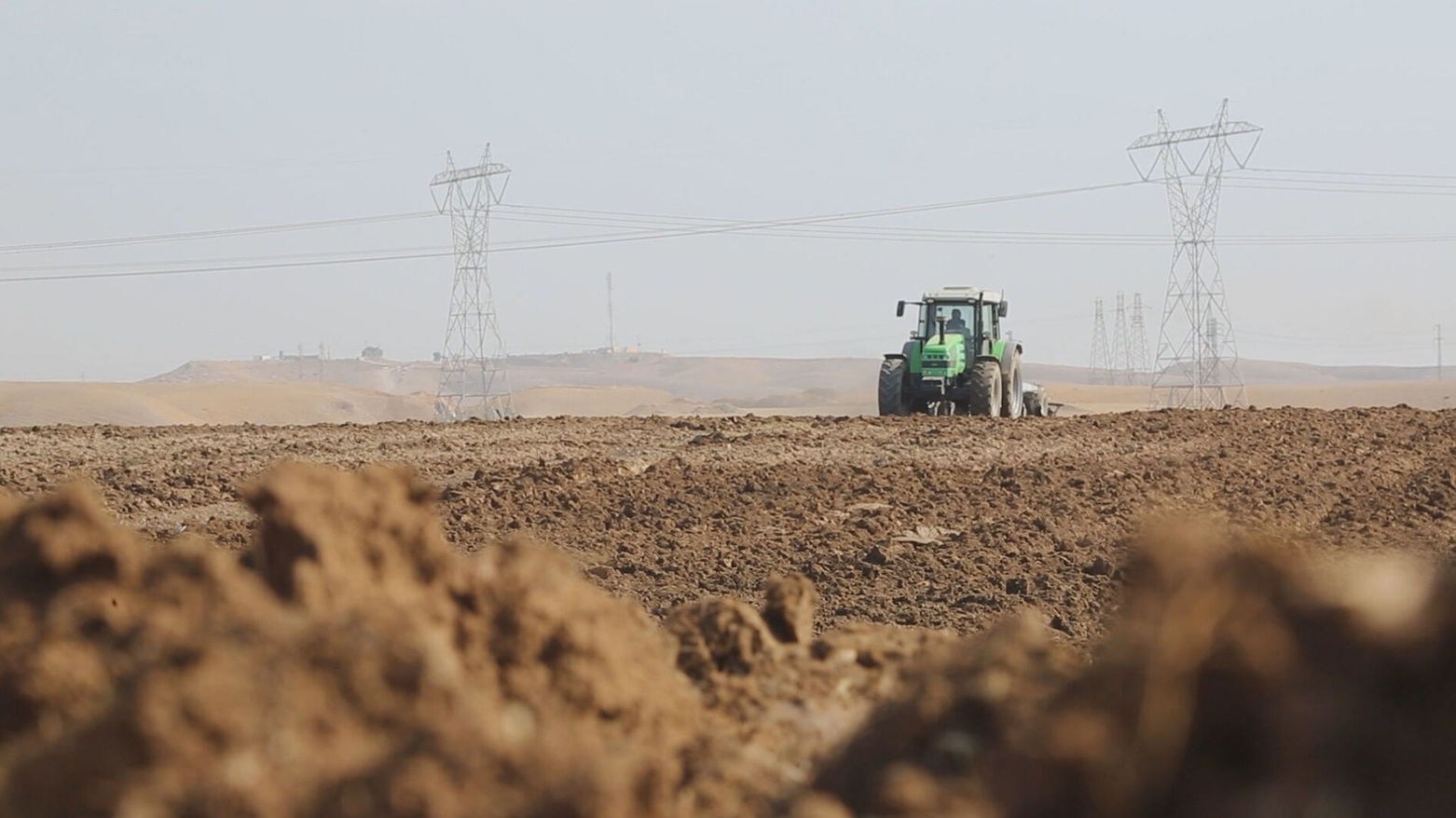
ERBIL (Kurdistan24) – A senior representative of the Kurdistan Regional Government charged on Friday that ruling political factions in Baghdad are deliberately obstructing the restitution of more than 300,000 dunams of farmland to Kurdish owners, alleging that the delay is a calculated political maneuver to retain electoral support among Arab settlers.
Dijwar Fayiq, the Kurdistan Regional Government (KRG) representative on the Committee for the Implementation of Article 140 of the Constitution, detailed the accusations in an exclusive interview with Kurdistan24 on Friday.
Fayiq asserted that despite constitutional provisions and prior government decisions intended to resolve land disputes, "imported Arabs"—a term referring to Arab populations settled in Kurdish areas—continue to occupy vast tracts of agricultural land with the tacit or active support of influential Iraqi political parties.
The dispute centers on the implementation of Article 140, a constitutional mechanism designed to address the status of Kurdistani territories disputed between the federal government in Baghdad and the Kurdistan Region.
According to Fayiq, the process has been stymied by political actors in Baghdad who are "playing for time" to avoid returning the occupied lands to their original Kurdish citizens. He stated that the settlers are not prepared to vacate the properties, which encompass more than 300,000 dunams, a significant area of agricultural production.
Fayiq provided a detailed categorization of the disputed lands, indicating that the occupation stems from two distinct historical and administrative contexts. The first category involves lands that were seized and redistributed under the decisions of the Ba'ath Revolutionary Command Council, the supreme authority under the former regime.
Fayiq noted that following the fall of the Ba'ath regime, a specific decision was issued in 2012 to return those lands to their original Kurdish owners. However, he emphasized that more than a decade later, the 2012 decision remains unimplemented, leaving the original owners dispossessed.
The second category of land disputes involves cases where a government committee was established to execute restitution decisions.
Under this framework, a mechanism was proposed to provide the Arab settlers with land in their original places of residence along with financial compensation to facilitate their departure. Despite this roadmap, Fayiq contended that Arab political parties have successfully stalled the process.
He attributed this obstruction to electoral calculus, stating that these parties fear the loss of votes from the "imported Arabs" if they were to be relocated.
The KRG representative described a situation where the settlers, emboldened by political patronage, have adopted an uncompromising stance.
He cited the position of the Arab occupants, supported by the ruling parties, as being: "We will not return and we will not vacate the lands." This refusal has effectively frozen the implementation of legal decisions aimed at restoring demographic and property rights in the region.
Fayiq offered a harsh critique of the current governance structure in Baghdad, suggesting that the federal government operates under a "dictatorship of the majority" that imposes its will on decision-making processes.
He argued that there is a clear double standard in how parliamentary and government decisions are executed.
According to Fayiq, if the mandates regarding the return of settlers to their places of origin were in the interest of the Arab population, the government would have implemented them "without hesitation and as soon as possible."
Conversely, because these measures would benefit the Kurds and disadvantage the Arab constituency, the ruling parties are "killing time" and actively working to prevent implementation.
The long-term consequences of this political deadlock appear grim for Kurdish landowners.
Fayiq warned that due to the prevailing injustice in decision-making and the persistent creation of administrative and political obstacles, a significant portion of the territory may be permanently lost. "There is a possibility that 30% of those occupied lands will not be returned to the Kurds," he told Kurdistan24.
Looking toward the future legislative landscape, Fayiq issued a call for unity among Kurdish political entities. He emphasized that Kurdistani political parties must adopt a single voice and a unified stance regarding the implementation of Article 140.
He argued that such cohesion is essential for the new term of parliament, where the primary objective must be to amend the decisions previously made against Kurdish interests and to reclaim the constitutional and legal rights of the Kurdish people within the federal framework of Baghdad.
The statements by the KRG representative highlight the enduring fragility of property rights in the Kurdistani territories and the degree to which administrative solutions are held hostage to the broader political and electoral rivalries defining the relationship between Erbil and Baghdad.
With hundreds of thousands of dunams still occupied and the implementation of restitution mechanisms stalled, the issue remains a potent source of friction within the Iraqi state.