Baghdad Deliberately Blocking Kurdistan Salaries, Kurdish Socialist Leader Says
Mohammed Haji Mahmoud, Secretary-General of the Kurdistan Socialist Democratic Party (KSDP), criticized Baghdad for withholding three months of salaries in 2025, dismissing "Kurdish-Arab brotherhood" as a hollow slogan and calling for political realism.
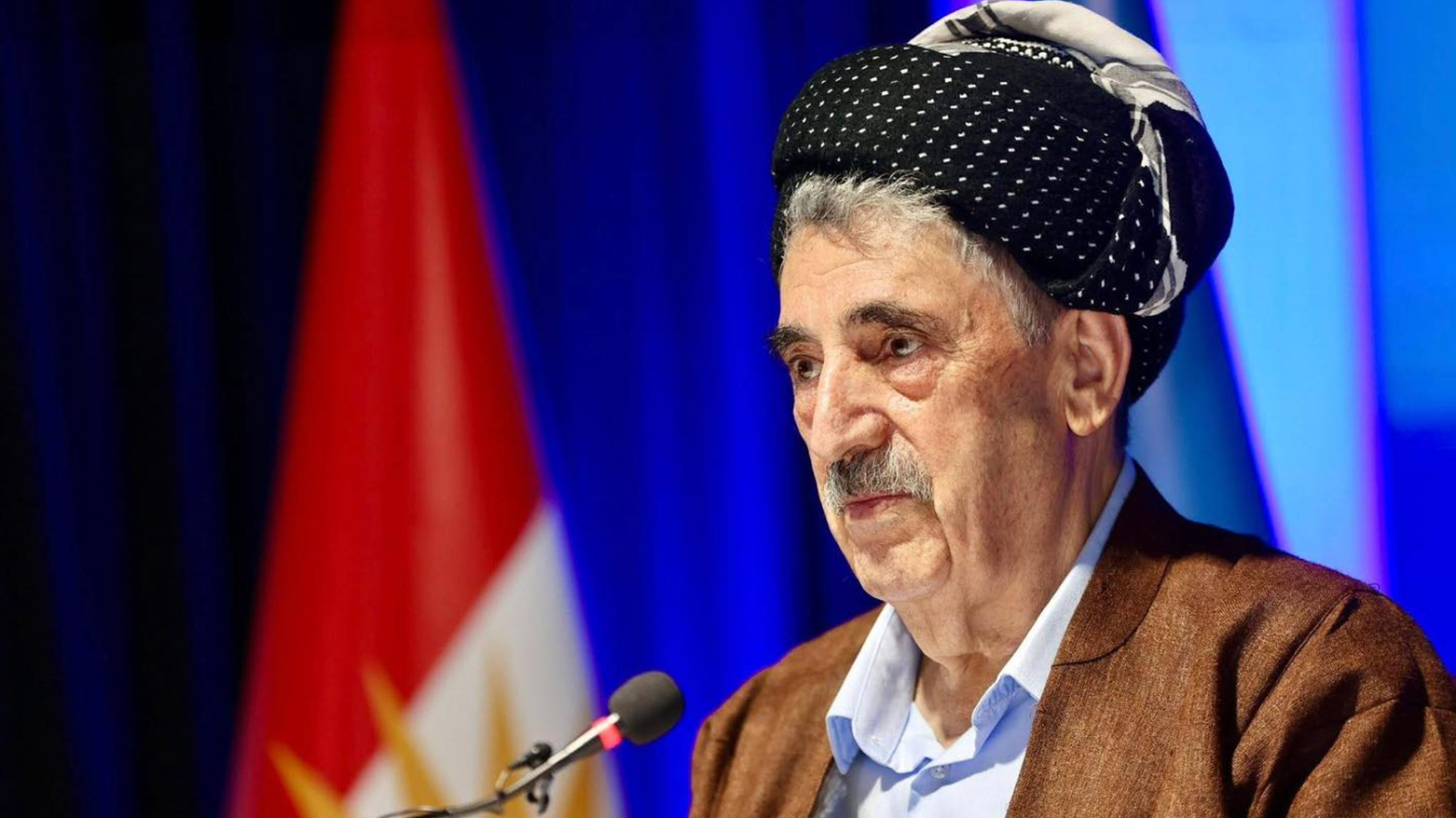
ERBIL (Kurdistan24) – The Secretary-General of the Kurdistan Socialist Democratic Party (KSDP) launched a sharp critique of the federal government in Baghdad on Saturday, accusing Iraqi authorities of deliberately withholding public sector salaries for three months in 2025 and characterizing the long-standing political narrative of "Kurdish-Arab brotherhood" as a slogan devoid of reality.
Speaking at the third Gulakhana Gathering on Saturday, Mohammed Haji Mahmoud delivered a broad assessment of the relationship between the Kurdistan Region and the federal government.
His remarks painted a picture of a political landscape defined by persistent financial disputes and what he described as a fundamental lack of will on the part of Baghdad to resolve outstanding issues with the Kurdish population.
A central focus of Mahmoud’s address was the ongoing fiscal friction between Erbil and Baghdad. He highlighted a specific grievance regarding the federal government's financial obligations during the current year.
According to Mahmoud, the federal government has failed to provide three months of salaries for public sector employees in the Kurdistan Region during 2025. He pointed to this payment gap as a definitive indication that financial problems between the two administrations remain acute and unresolved.
Mahmoud framed the salary issue not as a result of bureaucratic inefficiency or technical error, but as a reflection of political intent. He emphasized that the main problem lies with Baghdad itself. In his analysis, the federal authorities do not possess the desire to resolve their problems with the Kurds, leading to a perpetuation of economic strain.
This assessment suggests that the withholding of funds is viewed by the Kurdistan Socialist Democratic Party leadership as a calculated maneuver rather than a fiscal necessity.
The Secretary-General also offered a retrospective critique of the diplomatic efforts that have characterized relations between the Kurdistan Regional Government and the federal government in recent years. He announced that while several political agreements had been signed with Baghdad in past years, the outcomes of these deals had proven detrimental to Kurdish interests.
Mahmoud stated that all such agreements were concluded "at the expense of the rights of the Kurdish people," suggesting a pattern wherein diplomatic concessions failed to yield reciprocal benefits or protections for the region.
In a significant portion of his speech, Mahmoud dismantled the rhetorical framework often used to describe the relationship between the nation's primary ethnic groups. He criticized the political slogans that speak of "Kurdish and Arab brotherhood," a concept frequently invoked by politicians in Baghdad and Erbil alike to emphasize national unity.
Mahmoud contended that such speeches are merely "empty slogans" that have not been practically implemented in reality.
He argued that the reliance on this terminology obscures the true nature of the political dynamic in Iraq. By labeling the concept of brotherhood as nonexistent in reality, Mahmoud called for a departure from idealistic language.
He urged political observers and stakeholders to engage in a "realistic reading of the Iraqi political landscape" that is far removed from "glittering slogans." His comments advocated for a pragmatic approach where facts are seen "as they are," rather than through the lens of aspirational but unimplemented fraternity.
Broadening the scope of his address, Mahmoud discussed the resilience of populations facing external coercion. He spoke on the "resilience of the will of peoples," positing that historical and contemporary reality has proven that external pressures cannot break the collective will of a group. To illustrate this point, he drew a specific parallel to recent geopolitical events.
The gathering at Gulakhana served as a platform for Mahmoud to articulate a stance of deep skepticism regarding the federal government's intentions.
By linking the immediate financial crisis of unpaid salaries to a wider critique of historical agreements and national narratives, he presented a view that the structural integrity of the relationship between Erbil and Baghdad remains fractured.
Mahmoud’s insistence that Baghdad is the primary obstacle to resolution places the burden of the current impasse squarely on federal decision-makers.
His rejection of the "brotherhood" slogan in favor of a "realistic reading" suggests a hardening of political positions, as he argued that the current diplomatic vocabulary does not match the facts on the ground.
As the year 2025 draws to a close, the issue of the three months of unpaid salaries remains a critical point of contention.
Mahmoud’s speech highlights the continued vulnerability of the Kurdistan Region’s public sector to federal budget decisions. His assertion that Baghdad is "killing time" or lacking the will to solve these problems implies that without a fundamental shift in the federal government's approach, the financial and political instability plaguing the relationship is likely to persist.
The Secretary-General concluded his remarks by reiterating the need for clarity and realism. He warned against the comforting illusions of political slogans that have failed to materialize into tangible cooperation.