ISIS Carried Out 13 Attacks on U.S.-Backed SDF in 2025: Monitor
ISIS conducted 13 attacks against the SDF in northeastern Syria in 2025, killing 5. These follow recent attacks on US troops, Syrian security, and civilians, highlighting persistent, widespread instability.
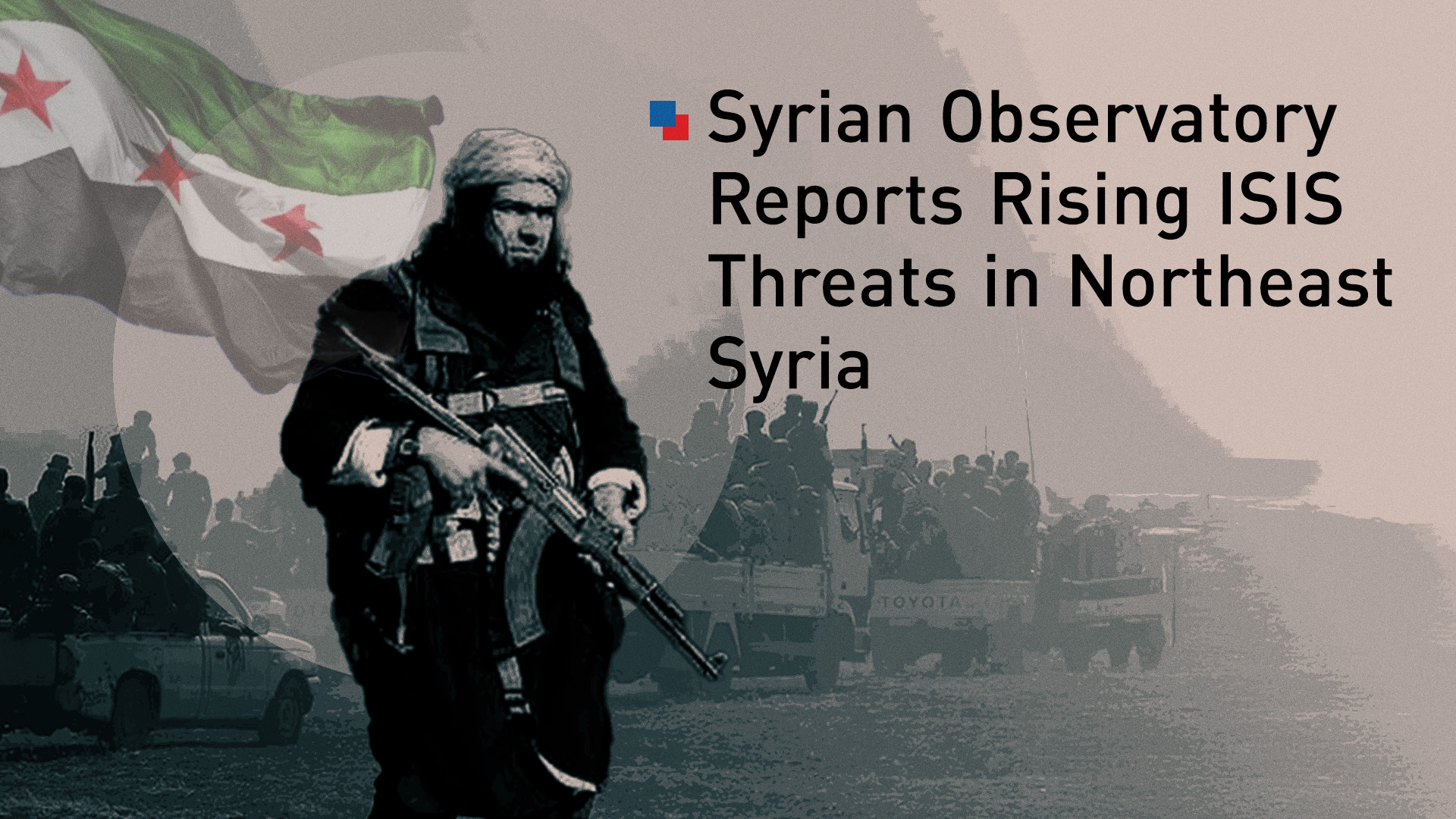
ERBIL (Kurdistan24) – The Islamic State group has conducted 13 attacks against the Syrian Democratic Forces (SDF) in northern and eastern Syria since the beginning of January 2025, resulting in the deaths of five SDF members, including a commander, and wounding six others, according to a report by the Syrian Observatory for Human Rights (SOHR).
These persistent assaults, primarily targeting SDF fighters and their oil and military facilities in Deir ez-Zor and Hasakah governorates, underscore a continued and escalating security threat from the militant organization across the country, even as other security incidents, including attacks on U.S. forces and civilians, highlight Syria's fragile post-conflict landscape.
The SOHR report indicates that ISIS sleeper cells have been active across a wide area controlled by the U.S.-backed SDF, which maintains authority over significant oil and gas fields in northern and eastern Syria.
The 13 recorded operations reflect ISIS's enduring capability to execute lethal strikes despite its territorial defeat in 2019, which the SDF, in cooperation with the U.S.-led Coalition, achieved in the group's last strongholds in eastern Syria.
The Observatory detailed that two SDF members were killed in Hasakah, while three SDF members, including a commander, were killed, and six others, one of whom is also a commander, were wounded in Deir ez-Zor. In these confrontations, two ISIS members were killed and another was wounded.
The SOHR emphasized that these attacks are a clear indicator of the "continuity and escalation of the security threats that ISIS poses" in SDF-controlled territories.
The SOHR's findings arrive amidst a broader pattern of recent security breaches and attacks across Syria that reveal the multifaceted nature of the country's ongoing instability.
Just weeks before the SOHR report on ISIS actions against the SDF, a deadly ambush in central Syria resulted in the deaths of three U.S. personnel, an incident that prompted strong condemnation and vows of retaliation from Washington.
On December 13, 2025, authorities released the identities of two U.S. service members—Sgt. Edgar Brian Torres-Tovar, 25, of Des Moines, and Sgt. William Nathaniel Howard, 29, of Marshalltown—both members of the Iowa National Guard, who were killed alongside a U.S. civilian interpreter, Ayad Mansoor Sakat, in an attack near the historic city of Palmyra.
The U.S. Central Command (CENTCOM) confirmed the ambush, stating that three other Guard members were wounded. The attack occurred during a lunch meeting between U.S. and Syrian security officials.
Syrian authorities identified the assailant as a recent base security guard, suspected of ISIS ties, who stormed the meeting after clashing with Syrian guards and was subsequently killed.
Interior Ministry spokesperson Nour al-Din al-Baba called it "a major security breach" but emphasized the new Syrian security forces' successes since the ouster of former Syrian President Bashar al-Assad.
The U.S. Pentagon, military officials, and President Donald Trump all attributed the Palmyra attack to an ISIS operative. Defense Secretary Pete Hegseth conveyed condolences and vowed that the United States would "avenge these fallen Americans with overwhelming force."
President Trump reiterated this promise, telling reporters that ISIS would "be hit hard," while clarifying that the Syrian government was not responsible for the attack. He stated that the area was largely outside the control of Syrian President Ahmad al-Sharaa, who recently held historic talks at the White House.
SDF General Commander Mazloum Abdi expressed regret over the injuries to both Syrian security personnel and U.S. soldiers, underscoring the necessity for "enhanced national will and joint counterterrorism efforts against ISIS cells and their networks."
Adding a critical layer to the Palmyra incident, the Syrian Ministry of Interior confirmed on December 14 that the gunman was a member of the country's security services who had been flagged for termination due to holding "extremist Islamist ideas."
According to an Agence France-Presse (AFP) report, Ministry spokesman Noureddine al-Baba revealed on state television that the decision to fire the assailant had already been finalized, with administrative processing scheduled for the day after the attack.
This revelation highlighted what observers have termed "perilous insider threats" and raised questions about internal vetting within partner forces in the counter-ISIS mission. The incident underscores the ongoing risks to U.S. and coalition forces closely collaborating with Syrian security units in volatile regions.
The spectrum of extremist violence has also impacted civilian and religious sites.
On December 26, an Islamist militant group identified as Saraya Ansar al-Sunna claimed responsibility for a deadly bombing at the Imam Ali bin Abi Talib Mosque in the Wadi al-Dhahab neighborhood of Homs.
This Alawite-majority district witnessed scenes of panic and chaos following the explosion. Syrian state-run Syrian Arab News Agency (SANA) initially reported three fatalities and five injuries, though later accounts cited by other sources raised the death toll to at least eight.
The Syrian Observatory for Human Rights reported that public security personnel fired shots to disperse bystanders, and residents were called upon to help transport the wounded.
Saraya Ansar al-Sunna, which emerged after the ouster of former Syrian president Bashar al-Assad, has previously claimed a church bombing in Damascus in June, raising concerns about a broader campaign targeting religious sites and minority communities.
Moreover, ISIS has also conducted attacks directly against Syrian government forces. On December 22, ISIS claimed responsibility for an attack in Idlib province that killed four Syrian security personnel.
In a statement circulated by SITE Intelligence Group, ISIS asserted its fighters targeted a patrol belonging to what it described as the “apostate Syrian government” with machine-gun fire on the Maaret al-Numan road.
Syria’s Interior Ministry confirmed the deaths and one injury to its road security department members but did not initially identify the attackers. This attack occurred days after the Palmyra ambush.
The security landscape in Syria remains complex and fraught with peril. While ISIS suffered a territorial defeat in 2019, its ability to carry out 13 attacks against the SDF in northern and eastern Syria since the start of 2025, as reported by SOHR, demonstrates its persistent insurgent capacity.
These targeted assaults on SDF fighters and critical infrastructure highlight that the organization continues to pose a significant security challenge in areas rich with oil and gas fields, where the SDF, backed by the United States, maintains control.
The Palmyra attack, which led to the deaths of two U.S. soldiers and a civilian interpreter, further illustrates the ongoing and unpredictable nature of the threat.
The revelation of an "insider threat" among Syrian security forces, despite assurances of "many more successes than failures" from Syrian authorities, complicates joint counterterrorism efforts and underscores the fragility of security arrangements.
The Idlib attack against Syrian government forces and the Homs mosque bombing, targeting an Alawite-majority area by a group distinct from ISIS but sharing a similar extremist ideology, collectively paint a picture of a country where multiple non-state armed actors remain capable of inflicting significant violence.
Although ISIS has claimed "significantly fewer attacks" against Syrian and Kurdish forces since Assad's overthrow compared to its peak, as noted by the Idlib report, the recent spate of incidents suggests a renewed or sustained level of activity.
Damascus frequently announces security operations against ISIS, sometimes in coordination with the U.S.-led coalition, to target suspected sleeper cells. However, the geographical spread of these attacks — from the eastern deserts of Deir ez-Zor and Hasakah to central Palmyra, and from the western province of Idlib to the city of Homs — indicates a pervasive and adaptable threat.
The SOHR's emphasis on the "continuity and escalation" of ISIS threats against the SDF reinforces the ongoing challenges to stabilizing Syria and ensuring the long-term security of its diverse populations and the forces operating within its borders.